This is the point in the growing season that we start anticipating signs of actual produce coming from the garden. We’ve eaten lettuce and radishes, picked lavender and echinacea flowers but we’re ready to peek under the leaves to see what might actually be growing there. Thought I’d share what we found!
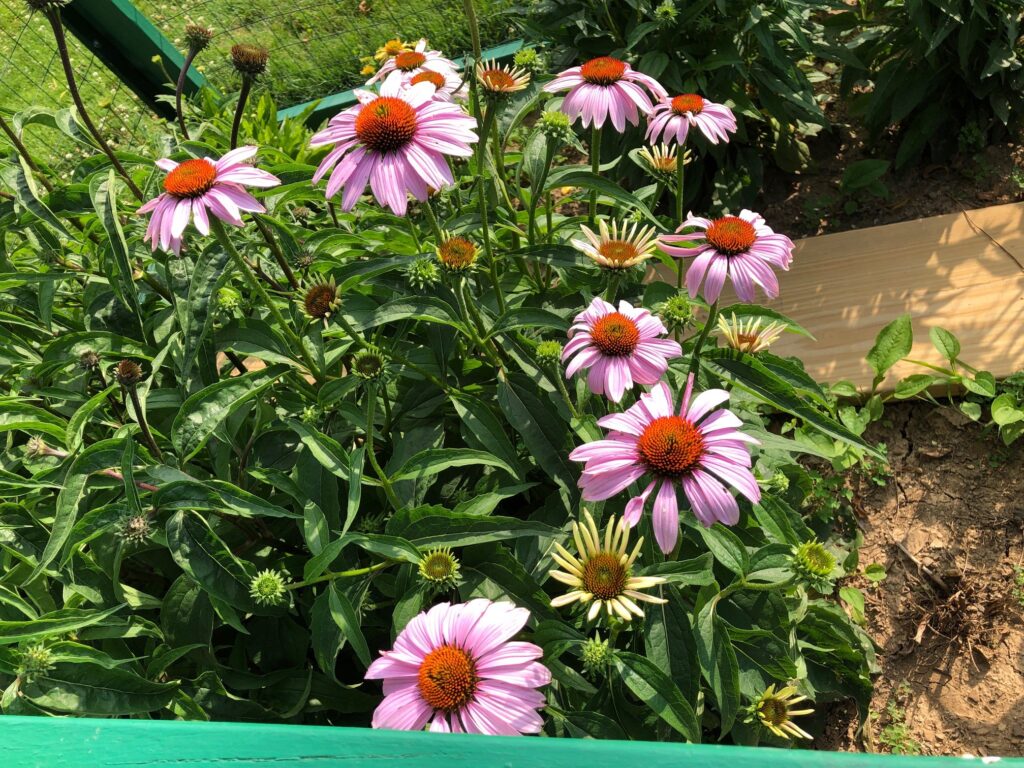
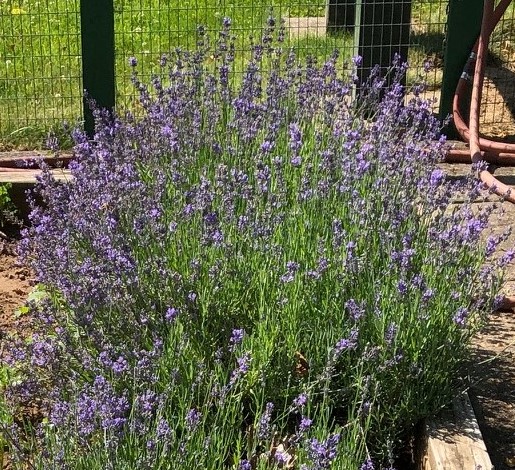
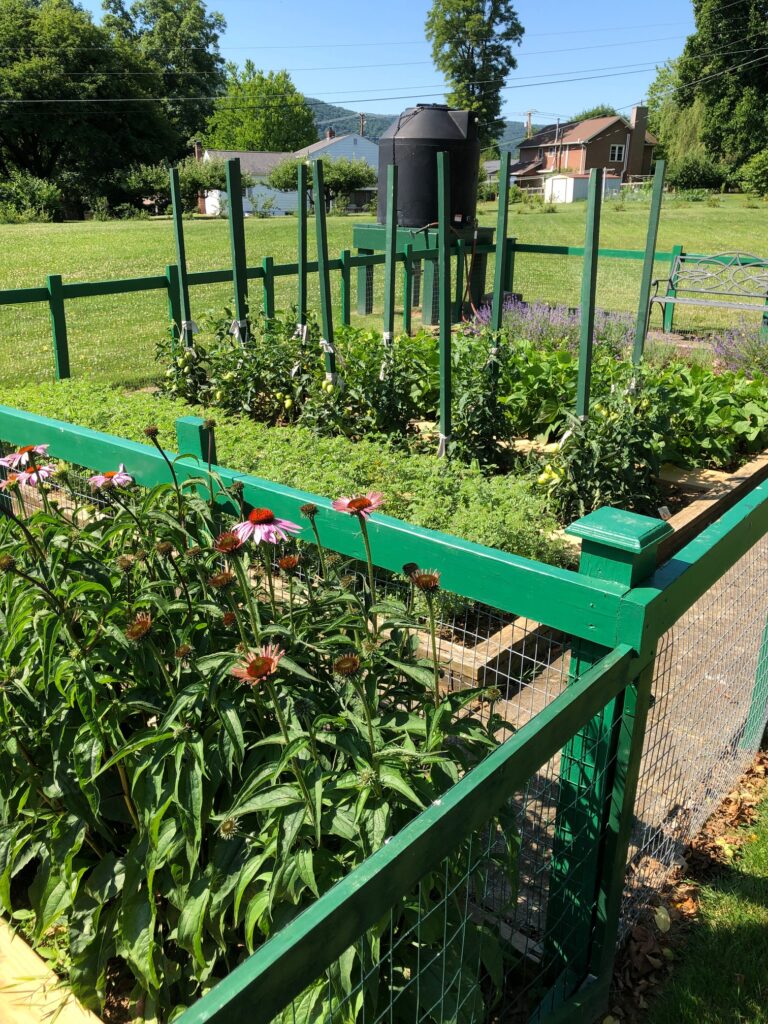
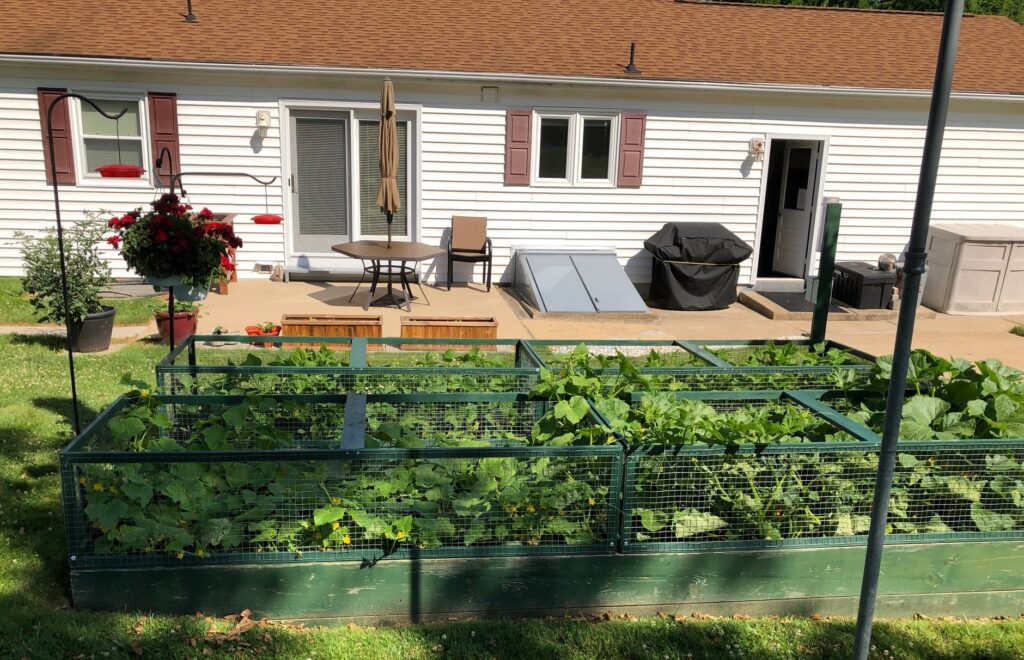
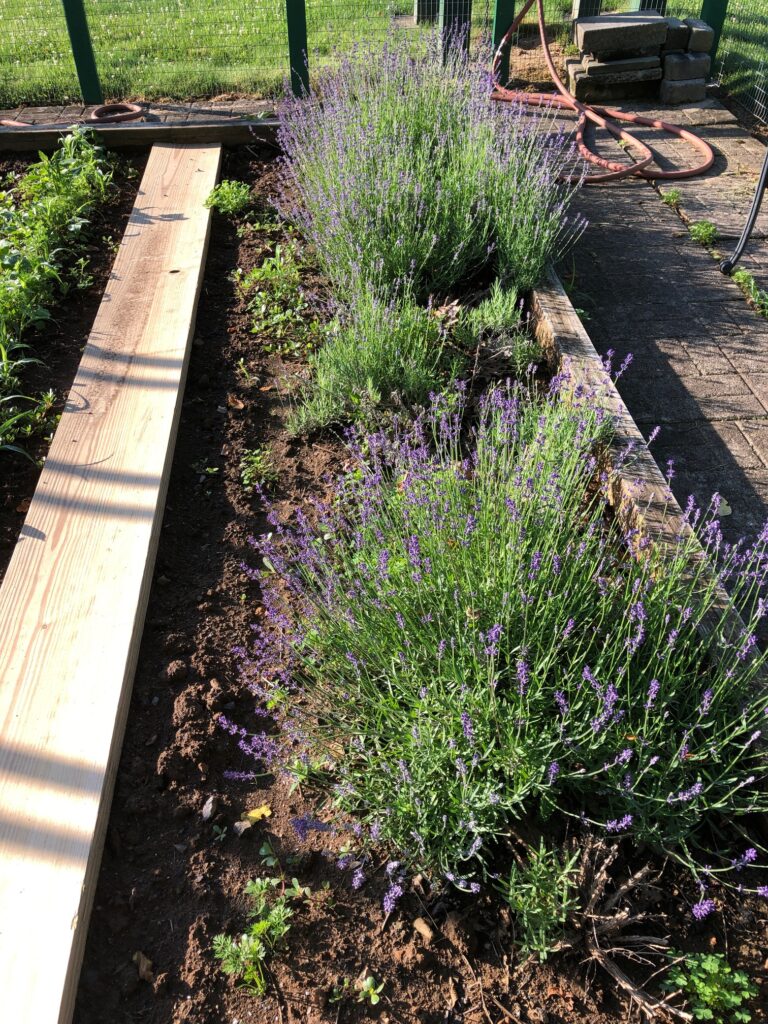
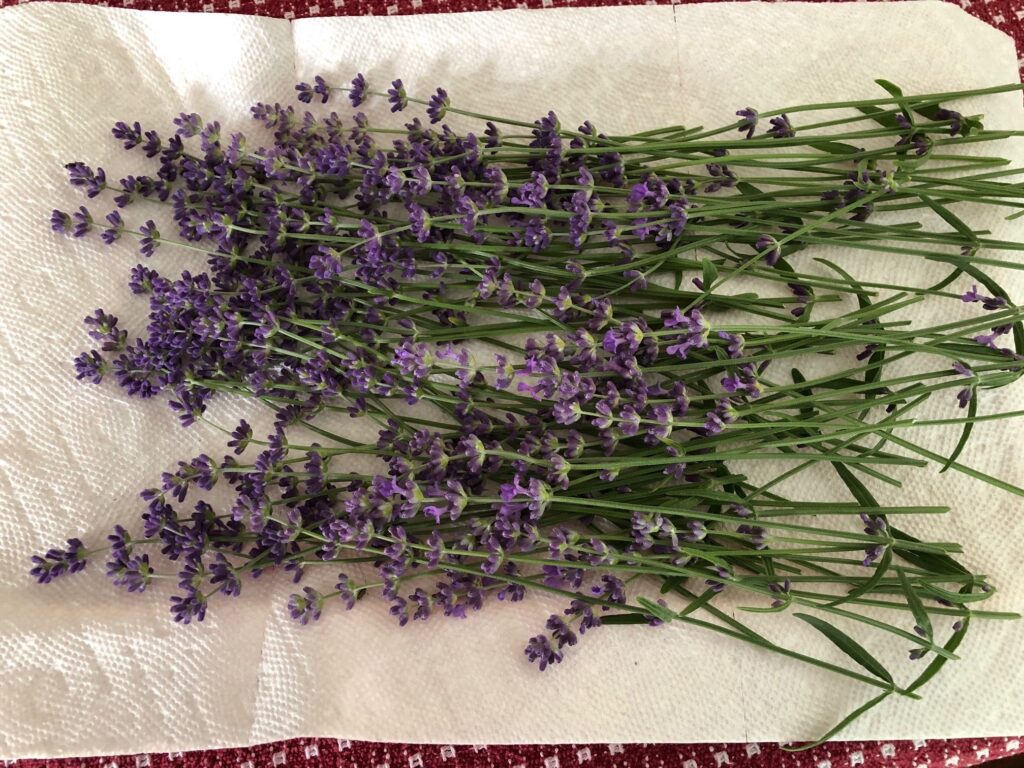
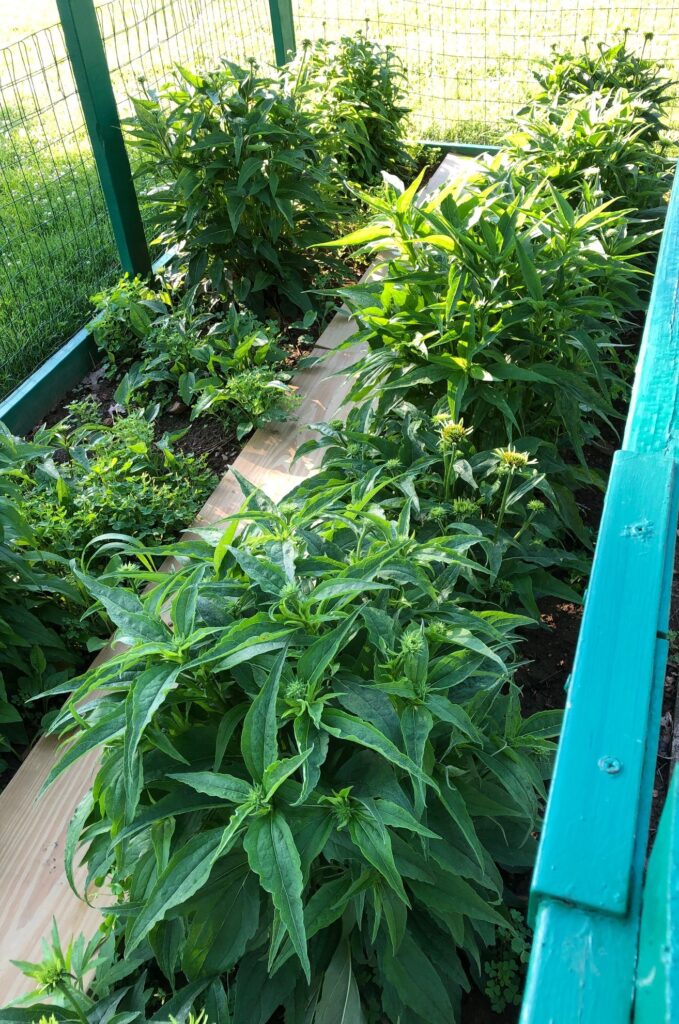
Echinacea is just starting but the potential for much more is visible.Lavender flowers are now opening so the bees are very busy.Here’s a view of the whole garden on the hill this 4th of July weekend.Here’s the view of the backyard planters from the hill.
At the close up level, under the leaves, we found what’s coming!
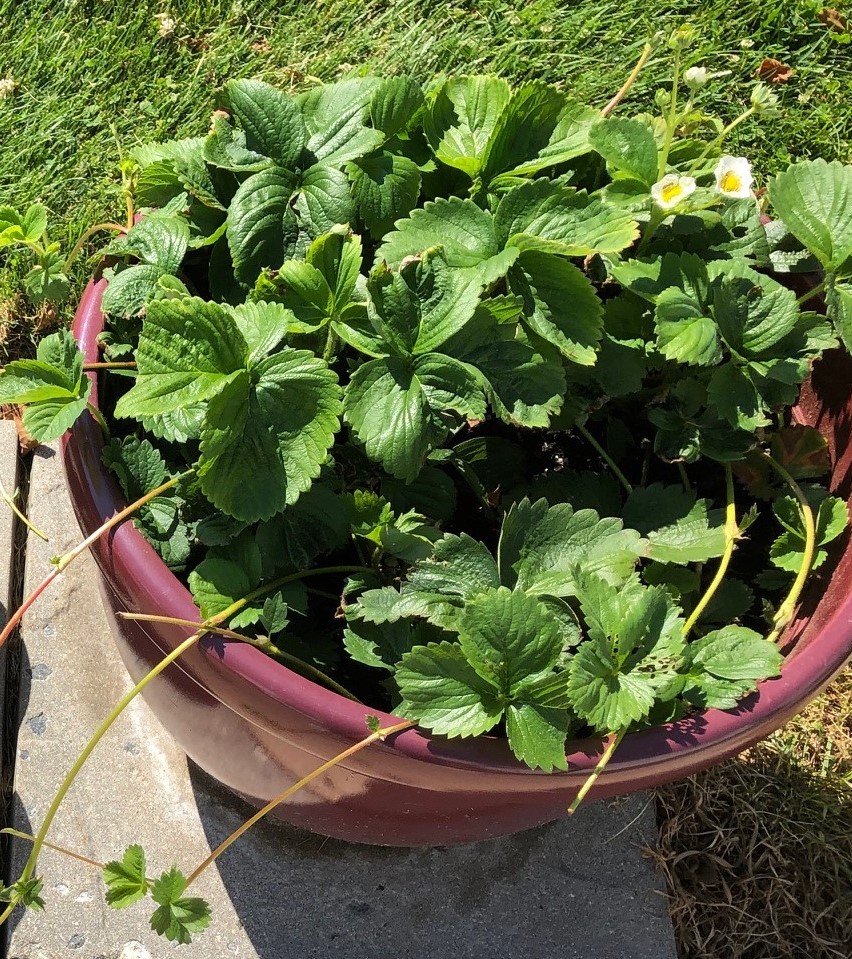
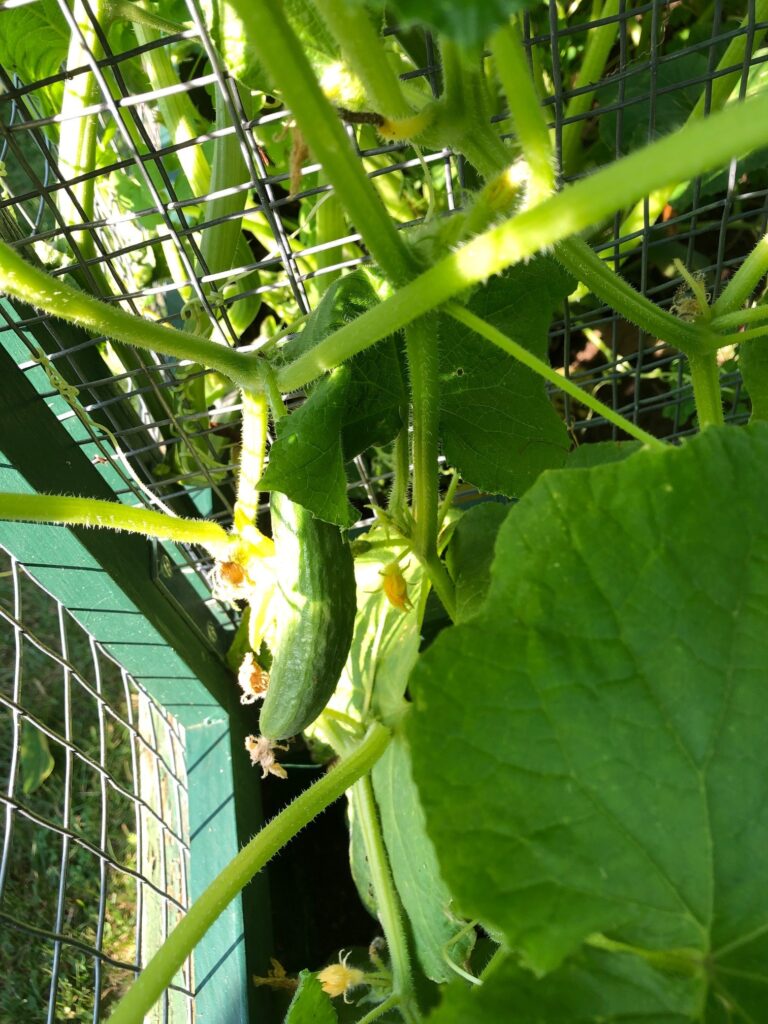
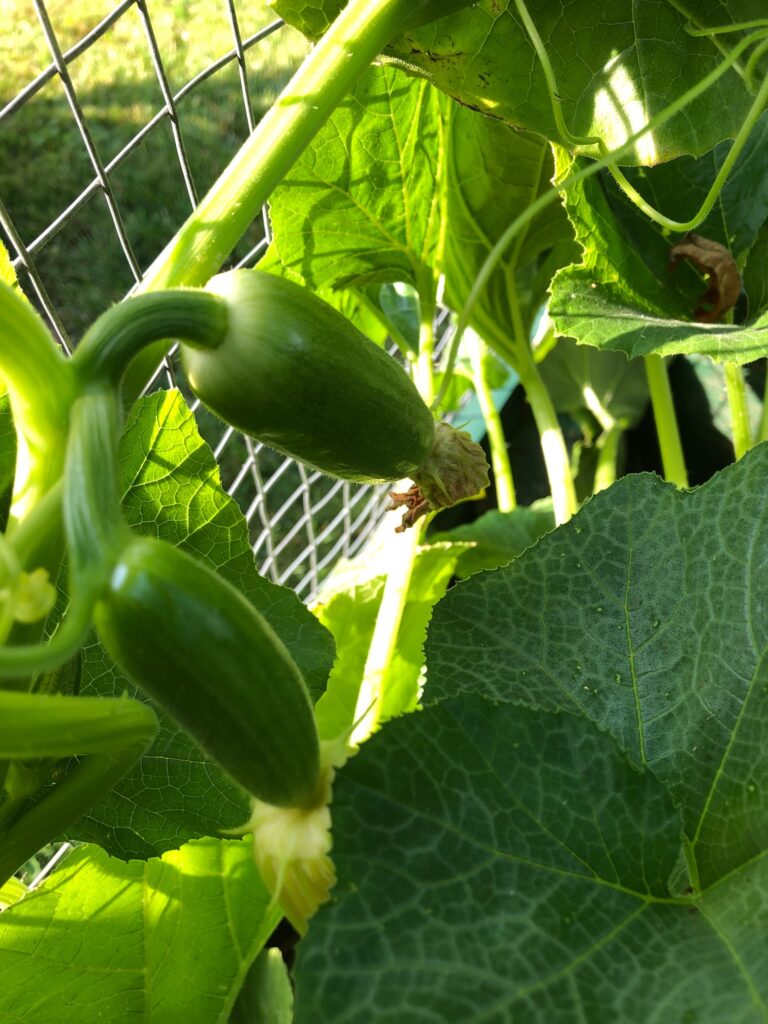
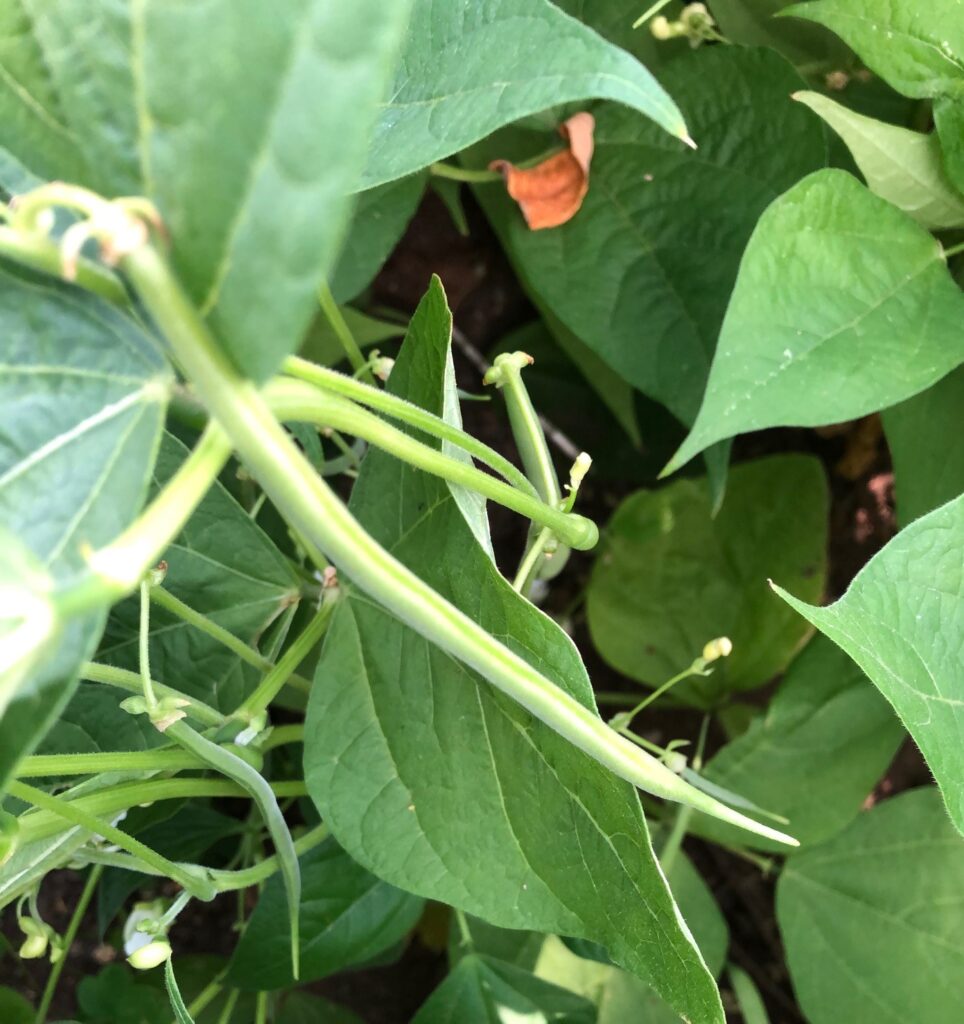
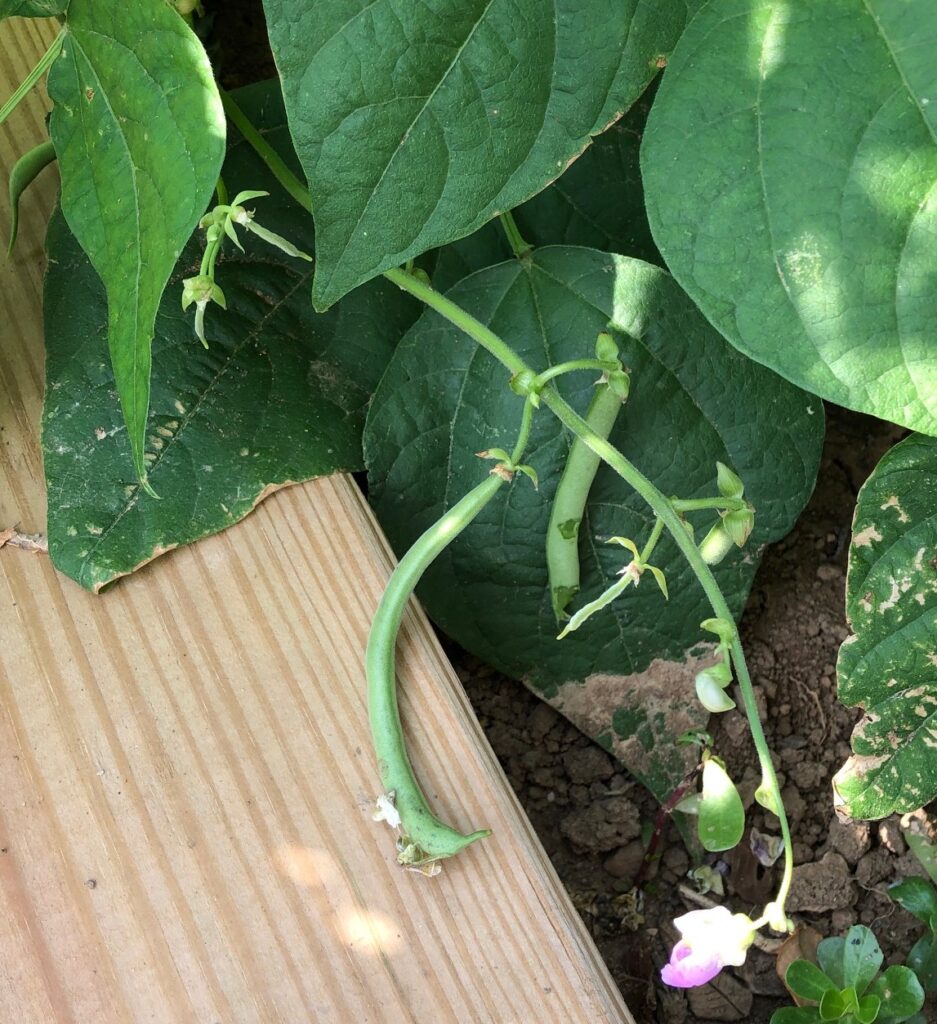
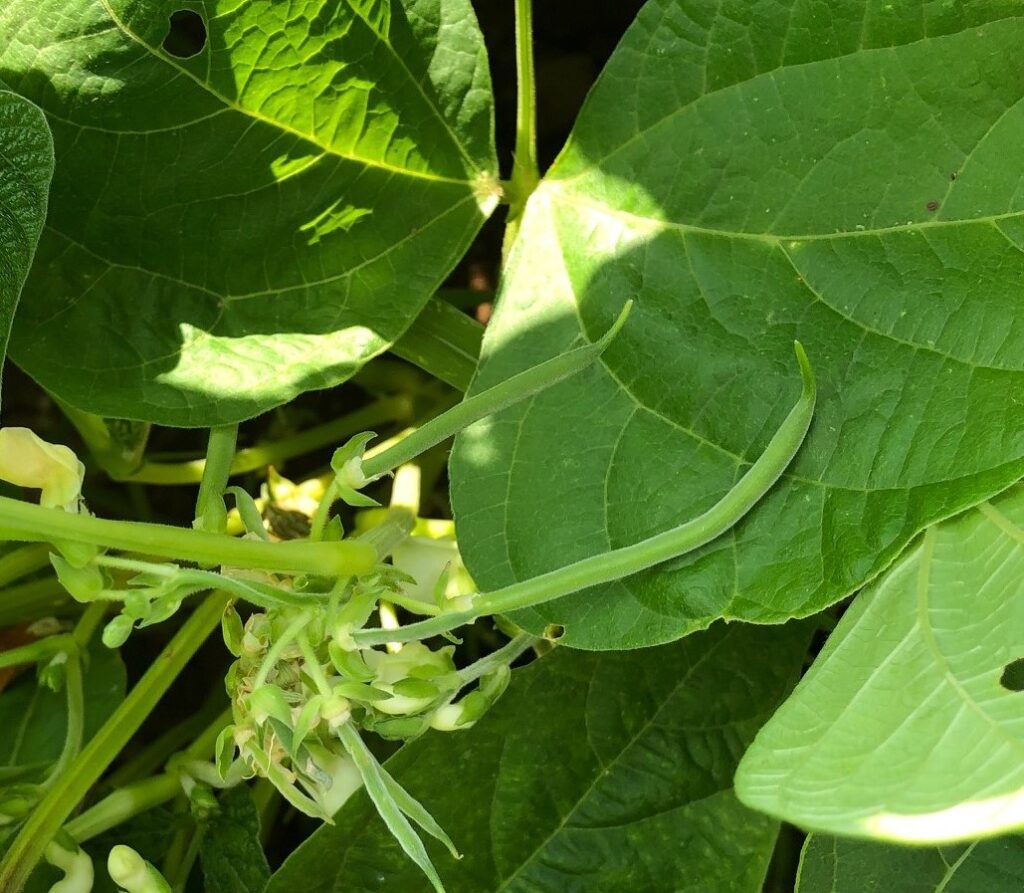
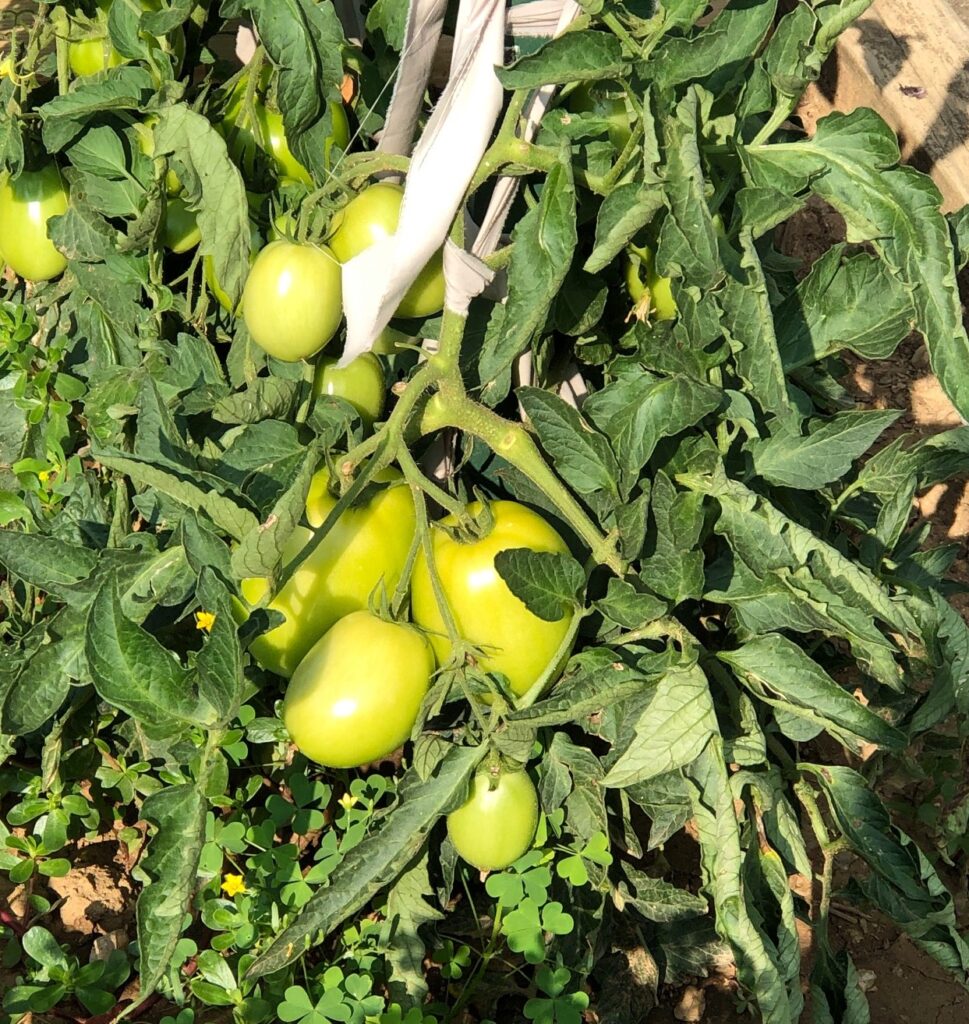
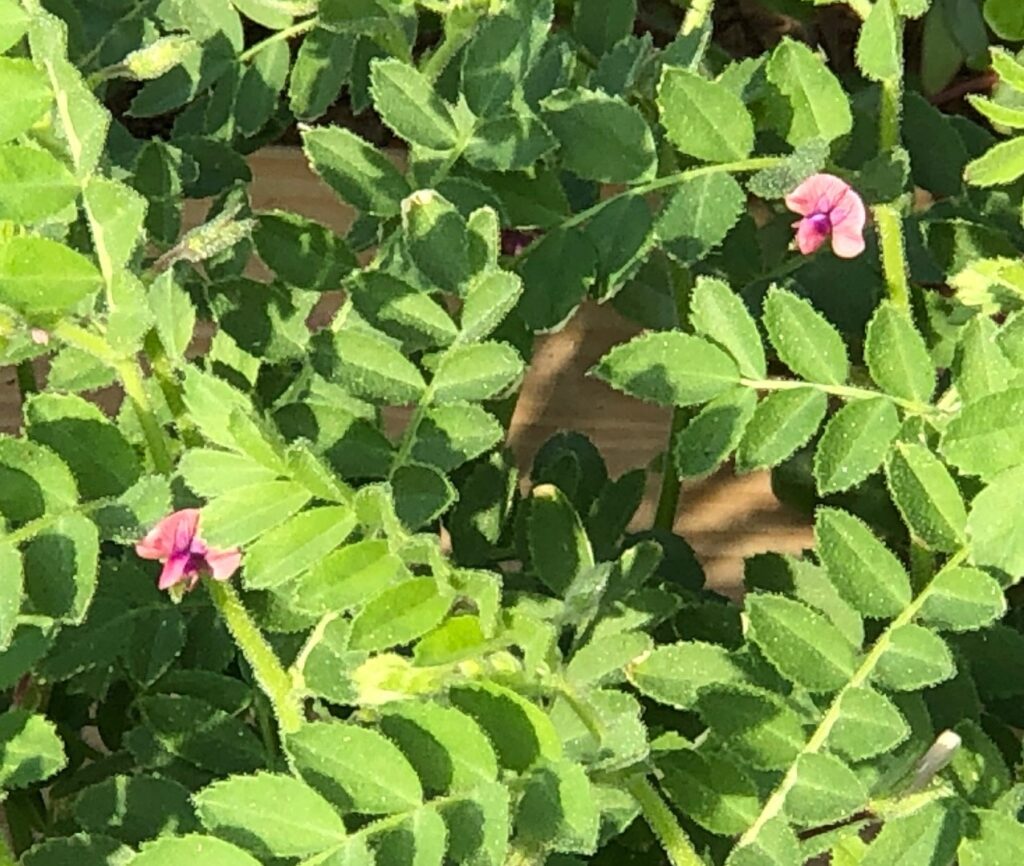
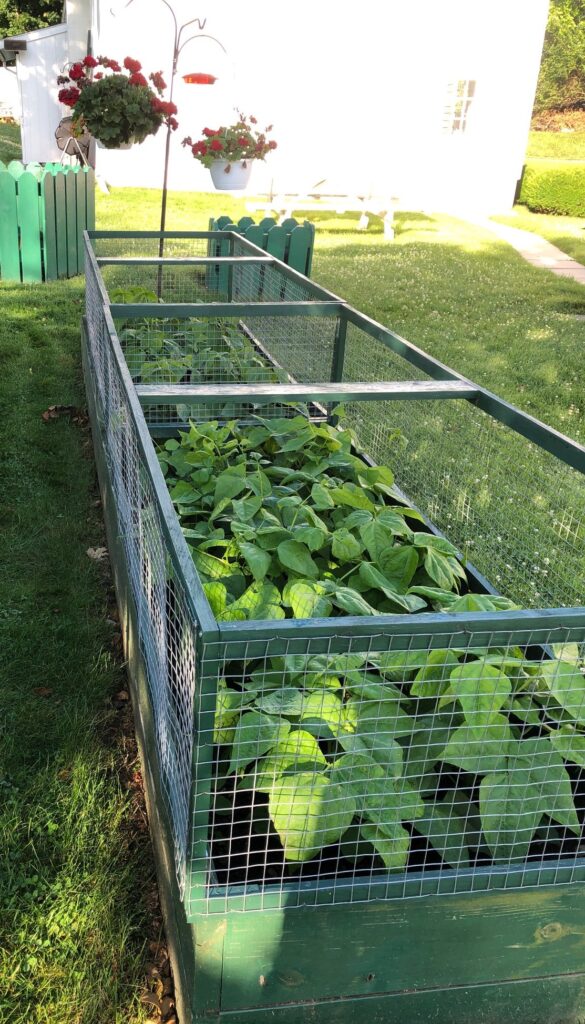
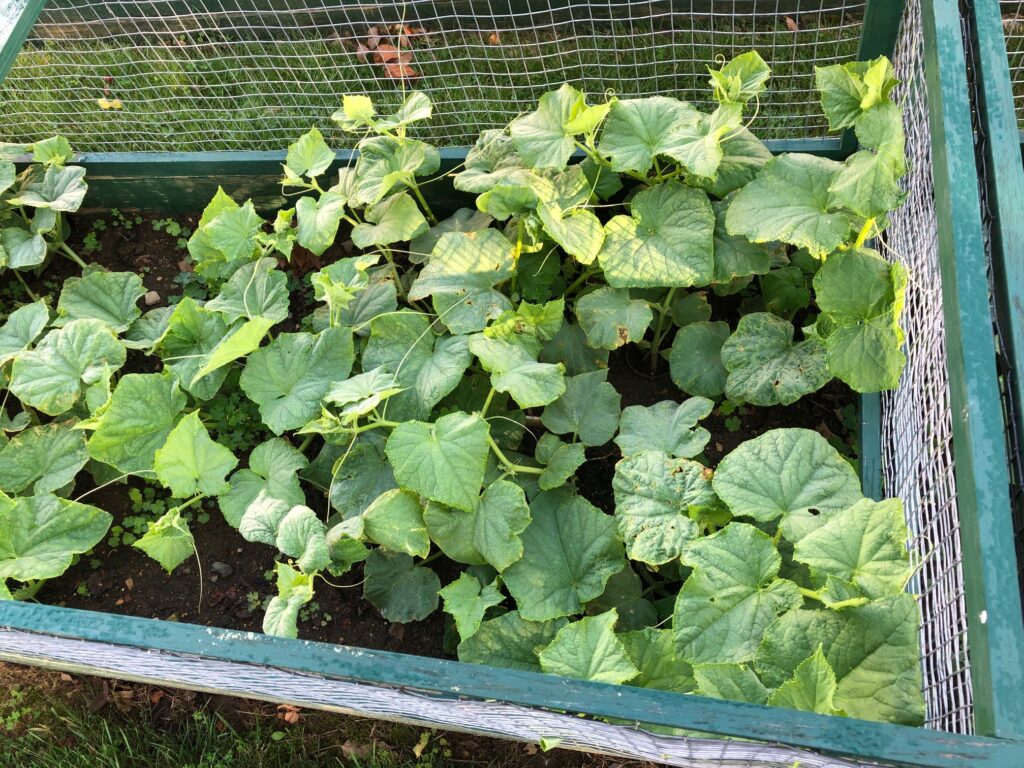
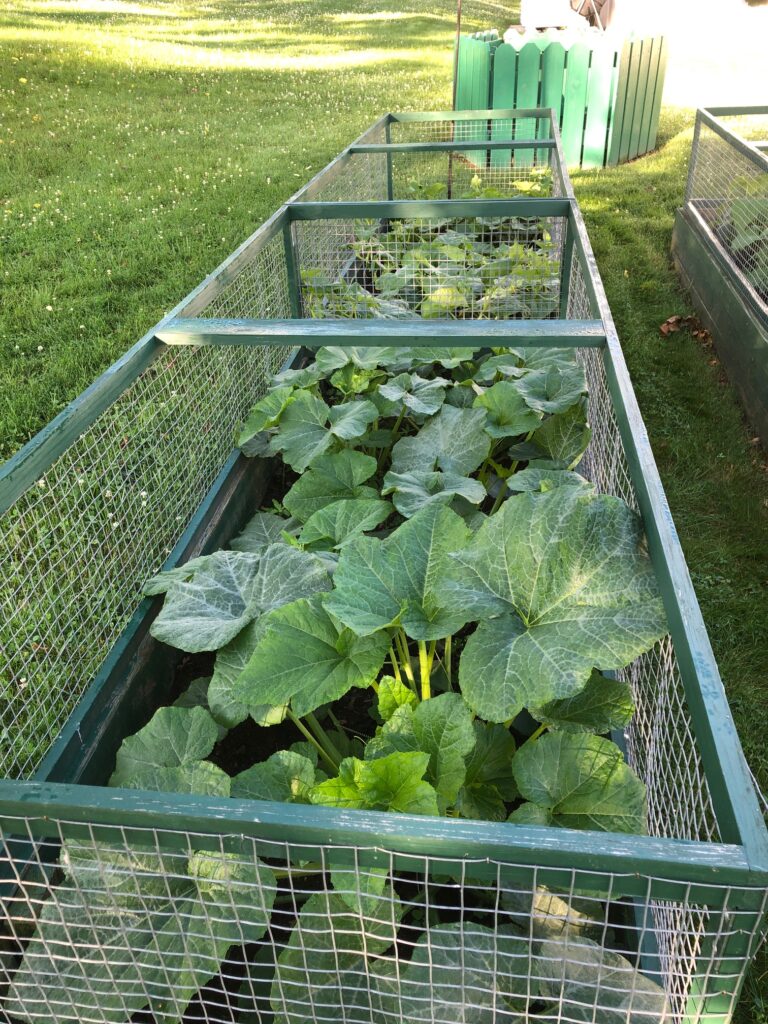
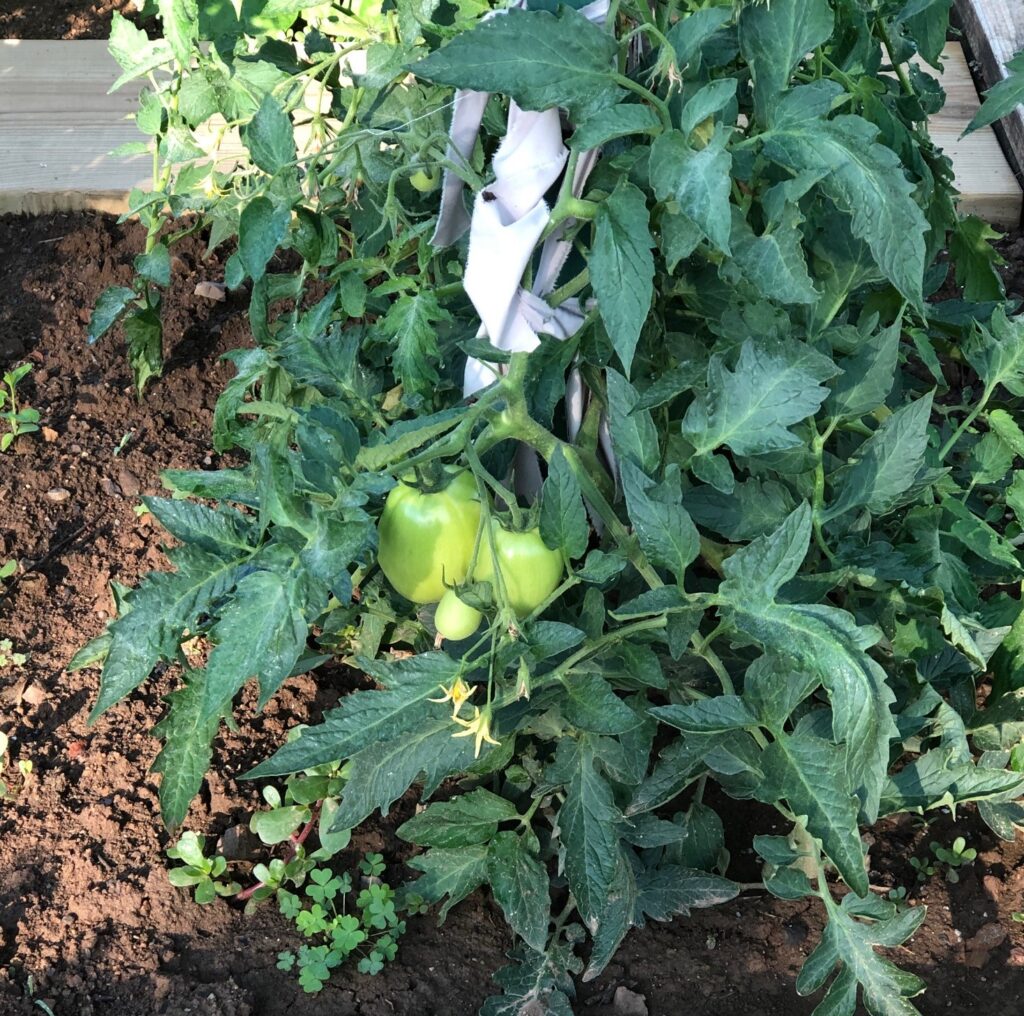
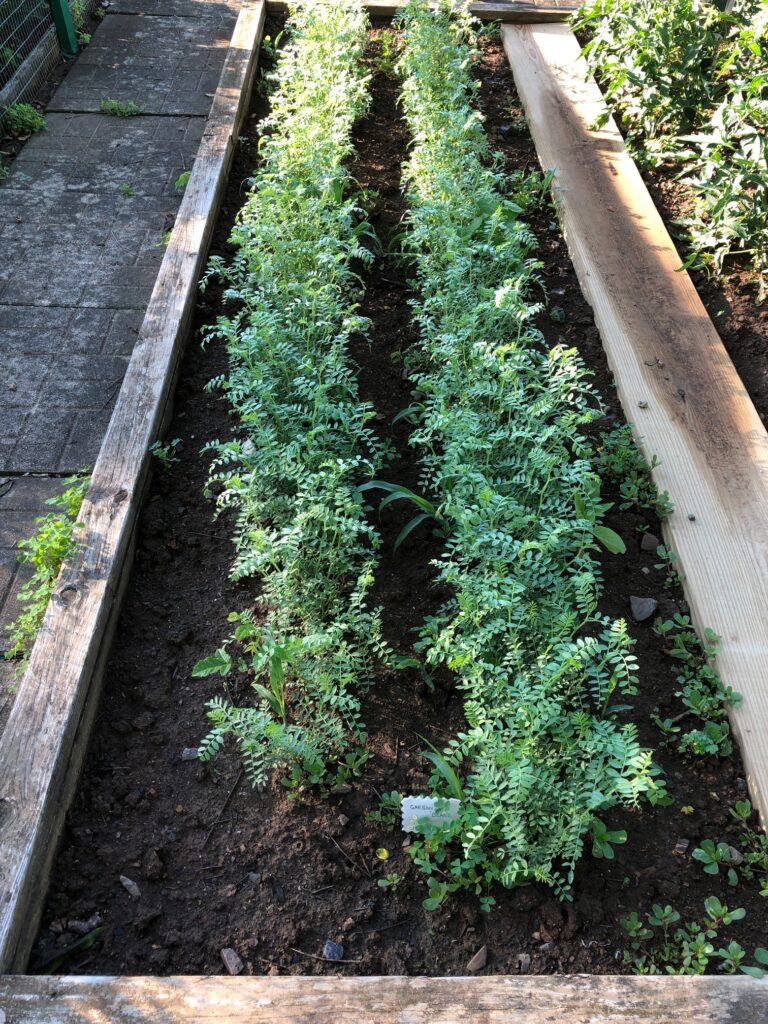
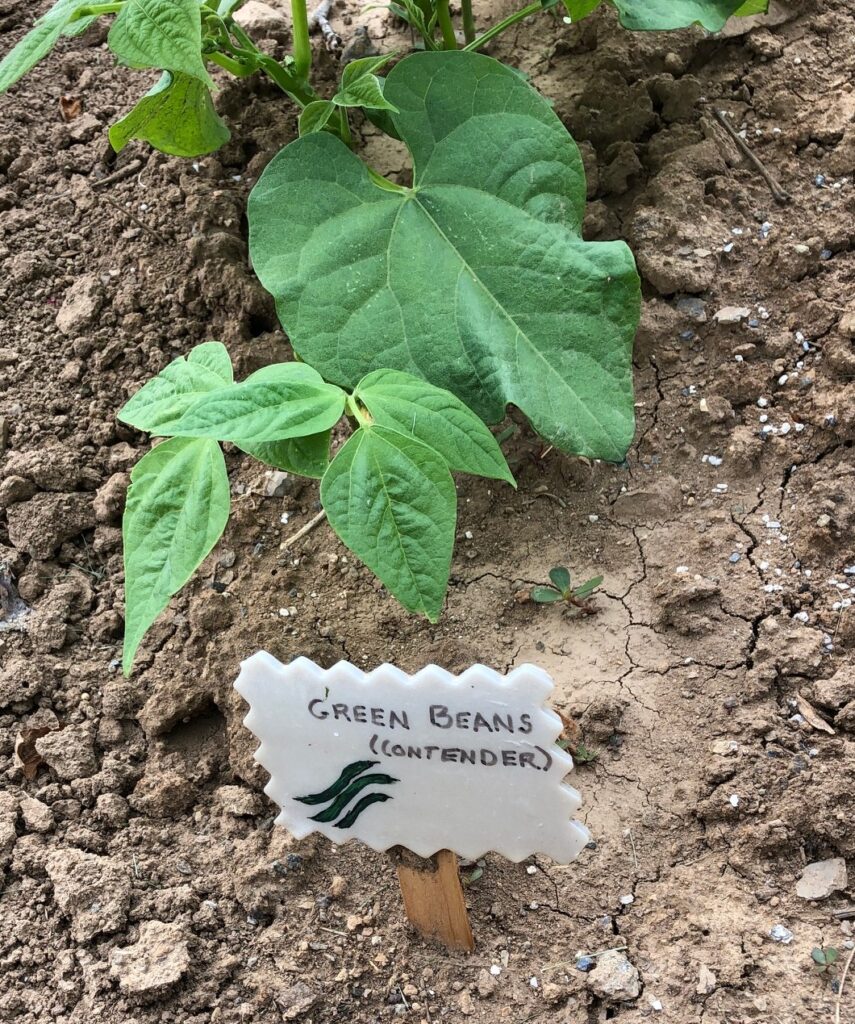
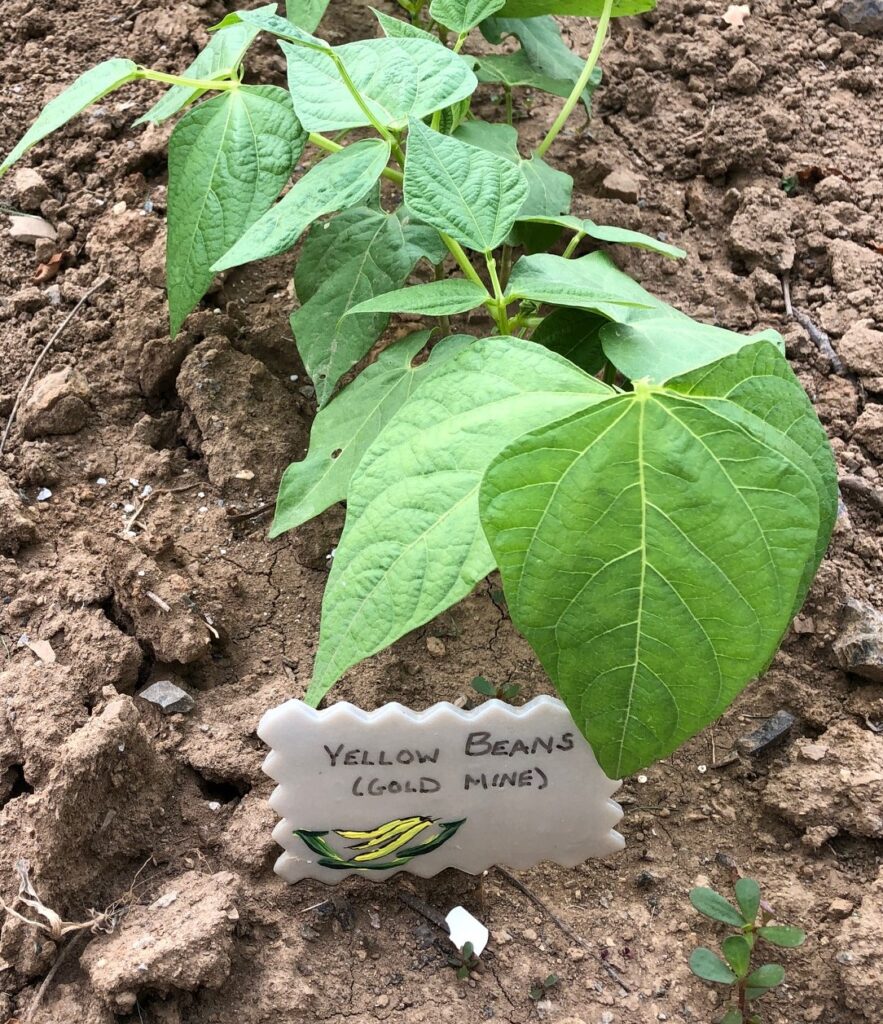
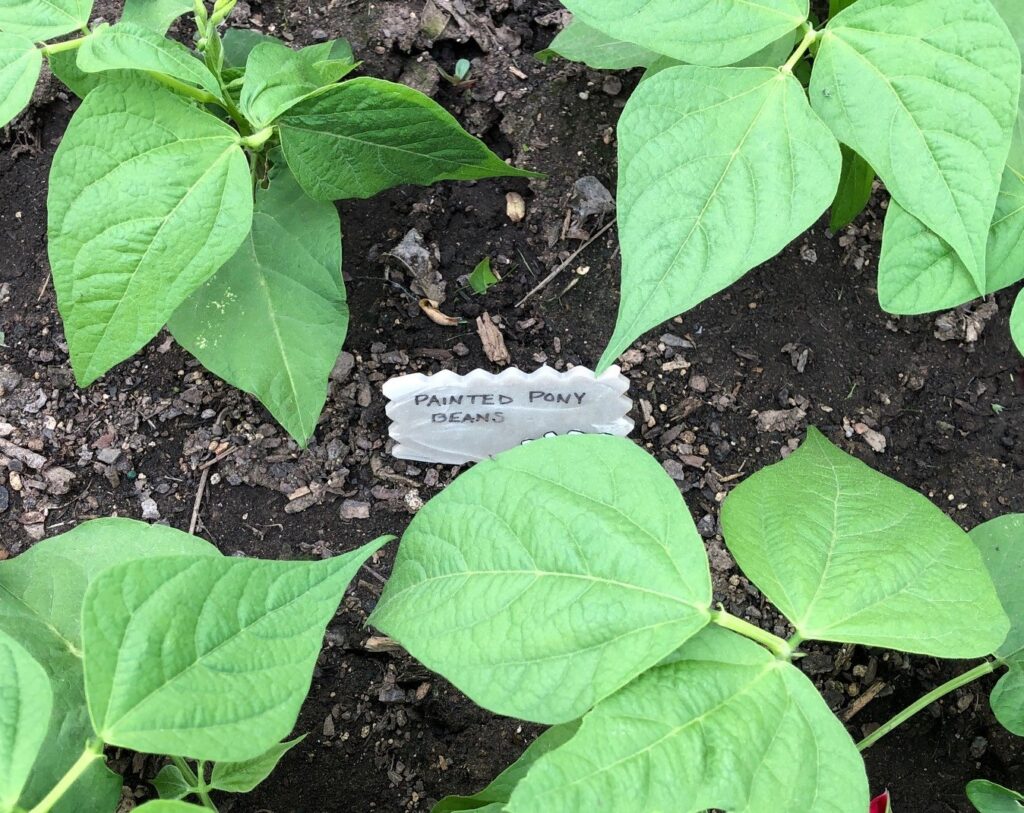
So far, strawberries have blossoms. Down at ground level, not sure if any actual strawberries will survive the wandering chipmunks!Most of the cucumbers are about 1″ long…except this one! There is hope!Delicata squash is finally on its way!Painted Pony beans are starting to be big enough to see.Green beans will be ready in a week or two.Yellow beans will turn yellow when they are ready to pick.Tomatoes are getting bigger!Garbanzo beans are just flowers so far.
So that’s the overview! Sort of in a holding pattern, making sure the rain is timed right and the bugs stay away. It’s called gardening season in Pennsylvania! Enjoy!
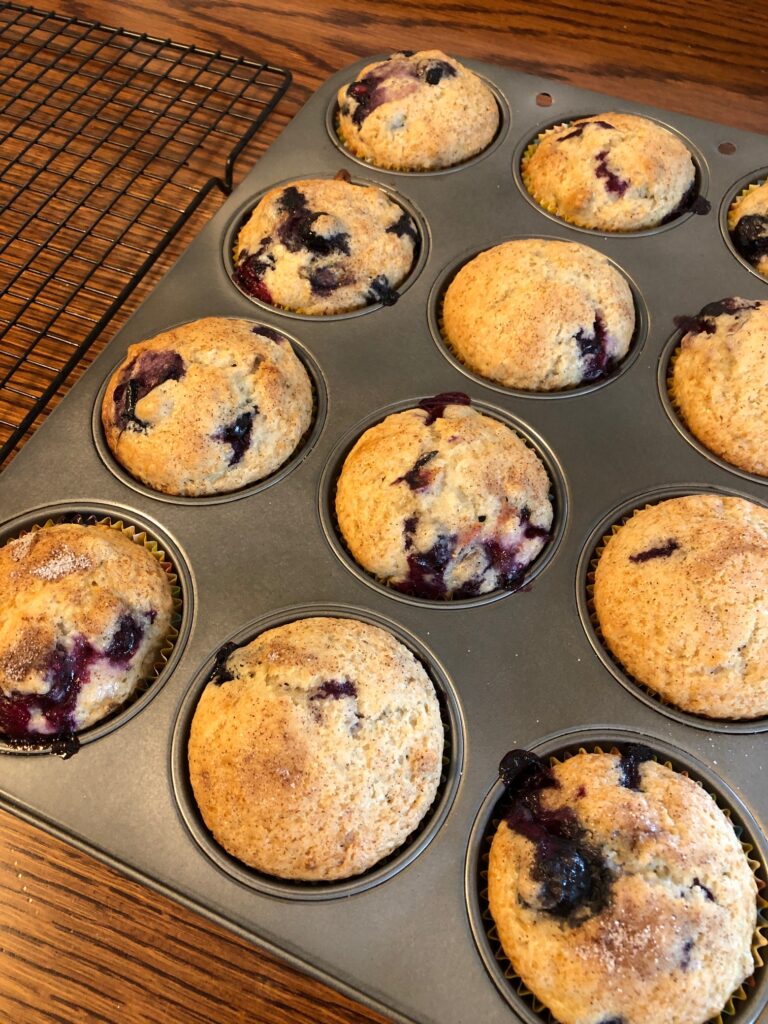
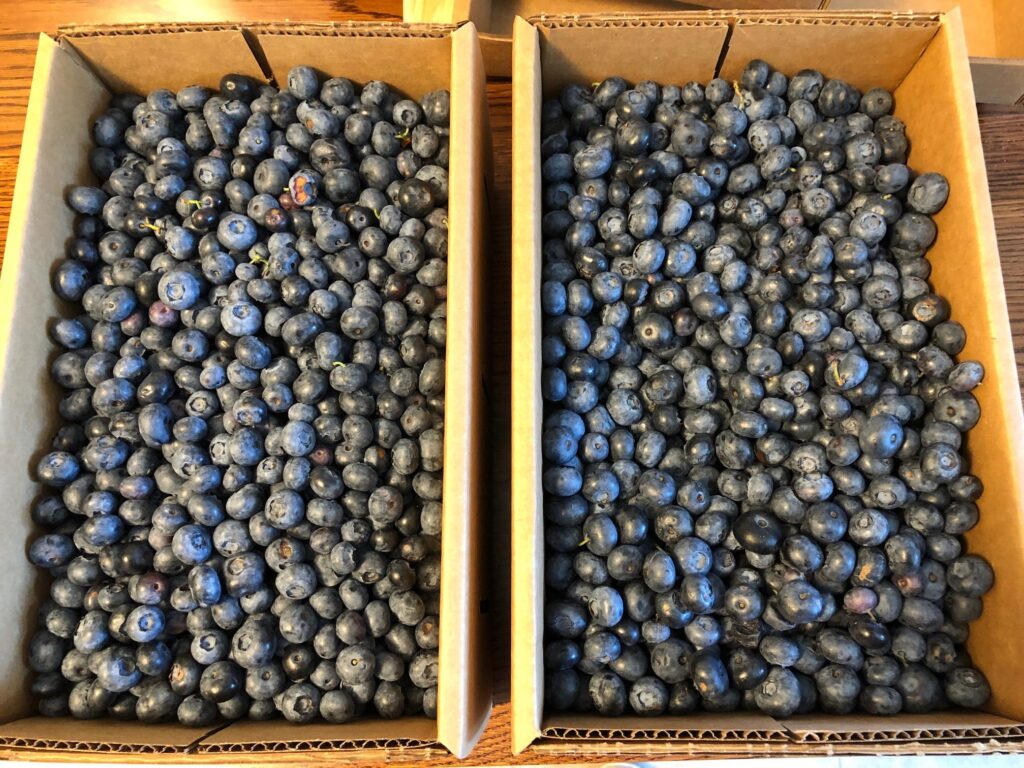
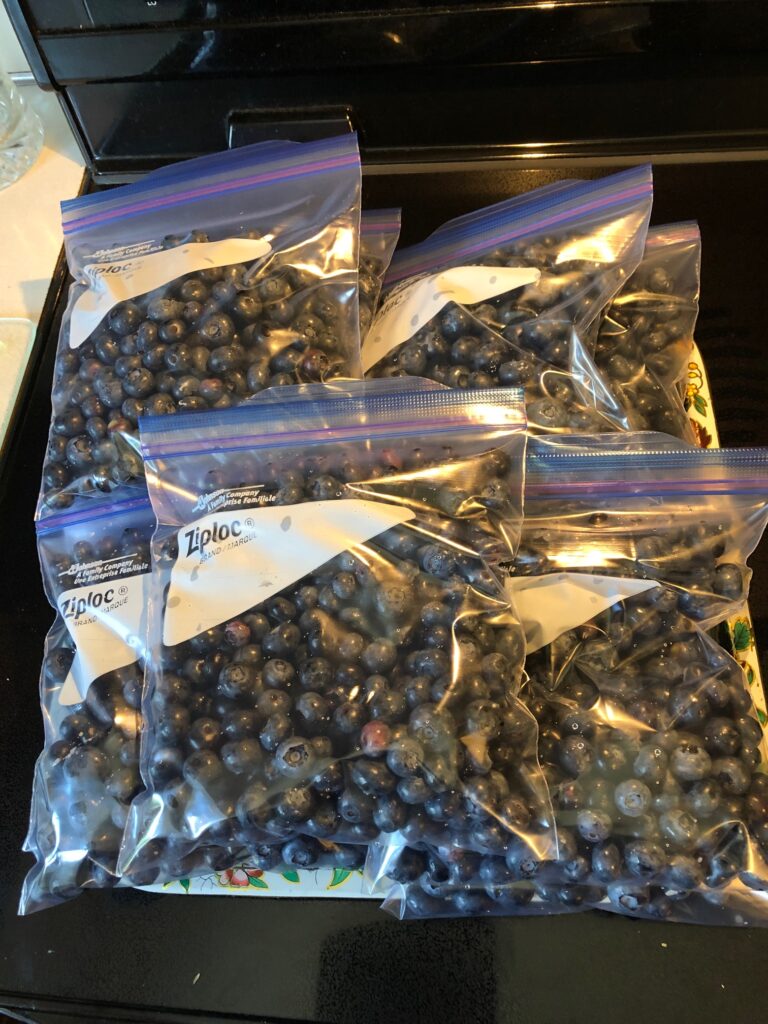
My fingers are shriveled and my back is tired…all to preserve the 20 pounds of blueberries I picked up today from the Kiwana’s blueberry sale. Whew! I just finished washing and freezing 22 pints of blueberries. It always feels great to get them all safely tucked into the freezer. I have enough to last a year and I can almost taste the first batch of blueberry muffins I have in mind! (Check out my favorite muffin recipe: https://marykisner.com/the-best-vegan-muffin/).
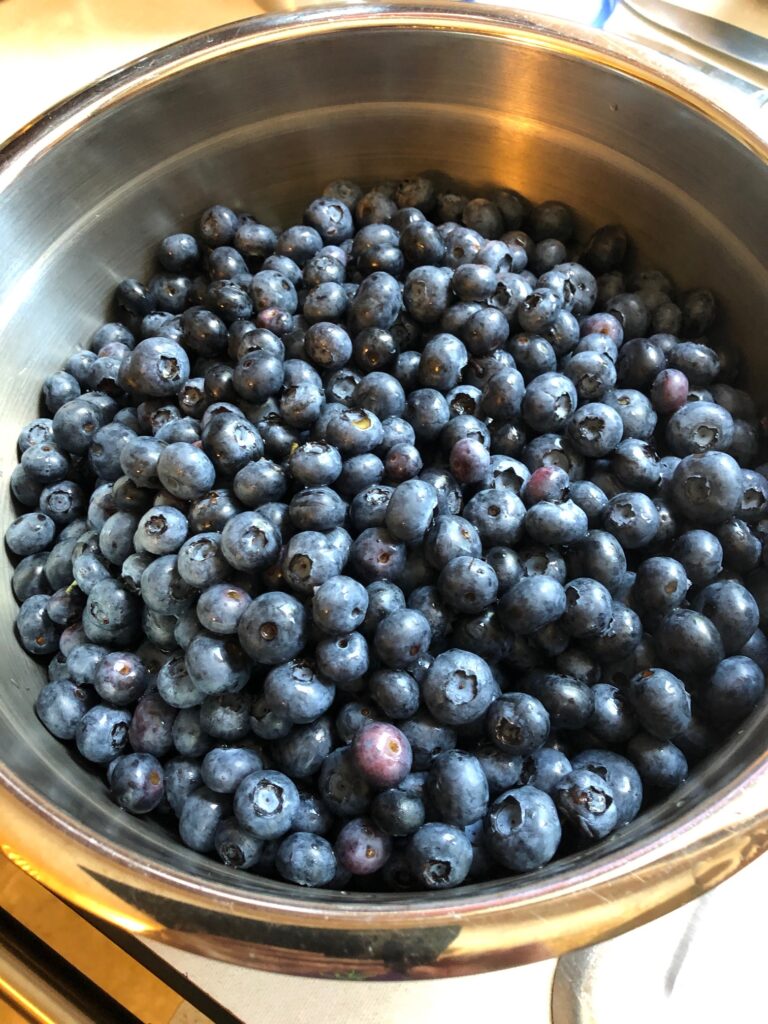
This year the blueberries came from New Jersey. In the past they’ve been sourced from Maine. They were quite clean already but I still rinse them in cool water and remove any squashed or unripe berries. They can be washed, scooped directly into freezer bags and put in the freezer. When frozen they can easily be measured out like a pile of marbles and baked into goodies, added to fruit cup or eaten on cereal.
Out of these 20 pounds, I think I had to throw away about 1/2 cup of squashed berries and stems…not bad. The bags stack neatly on the freezer shelf and will be a real treat in the middle of winter.
We tried growing our own blueberries a few years ago, but our soil must not be right and we had to fence them completely because the deer, bunnies and birds would help themselves as they wandered by. An ongoing battle in Pennsylvania!
I’m all for letting folks that are good at growing things we can’t, be my source to stock up my freezer. In the dead of winter around here local blueberries are NOT available! Knowing there may be food shortages this winter, I’m always on the lookout for things that I can add to my freezer without having to grow them myself. Check out farmers markets near you to do the same!
If you have been following my various activities, you know that not all of my projects are successful. Some of the recipes for baking sound yummy on paper, but end up being boring, tasteless, etc. A few of my body care formulations seem easy to follow but I end up with a product that just isn’t something I’d ever use or share. That doesn’t stop me from trying to make something new!
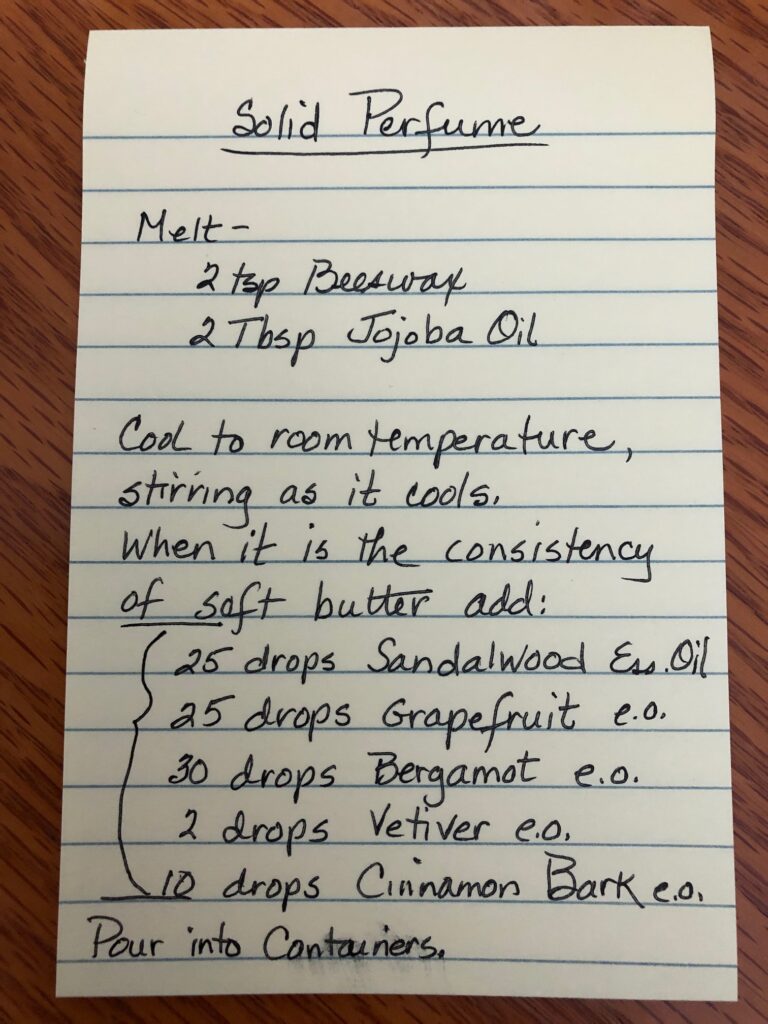
I came across a new recipe for a solid perfume that sounded like it might work. For one thing, it had way more essential oil incorporated into the mix. For another, the procedure was a little different so I thought I’d give it one more try!
Here is the recipe:
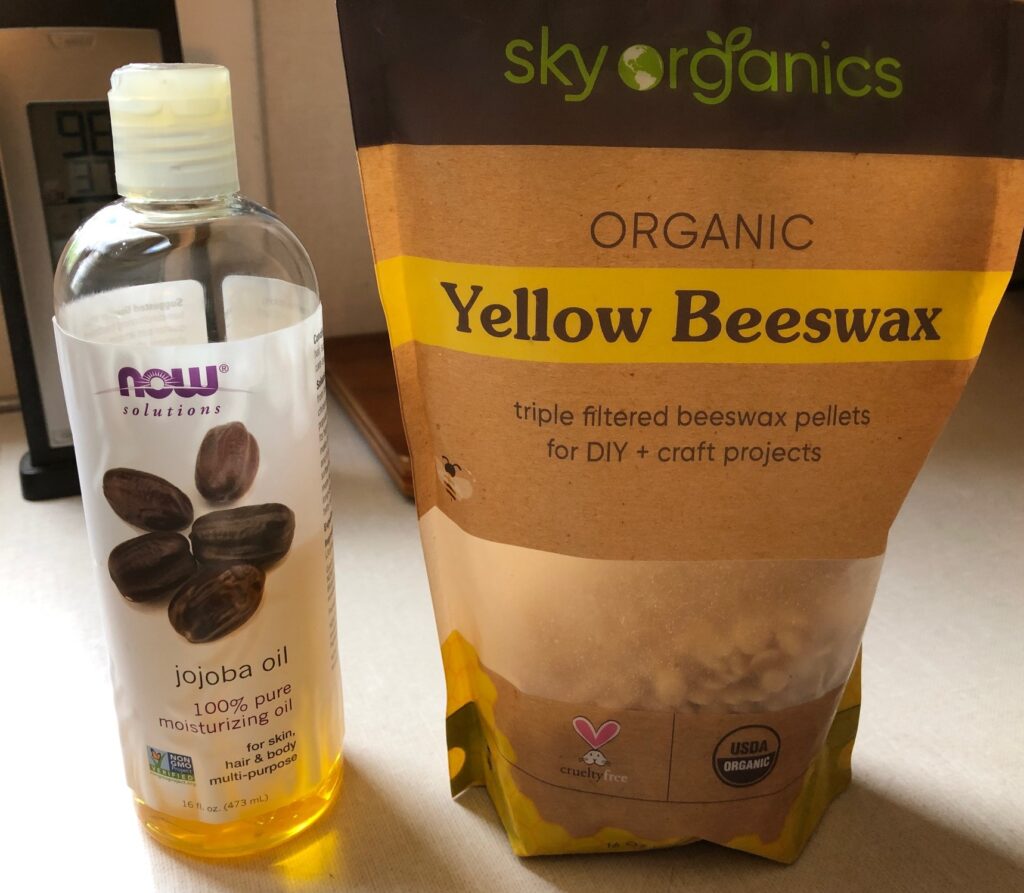
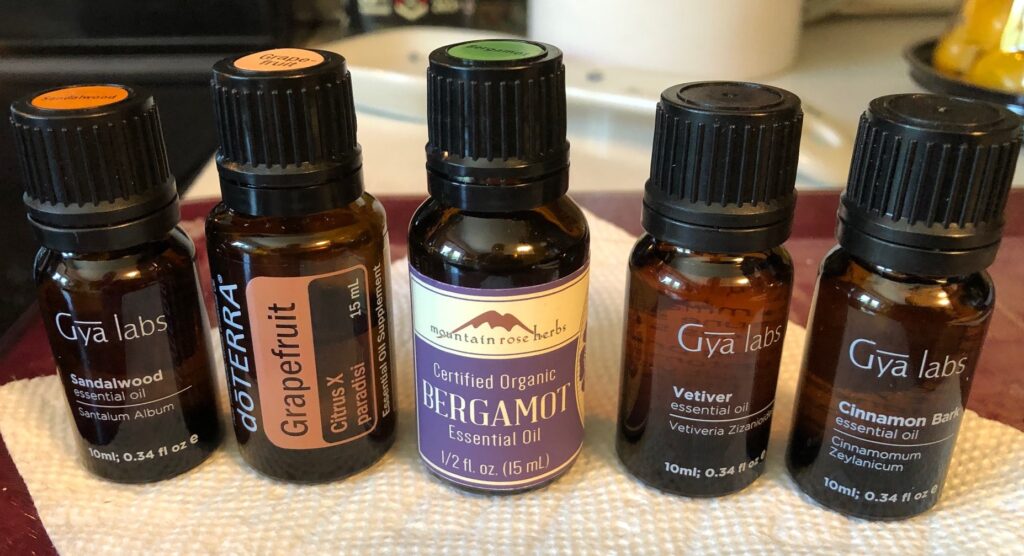
I first needed to order two of the essential oils that are listed but I did not have…Vetiver and Cinnamon Bark essential oils. Since I can’t rely on my nose to tell me what this combination would smell like, I just followed the recipe.
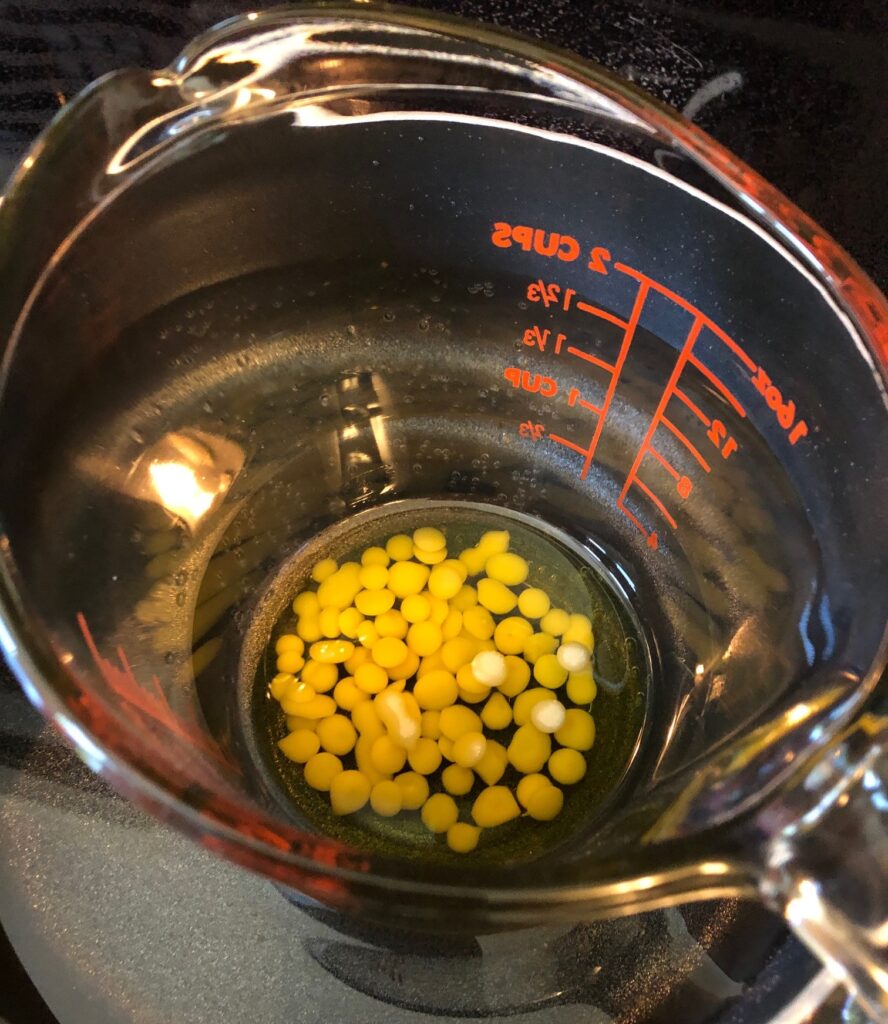
Once I had all the essential oils, I began with the beeswax and Jojoba oil. I measured them into a heat-safe glass cup and set the cup in a pan of water on the stove.
Heating the pan of water on the stove did not take long.
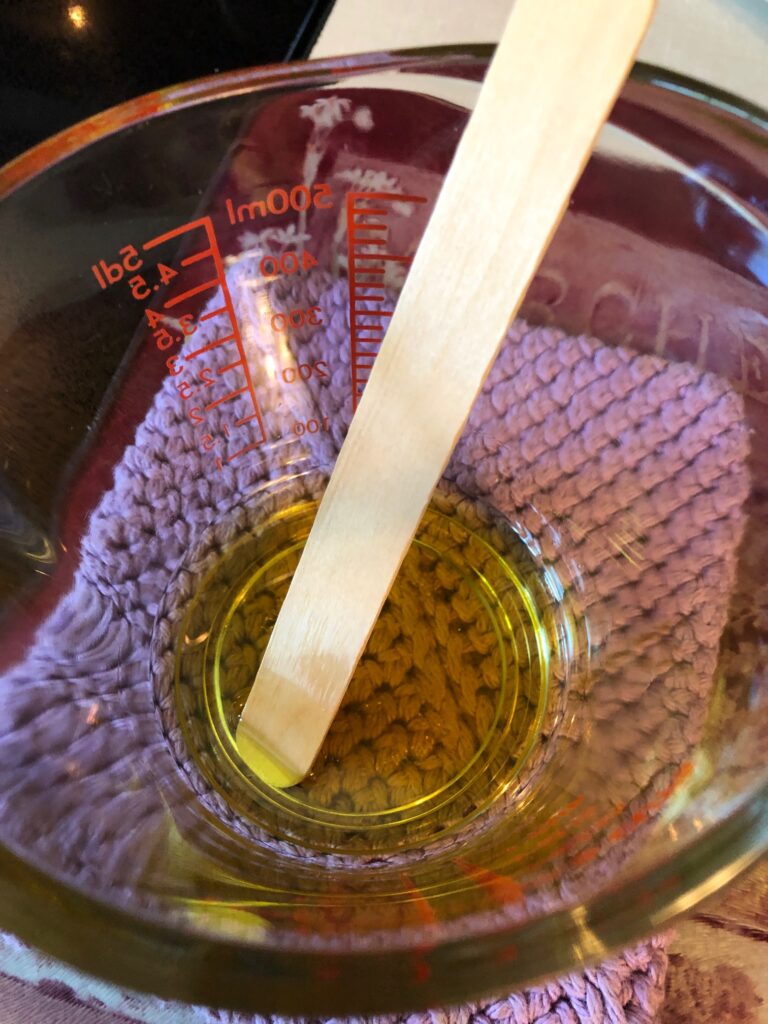
When melted, I removed the cup from the boiling water and started stirring. Let me tell you…I very quickly decided I would be there for a very long time waiting for it to get to room temperature!
I stirred for a while but then decided to just start adding the various oils. I stirred well between each addition. I did not see it turn into a “soft butter” consistency. I was too impatient!
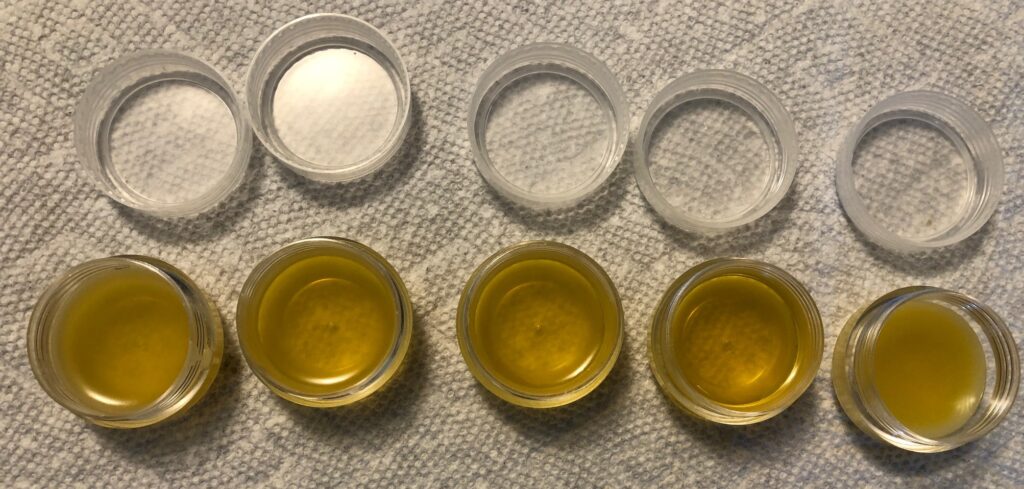
Then I poured the mixture into my tiny containers.
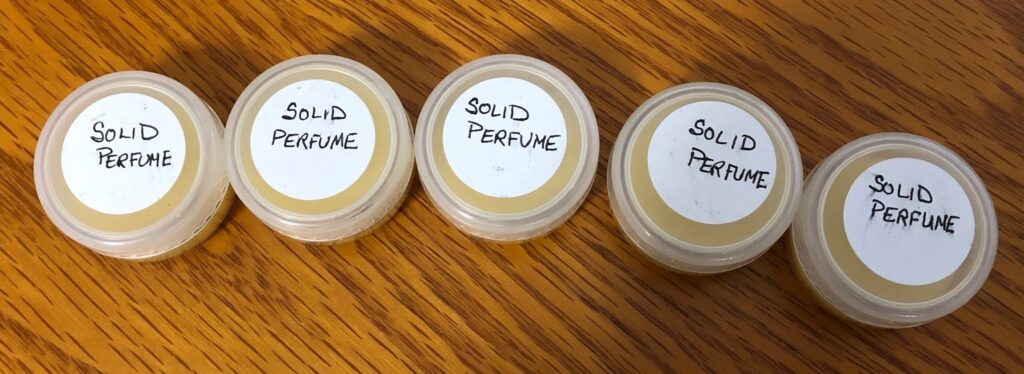
It took less than 30 minutes to cool and set up.
It looks like it was successful! It is not a flowery scent…more subtle and woodsy. I smell the sandalwood first but I suspect over time, the other scents will be noticeable. We’ll see how it is in a few days. This will need to be applied over a larger area, but I think I’ll enjoy it!
So, don’t be afraid to experiment…sometimes you discover something new! Enjoy!
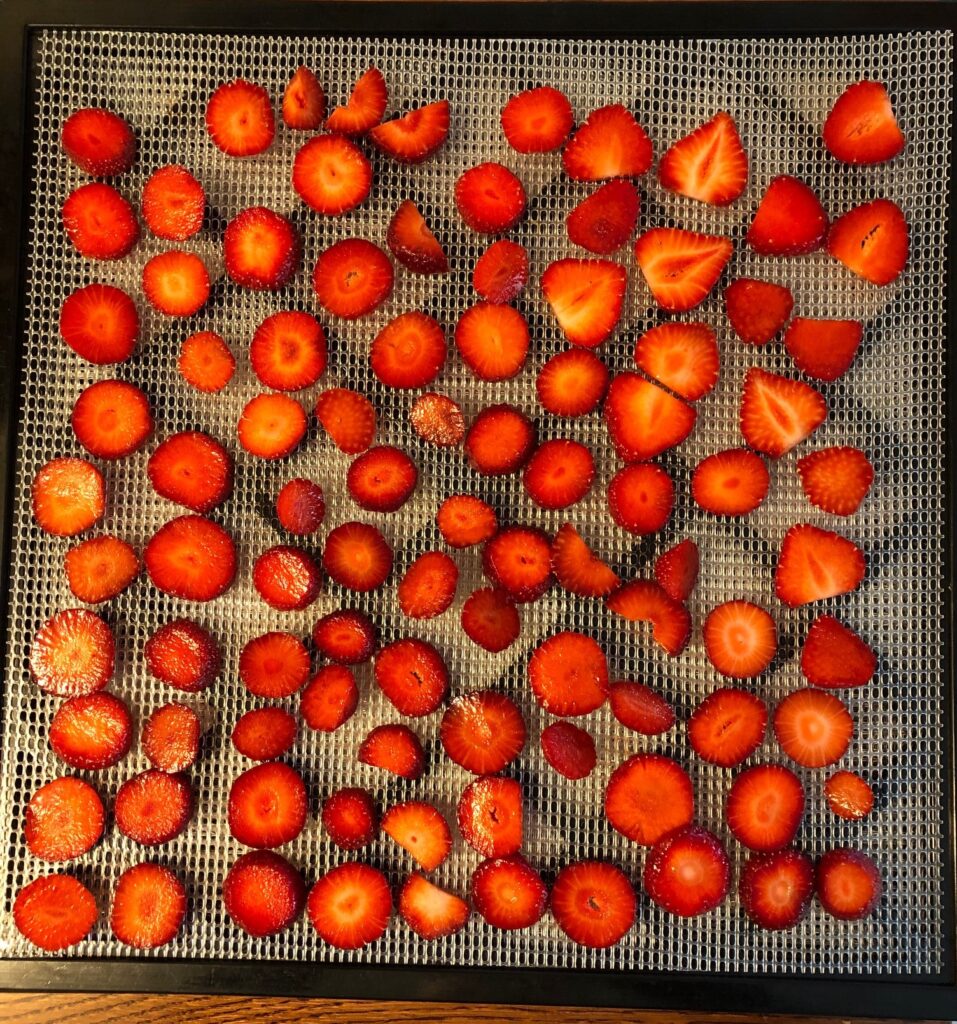
Strawberries are in season in Pennsylvania…everywhere, except in my garden! So rather than get upset, I managed to find fresh, yummy strawberries at local farmer’s markets. I thought I’d start with just two quarts, while I worked to remind myself how to do it. The dehydrator sits quietly in my garage most of the year, but from July to September it gets heavy use. Dried fruits make great snacks and toppings for cereal. Dried vegetables make quick additions to vegetable soups. The last few days, I focused on strawberries and as you’ll see…relearning how to use the equipment is always my first step.
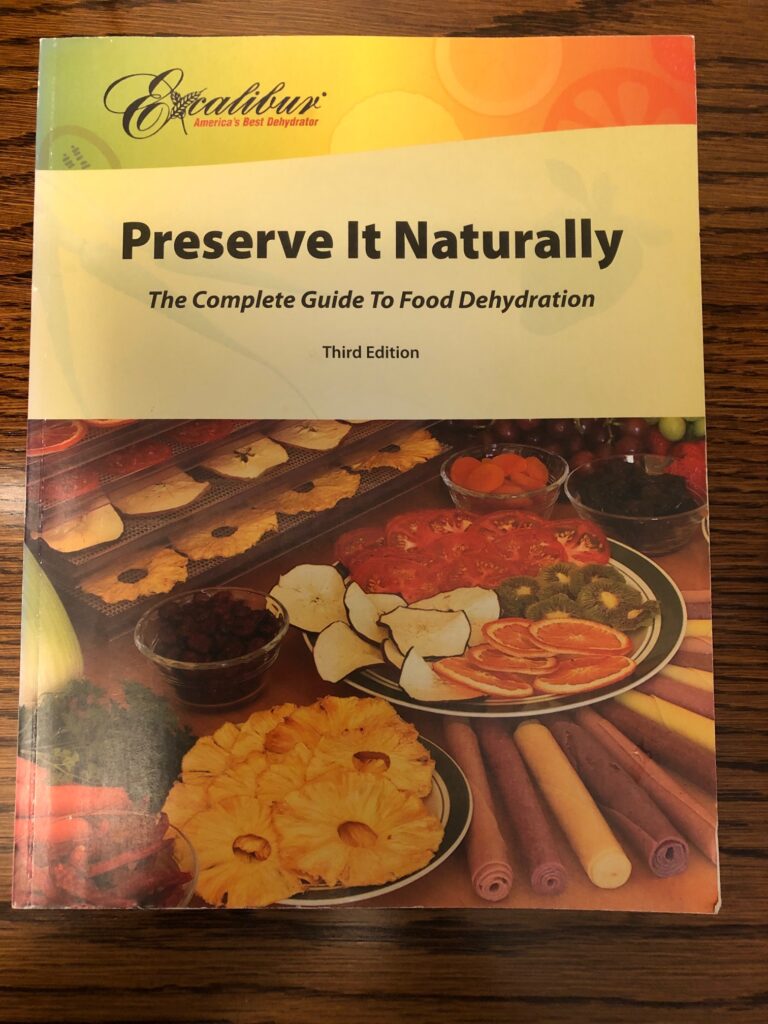
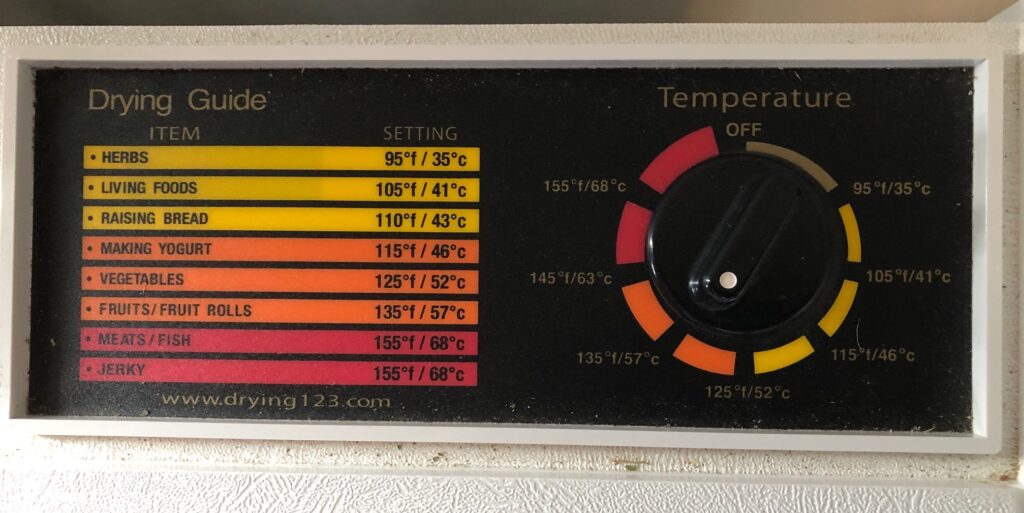
I pulled out the book that goes with my dehydrator:
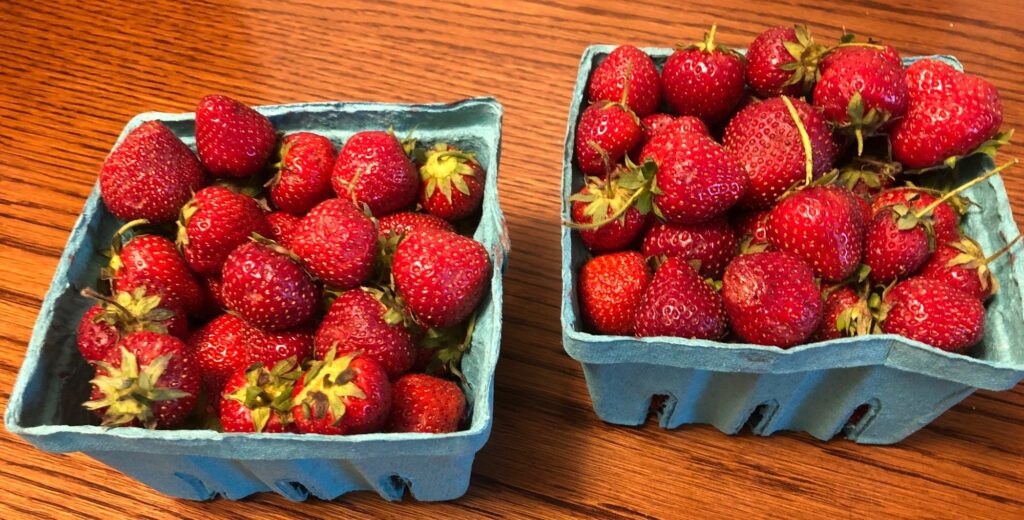
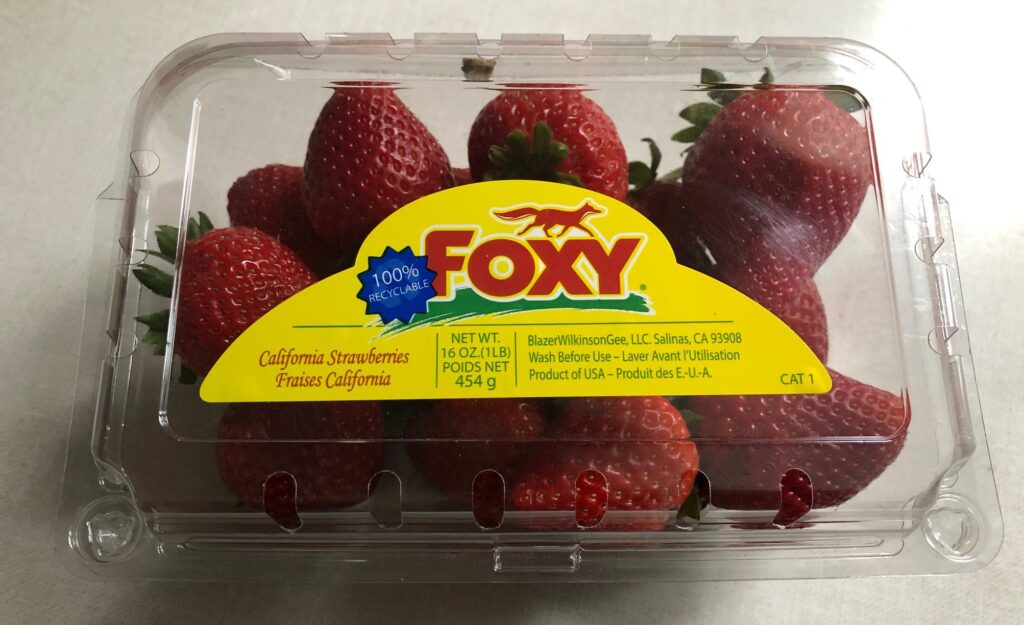
Then I picked up two quarts of strawberries at a local market:
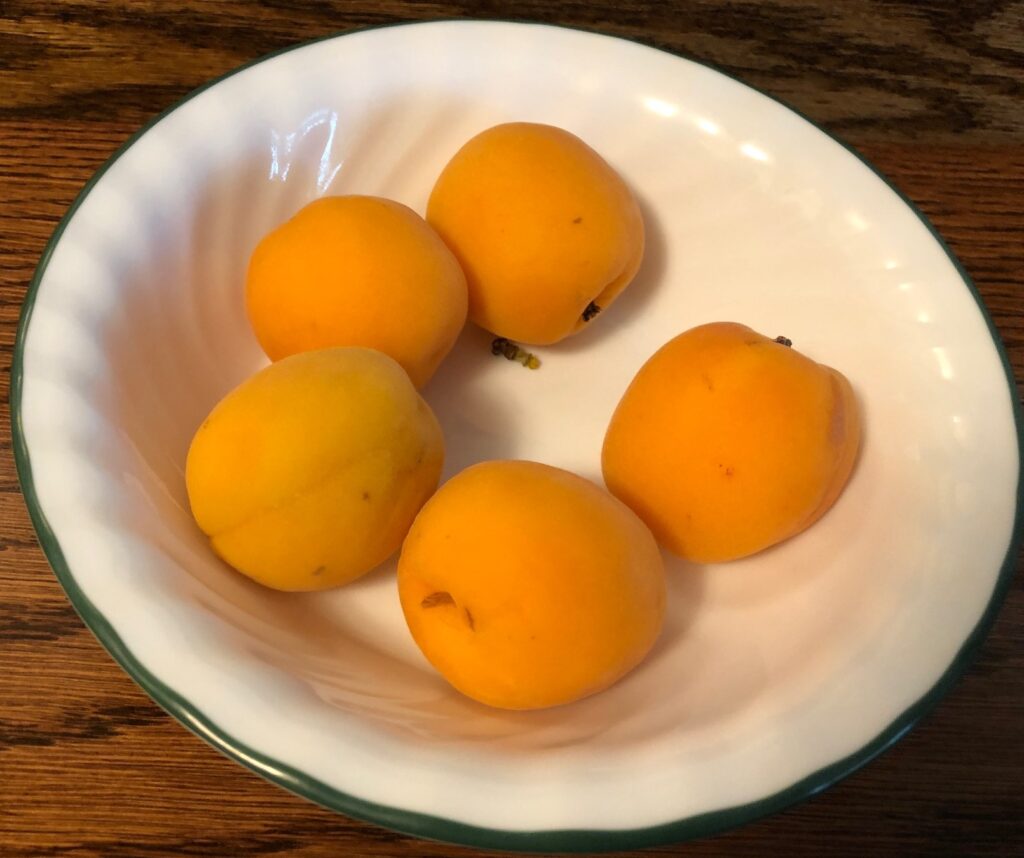
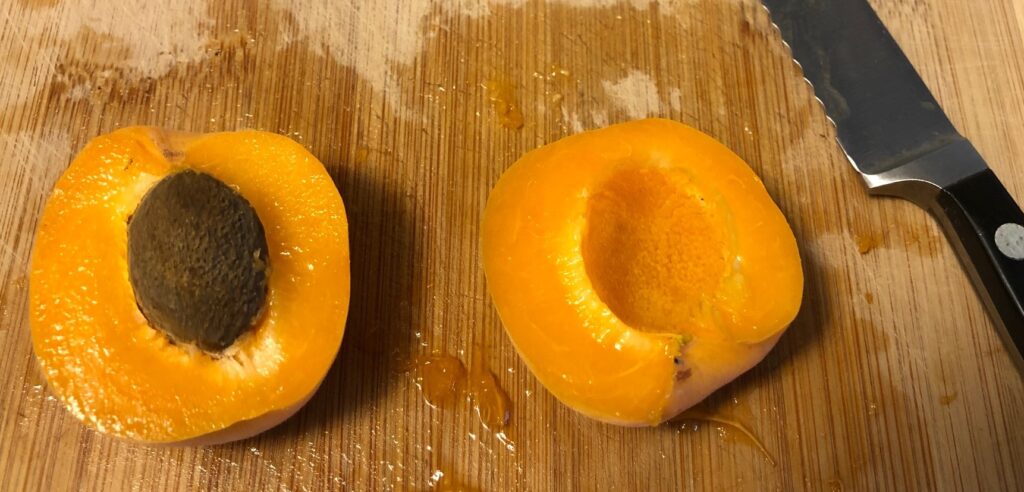
I also had a few apricots sitting on the counter that were ripe and decided to add them to a tray:
I pulled the trays out of the dehydrator and got to work. Washing and slicing very ripe strawberries is work, but delicious…I think every now and then one would jump right into my mouth!
My First Attempt to Dehydrate Strawberries
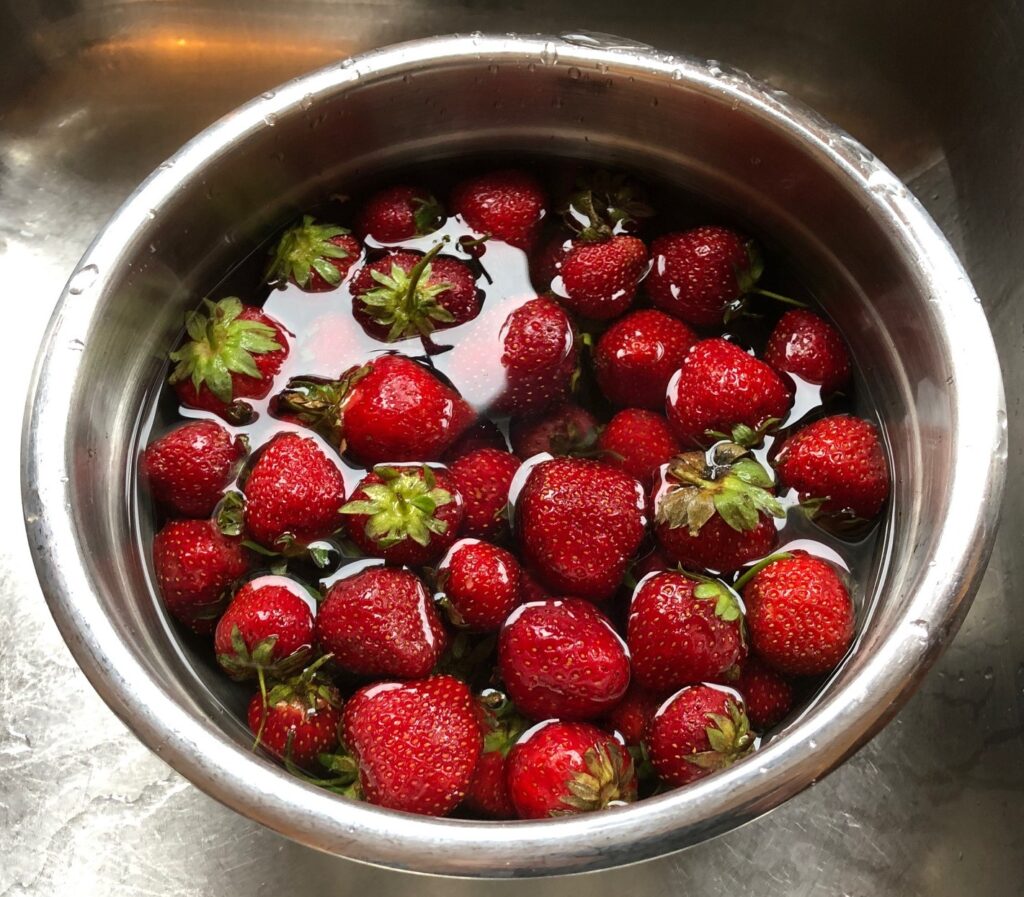
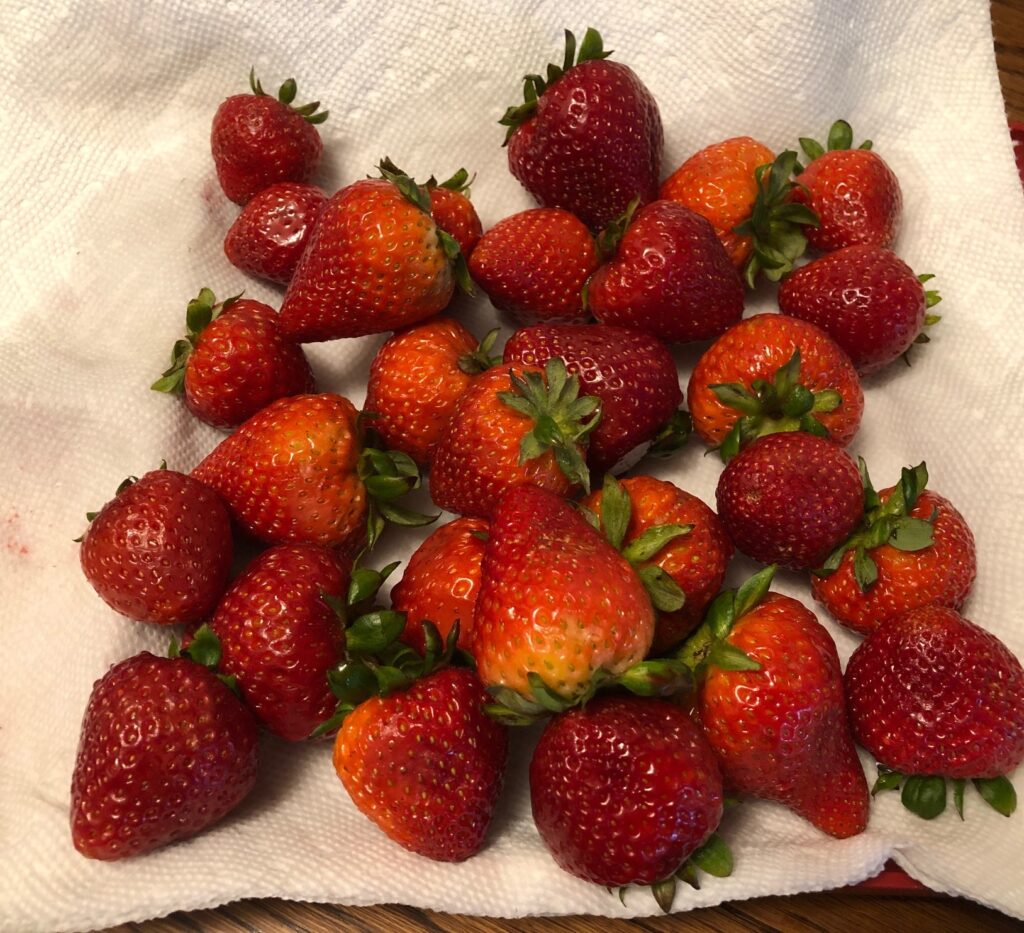
First, I washed the strawberries:
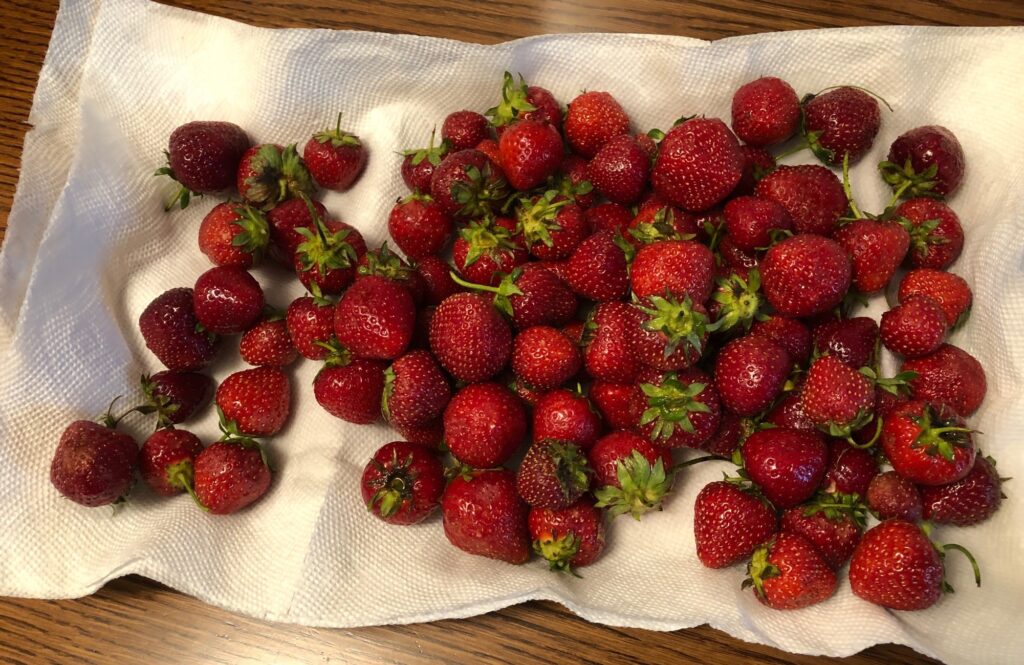
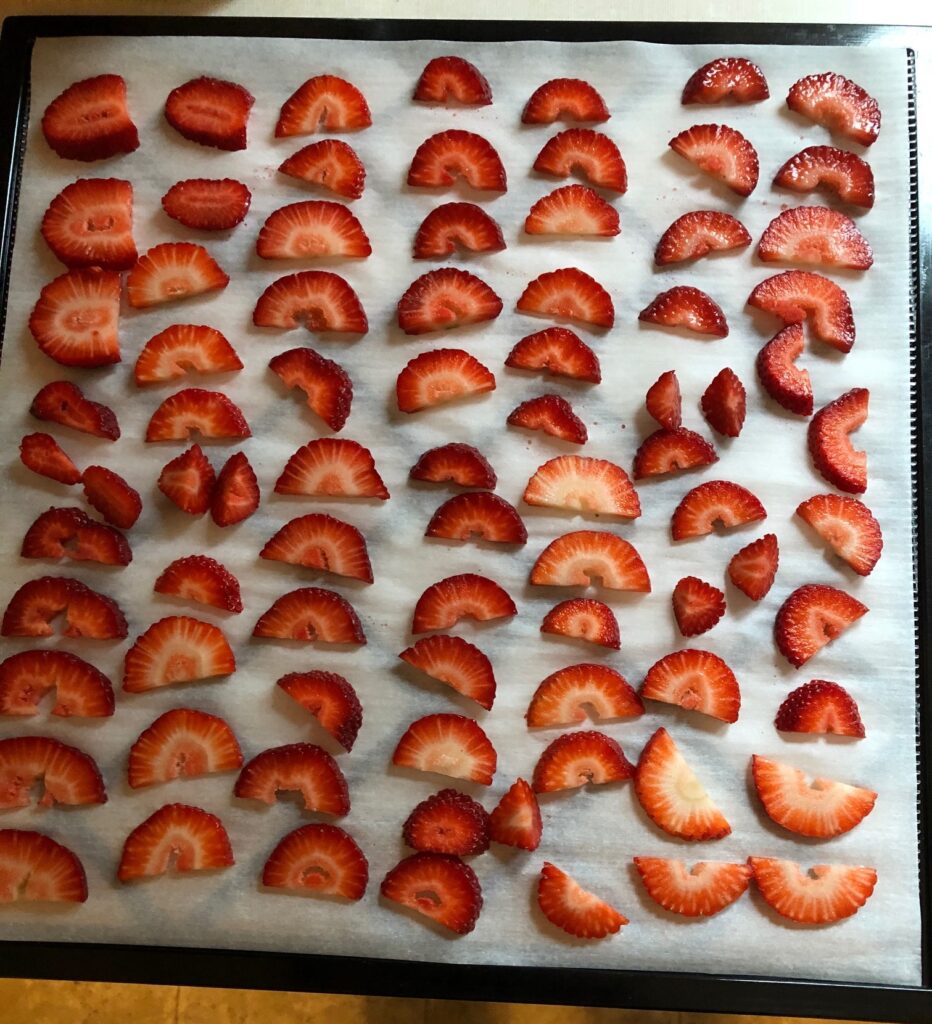
Just a few minutes in cold water was enough.Washed strawberriesSliced and ready for the dehydrator
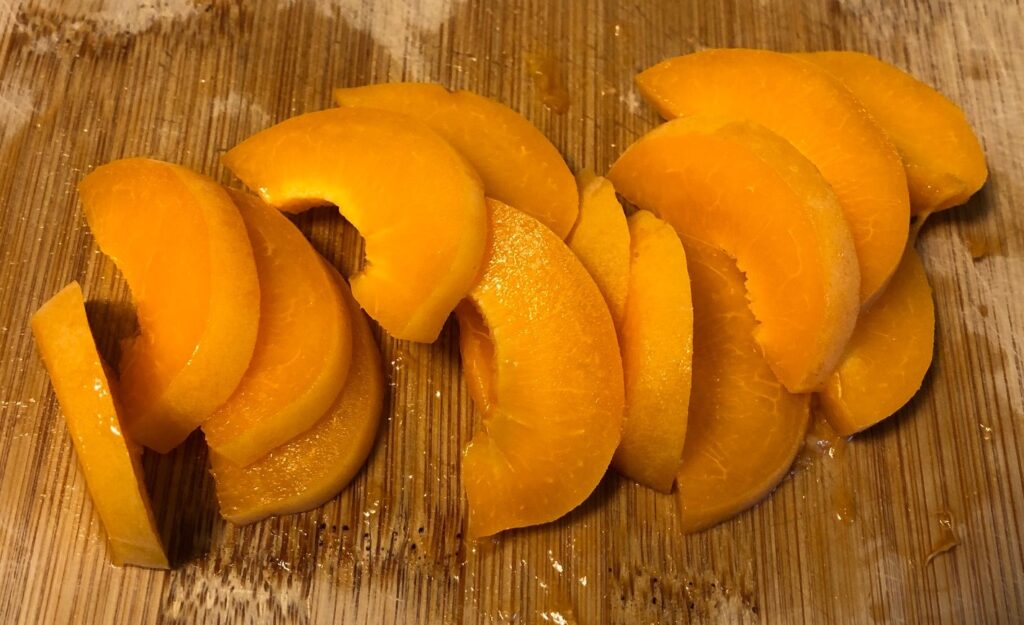
Apricots were pretty easy:
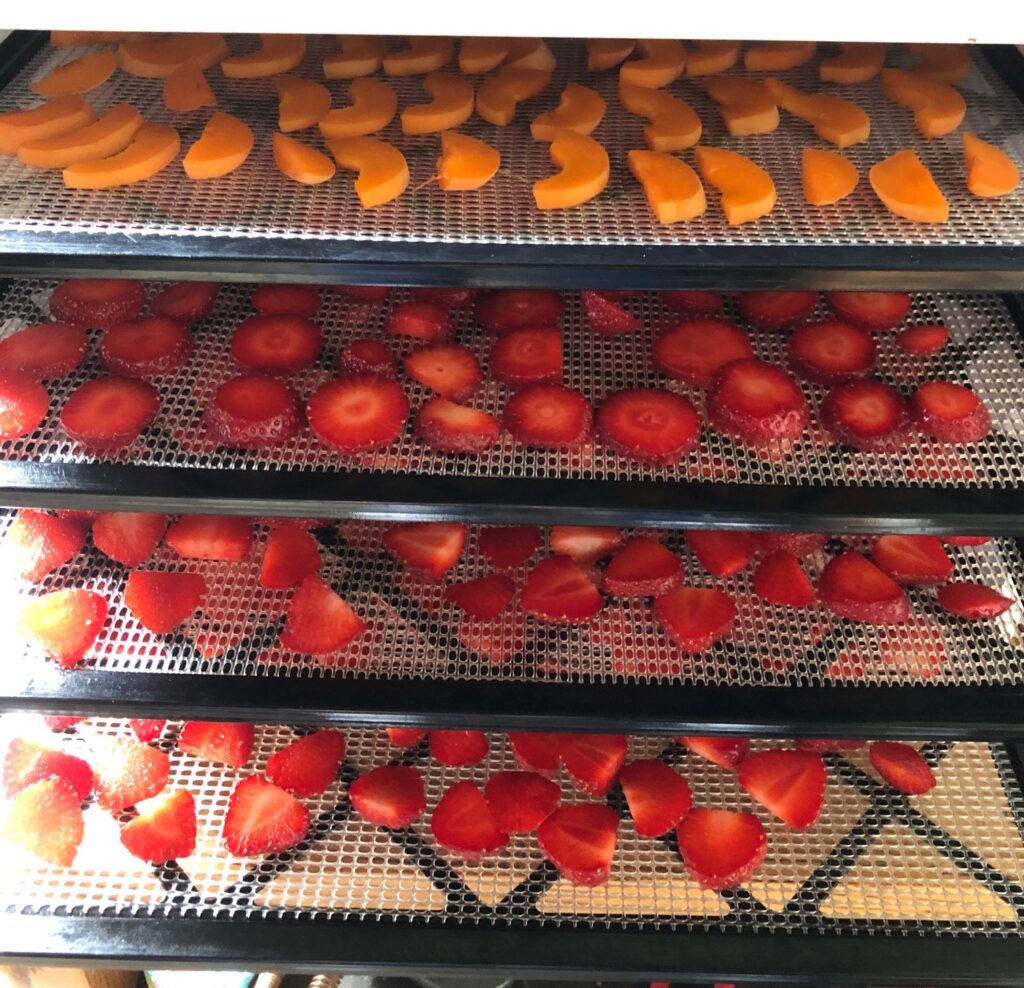
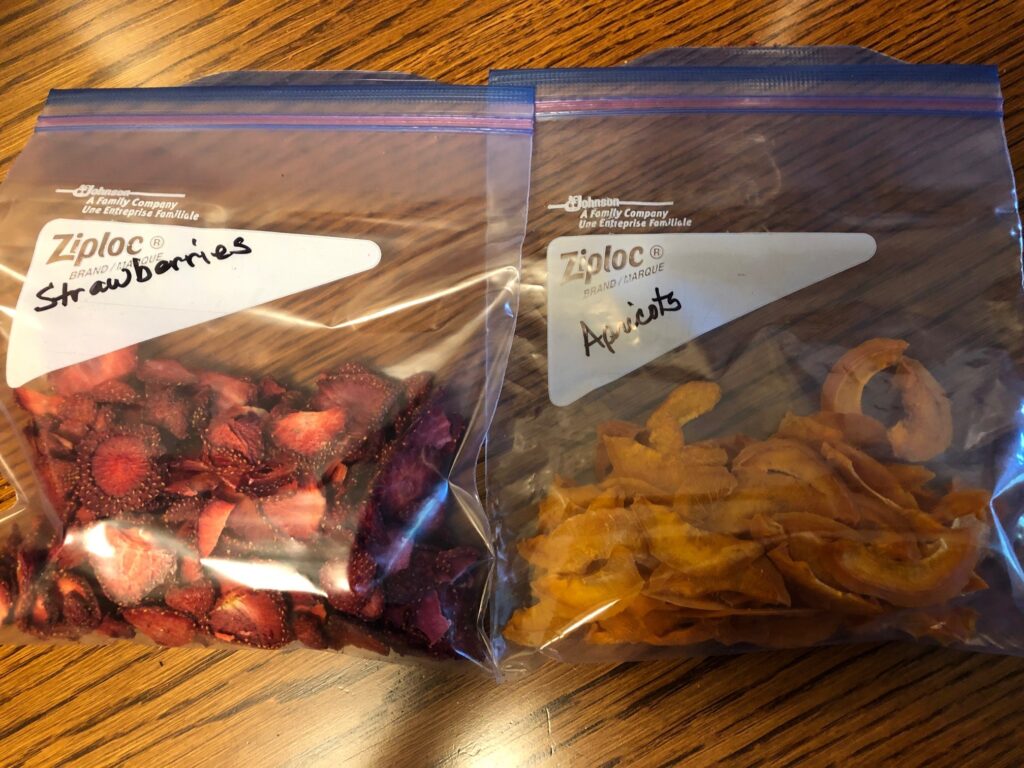
Five apricots filled a trayFilled 4 trays (out of 9) so I spaced them out.Temperature set at 135 degrees for 6-8 hours.
Well, let me tell you something I had forgotten:
Soft, juicy fruit needs a sheet of parchment paper under it…otherwise, it will gradually sink into the grid of the tray and practically glue itself to the grid!
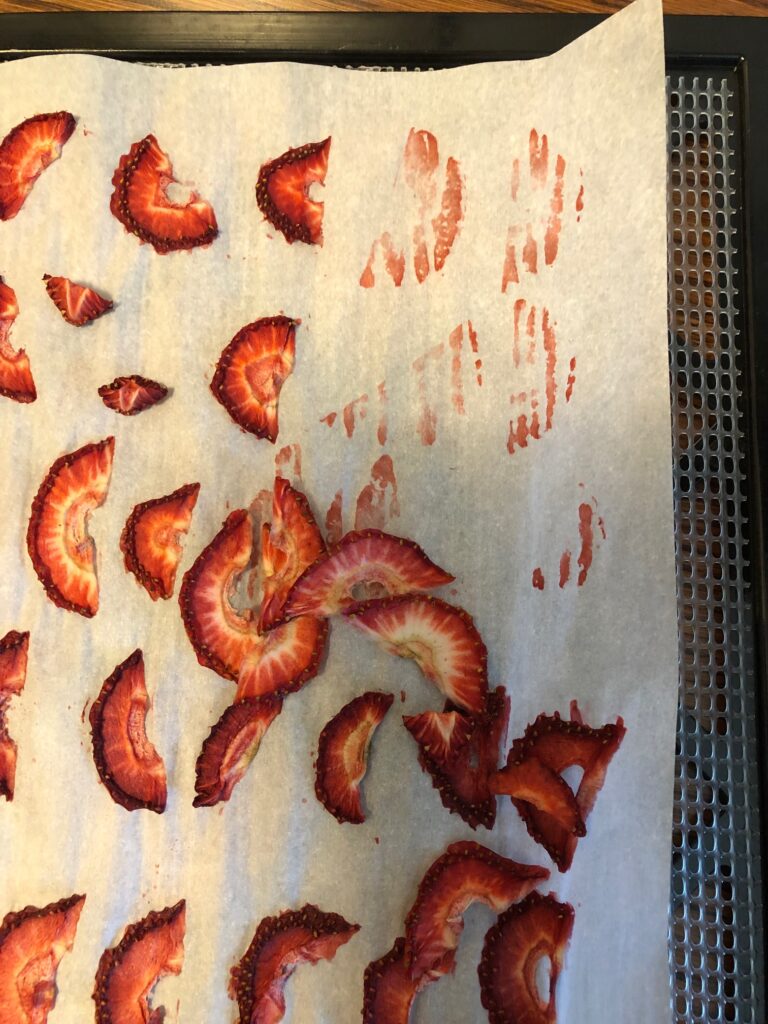
After 6-7 hours, they were ready to remove. Yikes! They were stuck fast! I could chip most of them off but it was tedious.
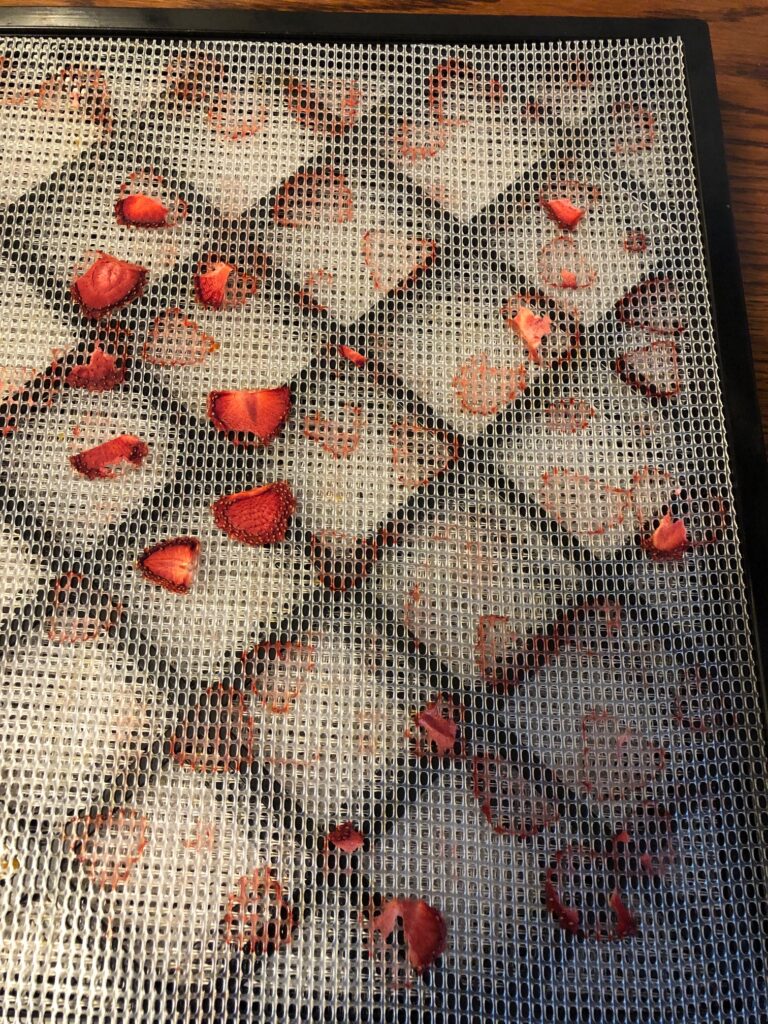
Looked great, but……I just couldn’t chip these off the tray. I had to soak them in a tub outside until I could wash them off.
Actually, the larger pieces of apricot did much better because they weren’t so juicy.
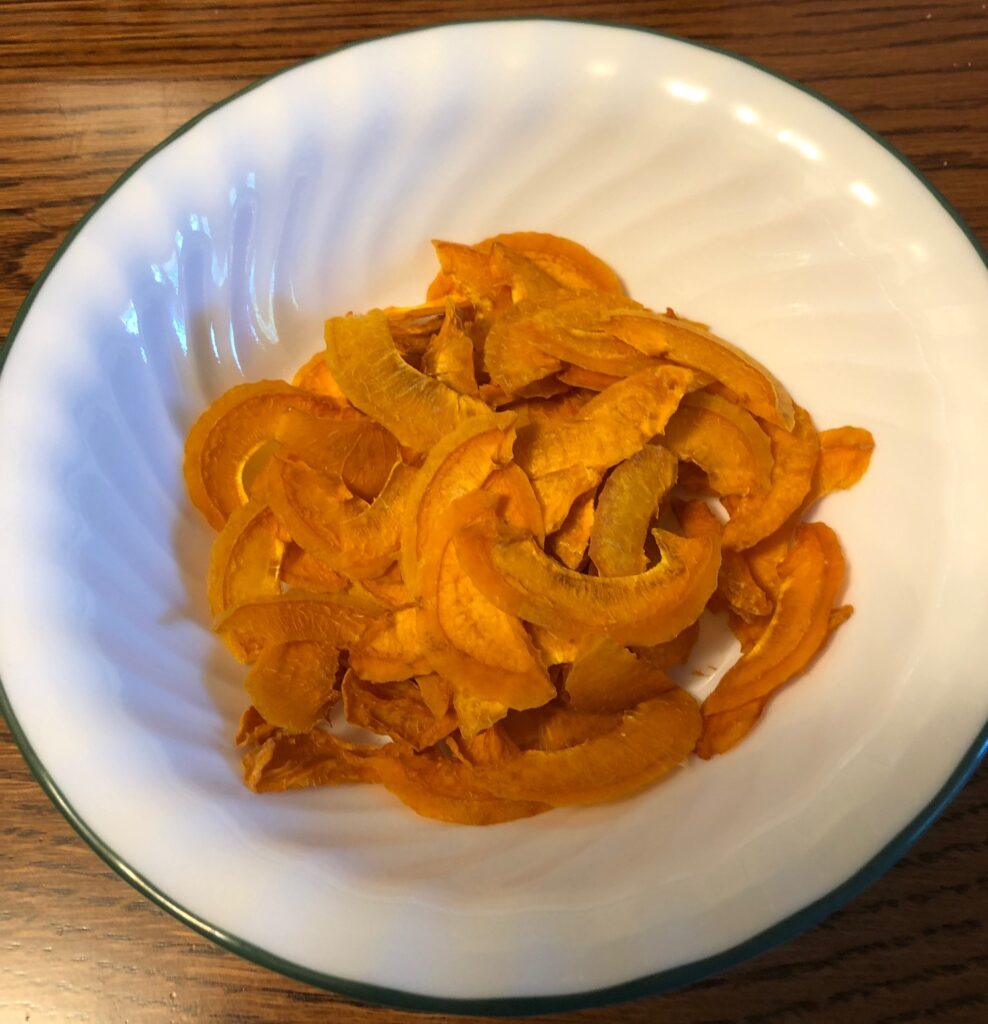
Made pretty yummy snacks!
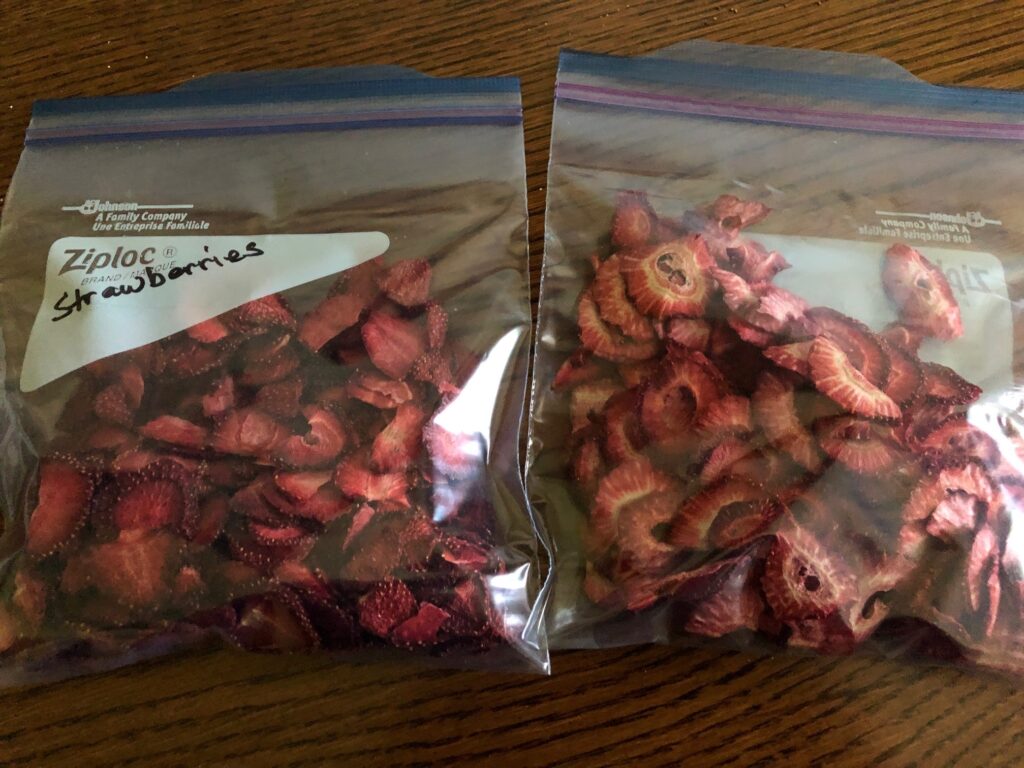
So, my first attempt made two small bags of dried fruit, but I had to take the trays outside to soak off all the bits of fruit that was glued on the plastic grid!
My Second Attempt
The next day, I ran to the grocery store and picked up more strawberries…not local but less juicy.
This time, I lined the trays with a sheet of parchment paper on top of the plastic grid.
I can buy parchment exactly the right size for the tray…14 inches square.When dry, the strawberries popped right off the paper!
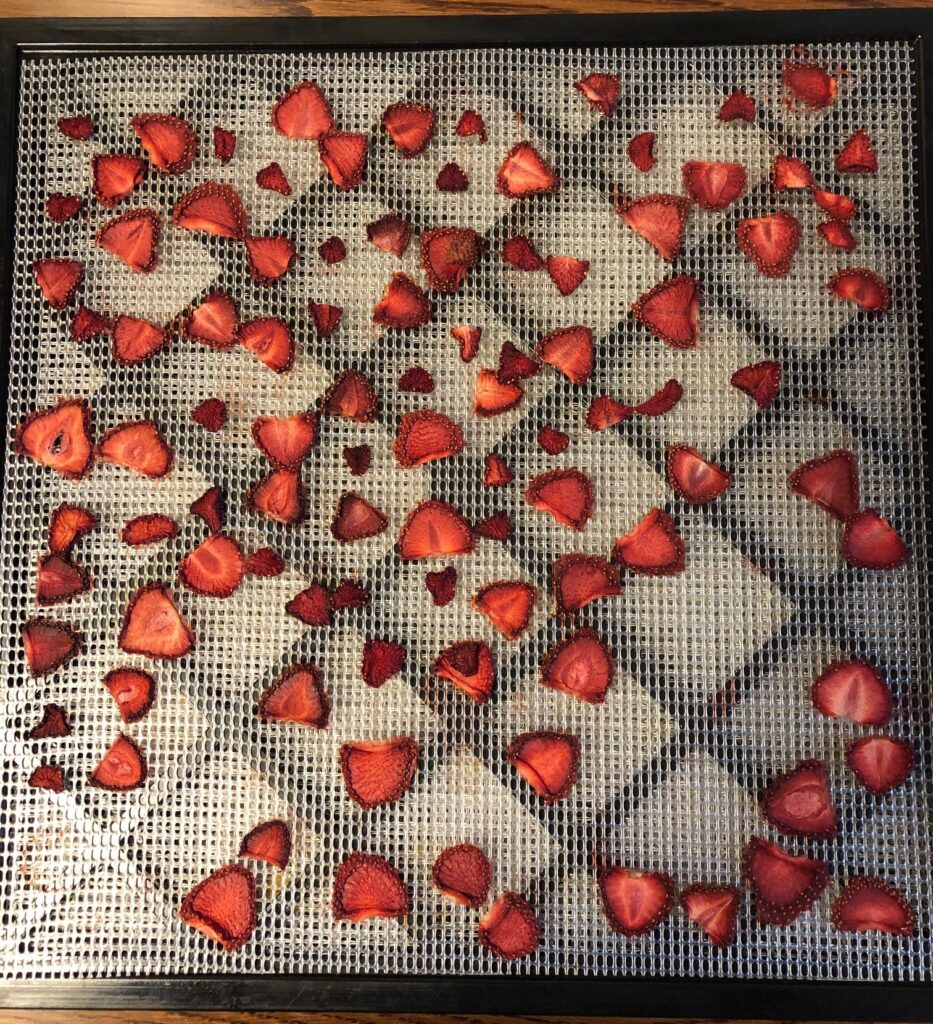
My second attempt made as many dried strawberries with MUCH less hassle! Yea! These will be great on top of granola and oatmeal!
What did I learn?
Always use parchment paper under soft juicy fruit (especially strawberries and bananas). The parchment is essential under fruit roll-ups, like applesauce or mixed blended fruit.
I think I’ll print this statement and tape it to the inside of my manual! Live and learn.
I finally finished my first attempt to make a door quilt on a piece of 12″ x 12″ plywood. I was determined to make this painting on wood that hopefully would maintain it’s bright colors. Fabric quilt blocks were my original solution to needing a door decoration that would fit in the flatter space between the front door and the screen door. Last year I managed to make six quilt blocks that solved the problem, but when I started pulling them out this year the colors had faded and looked pretty sad. (See https://marykisner.com/prepping-for-new-door-quilts/).
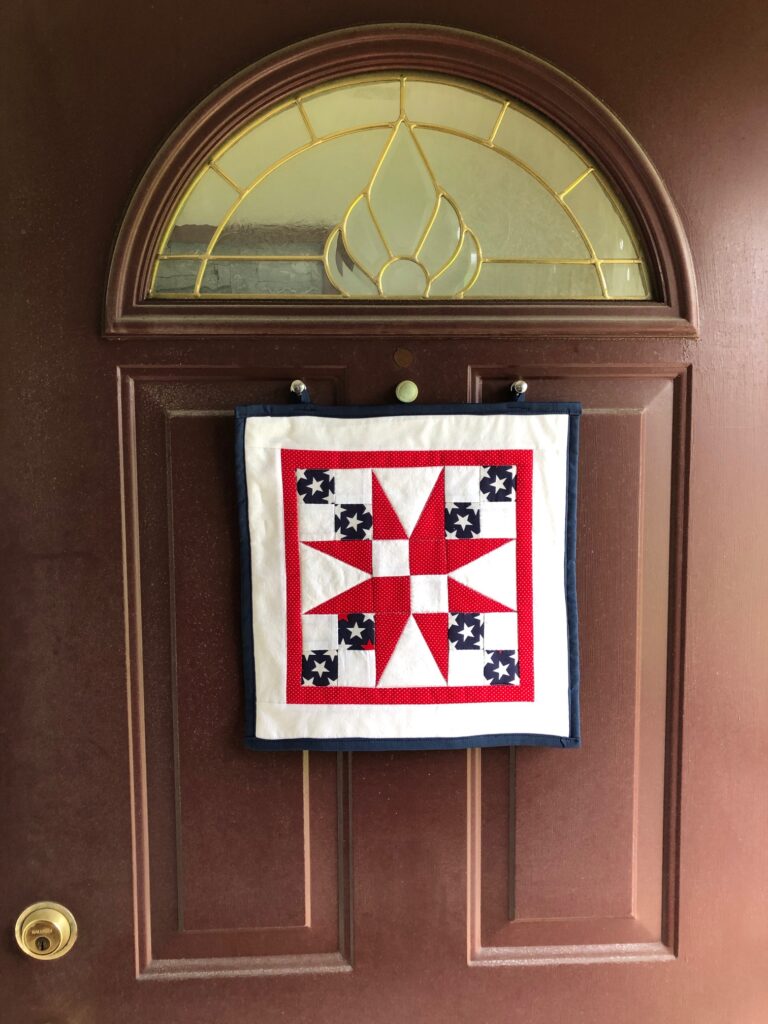
So, I had Bert cut two pieces of 12″ x 12″ plywood for me to play with (just in case it didn’t work, no point in having a bunch cut out!). First, I wanted to replace the fabric patriotic quilt block that was on the door right now:
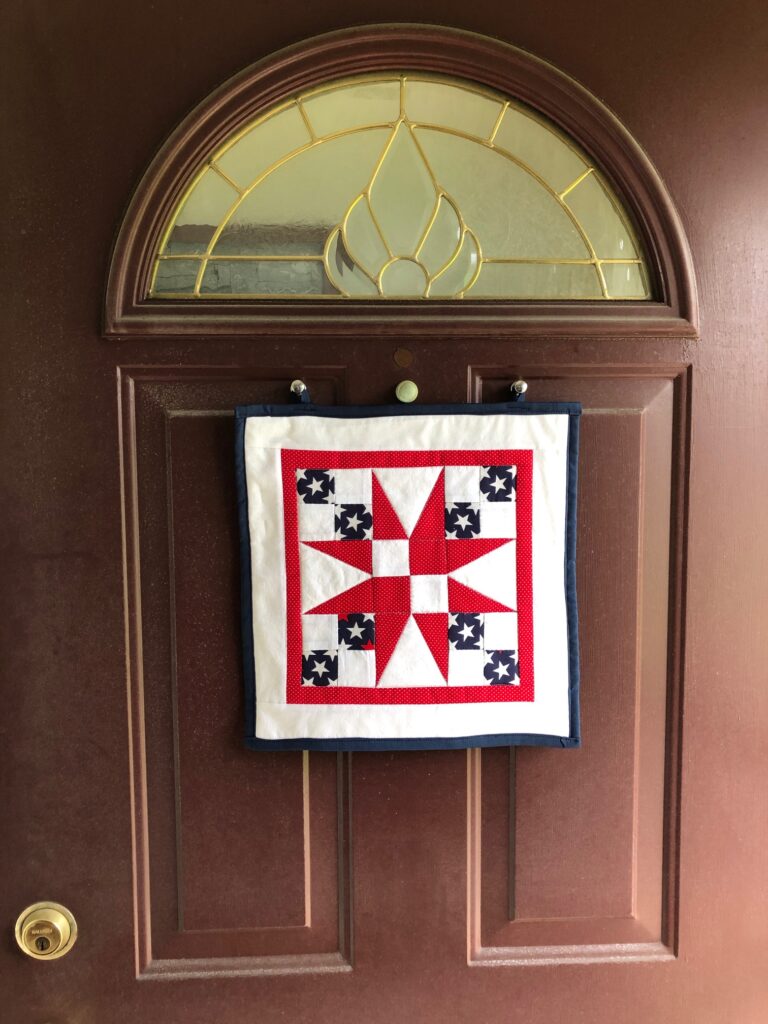
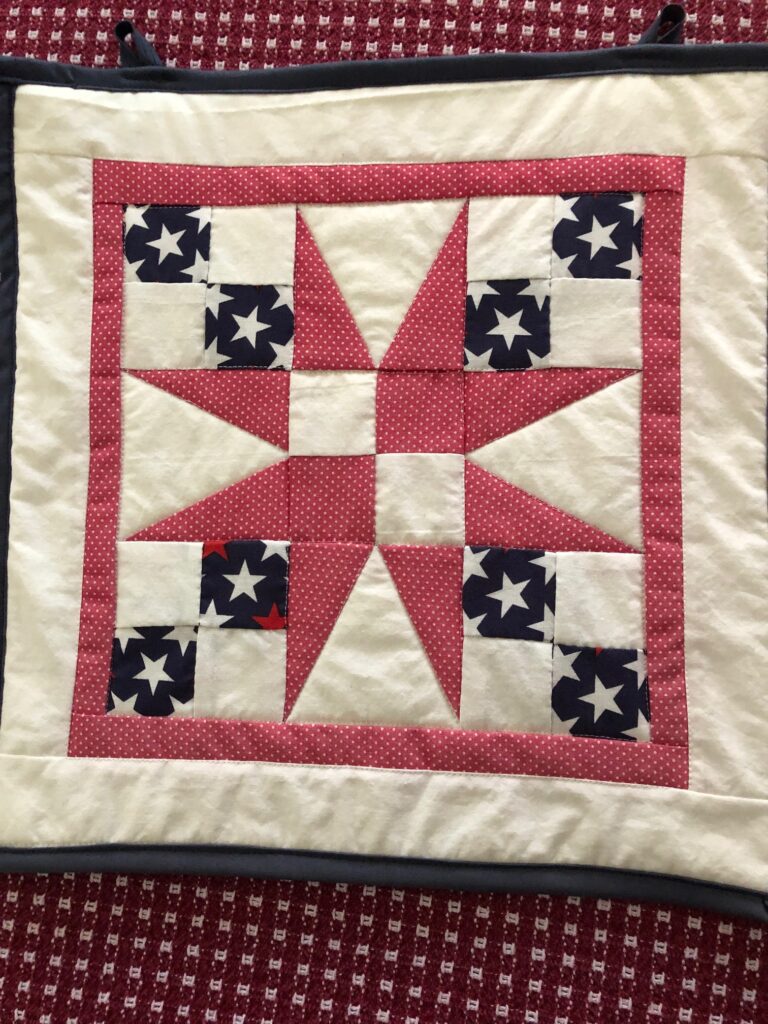
This picture was taken when I first put it up last year…nice bright colors.
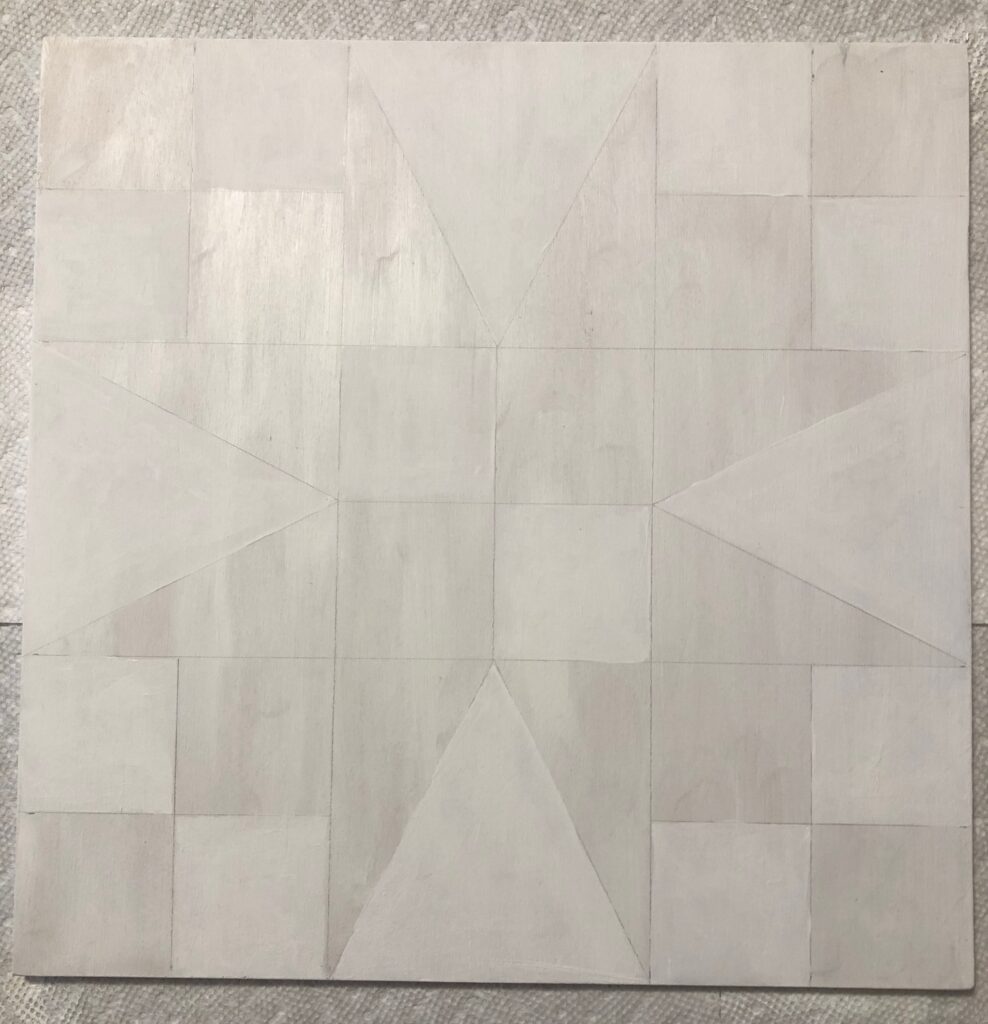
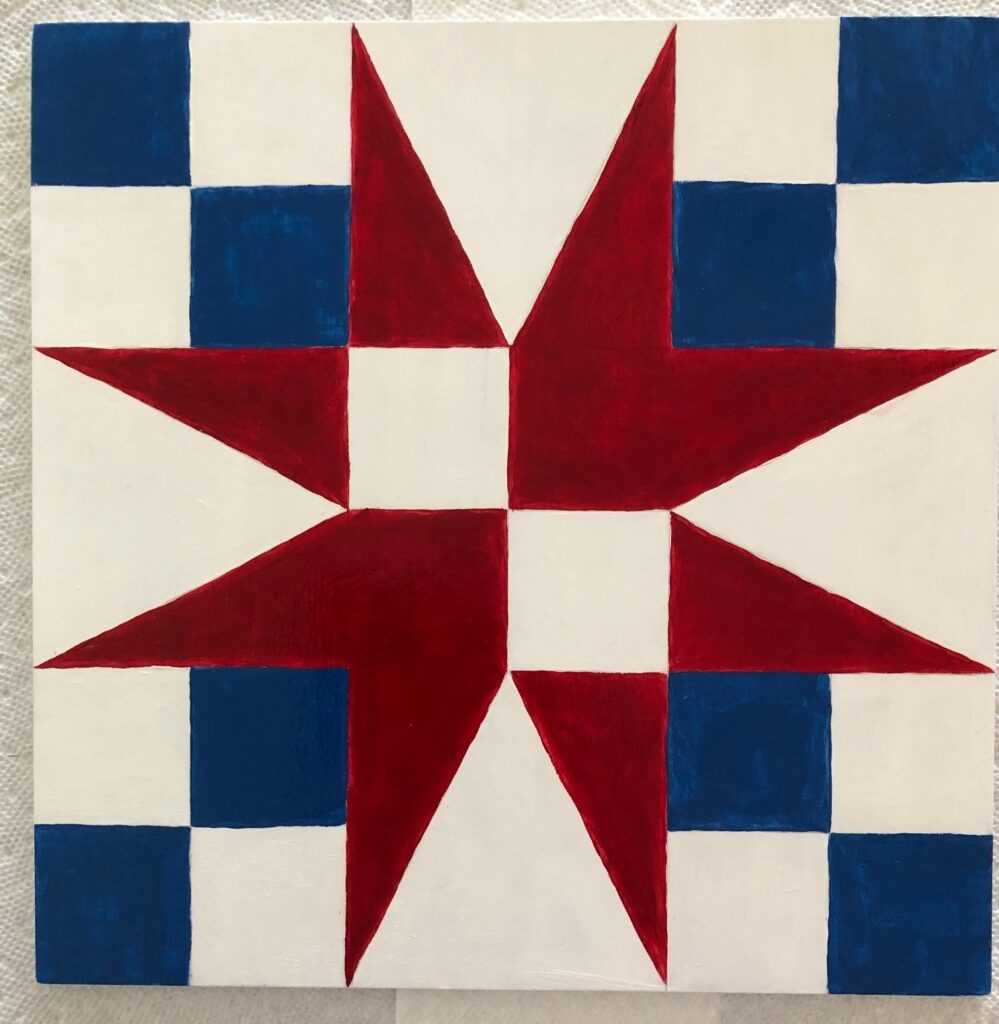
I first painted the block, both sides, with a base coat of white. When dry I sketched out the pattern and put a second coat of white paint on the corresponding white sections:
This looked pretty easy but I was re-learning how to use various brushes. Not as easy as I thought it would be!
Then I started with the red paint and filled in those sections. It took a second coat to get the solid color.
I’m certainly not as steady as I should be to do those straight lines!
Then I filled in the blue sections:
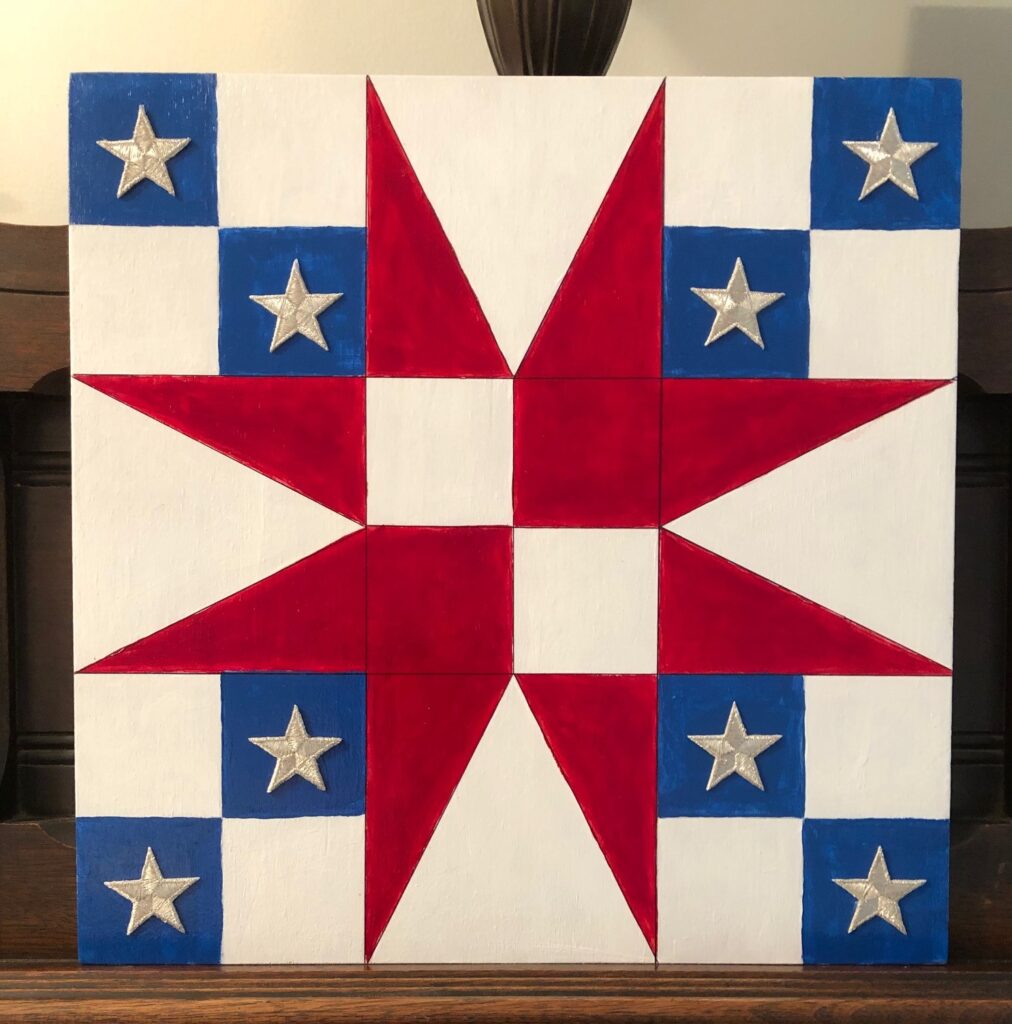
Now the dilemma…the original pattern had white stars on the blue squares. I did that with some fabric that had stars in the pattern and managed to get at least one white star centered in the block. However, how to do that with paint? After seeing how unsteady I was with a tiny brush, I did a quick run to JoAnn Fabric Store and picked up some embroidered appliques of stars. Perfect!
After finishing the block with a satin finish acrylic spray, I just glued the stars to the blue squares!
Funny how different light made the colors brighter!
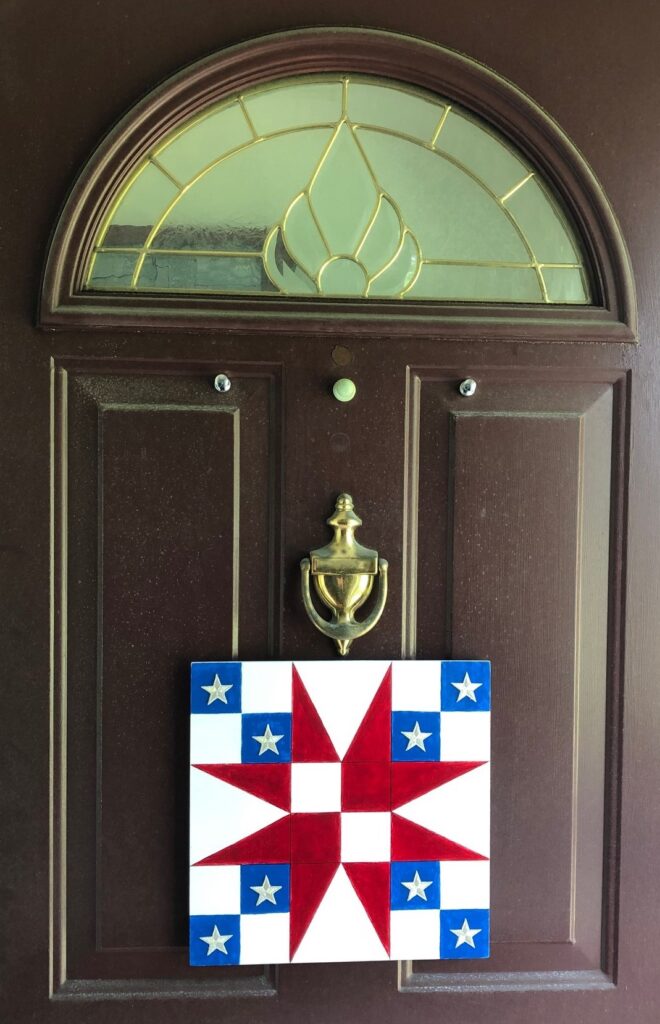
The block sat on my old organ by the front door for a week until Bert had time to figure out how to hang it on the front door. It couldn’t be hung the way the fabric blocks were because we have a door knocker right in the middle. The fabric blocks just draped over that with no problem.
Bert finally had to put magnets on the back (the door is metal under the paint!).
Now the block has to sit below the door knocker.
Oh well…now to see if the paint fades over time. This block should be appropriate through the 4th of July holiday. I’ll have to think about whether it’s worth it to make more in wood. Enjoy!
This is about the time the garden gives us hope for a good harvest! If a plant is going to die, right about now is when we know for sure that it’s time to replant something else!
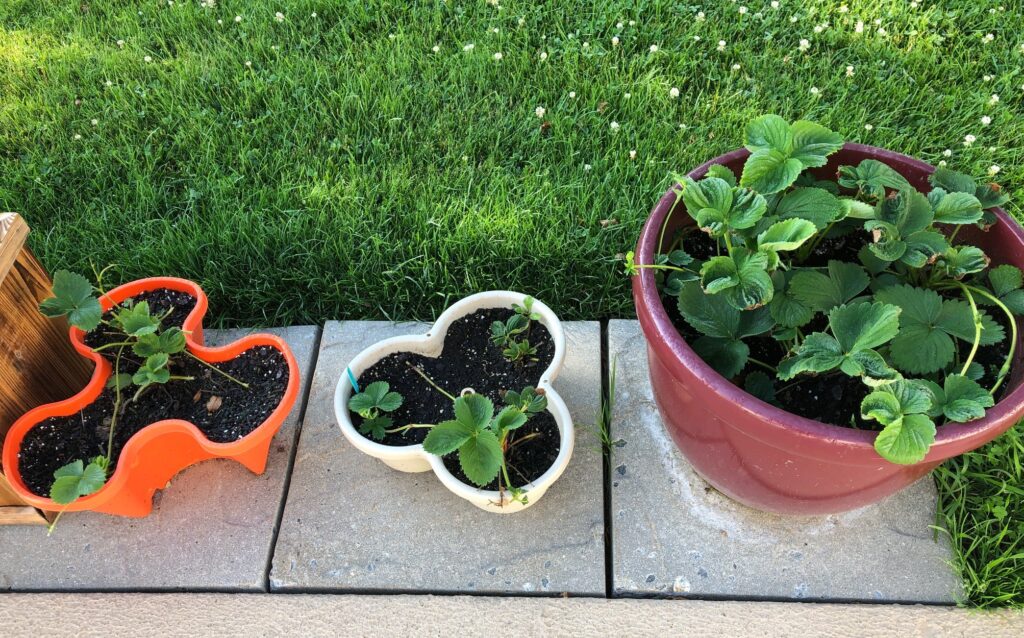
The hopes for abundant strawberries have been dashed, as one by one the plants withered and died. We started with a 5-tier tower, an extra bucket of 4 plants and a separate pot with 3-4 plants.
Strawberry tower in May.Strawberry plants in May.
We took apart the tower, thinking they weren’t getting enough sun, or water, or something. This is what we have left:
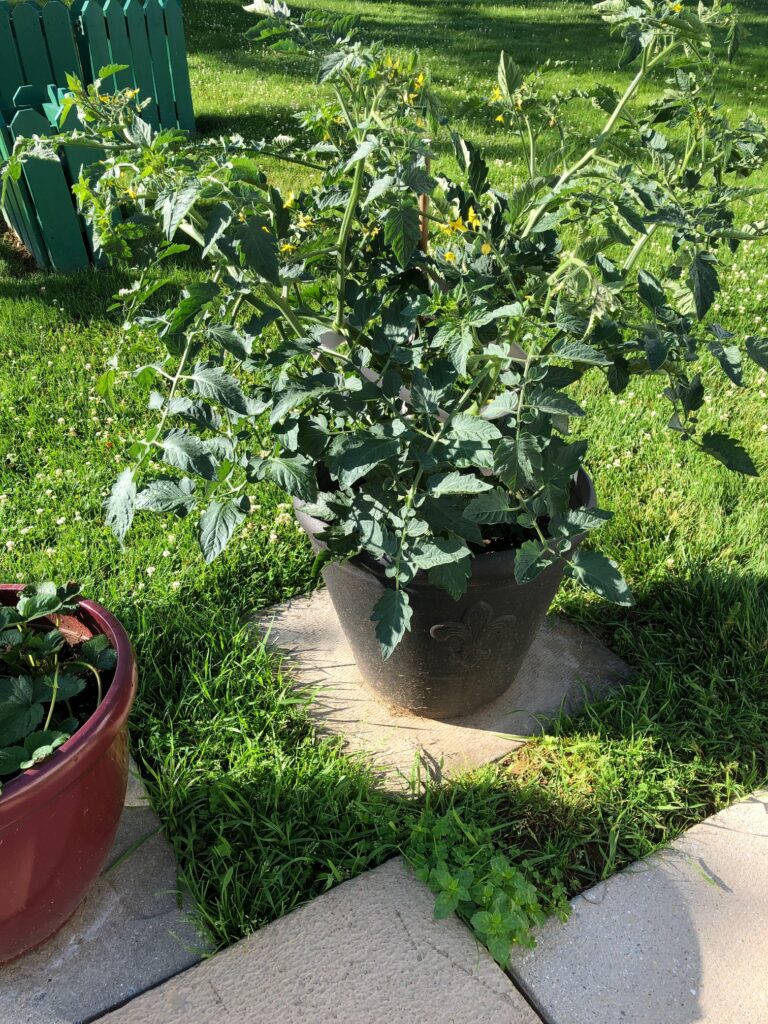
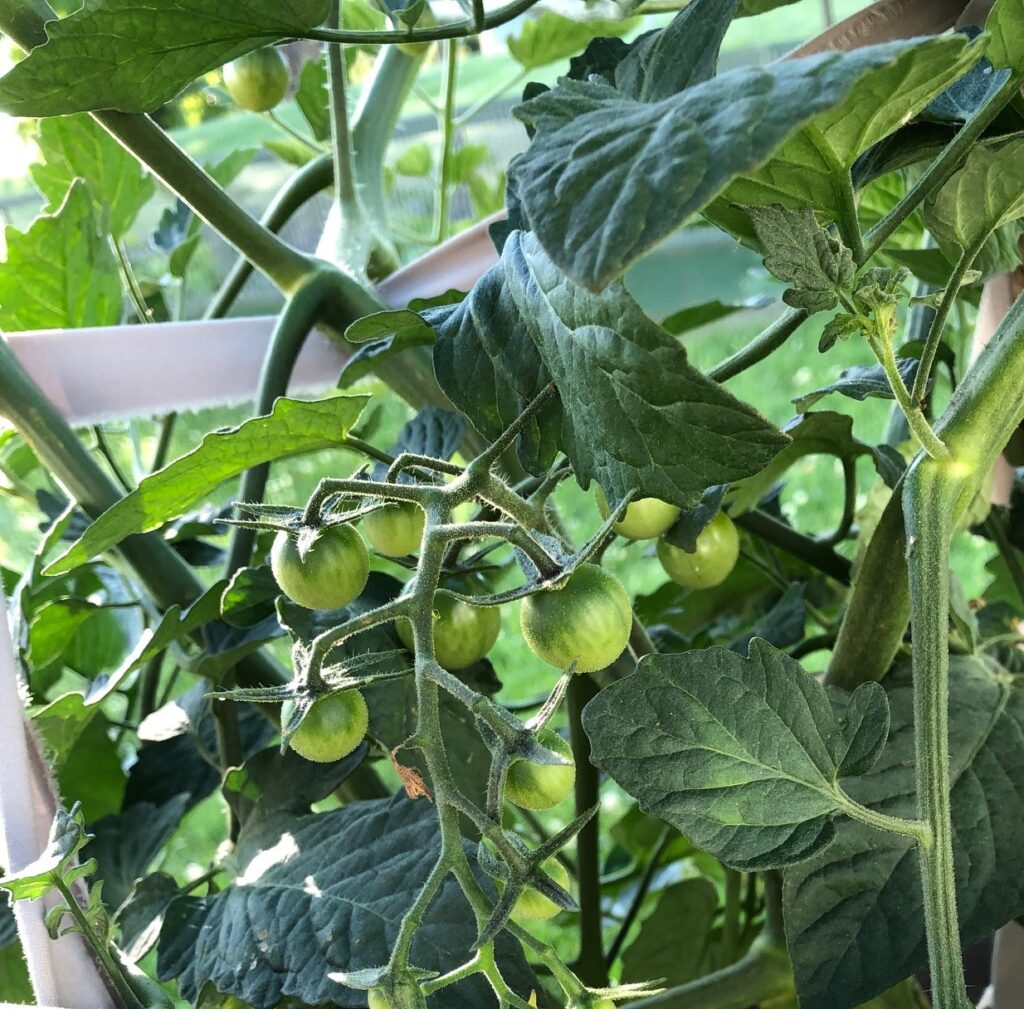
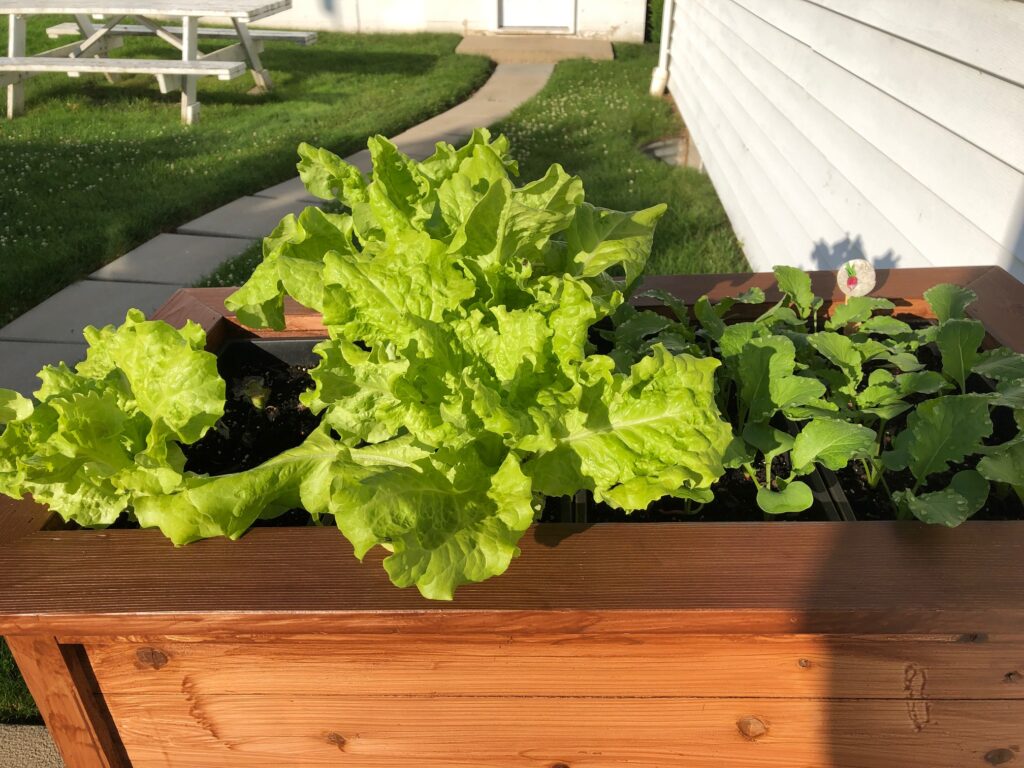
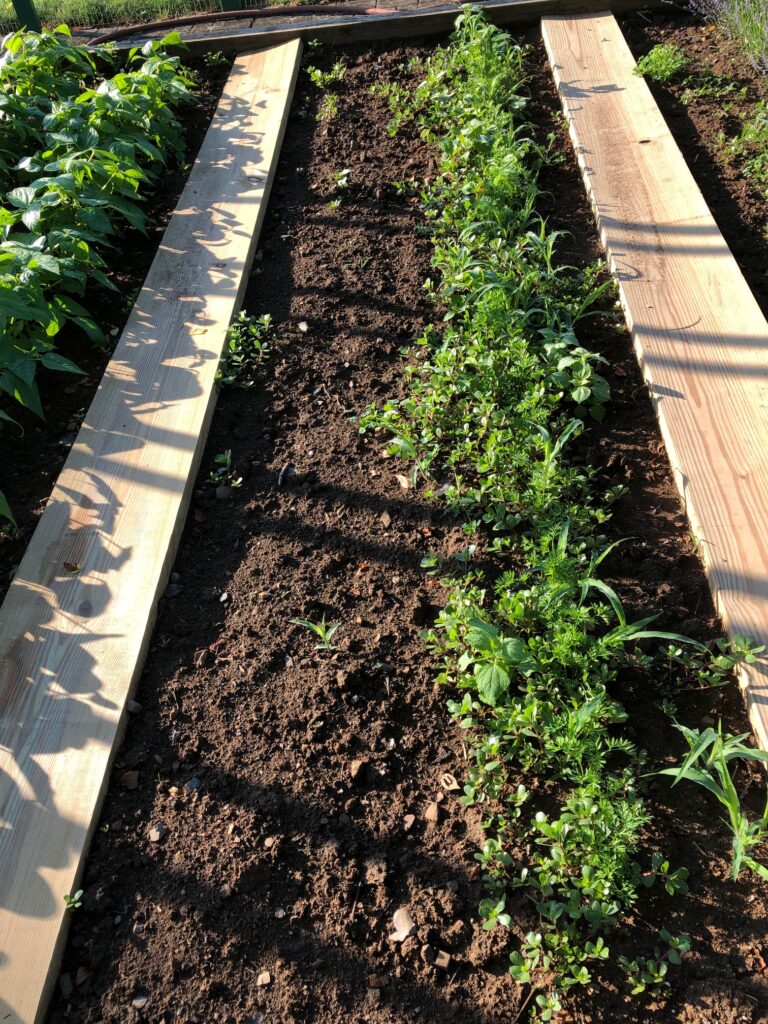
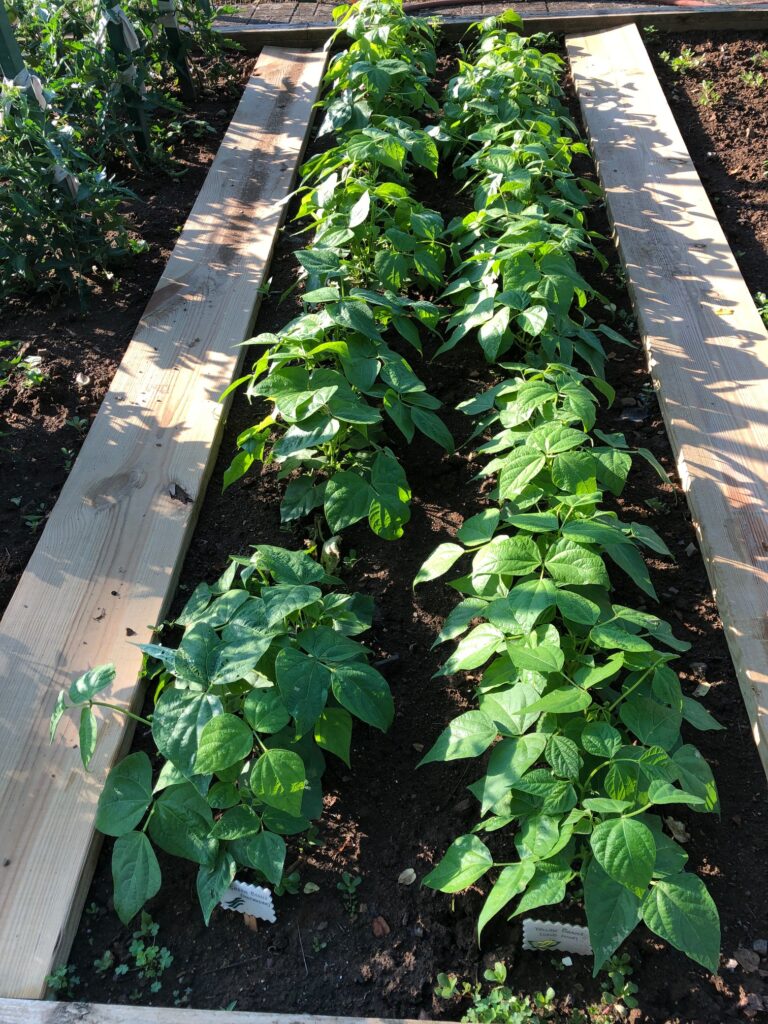
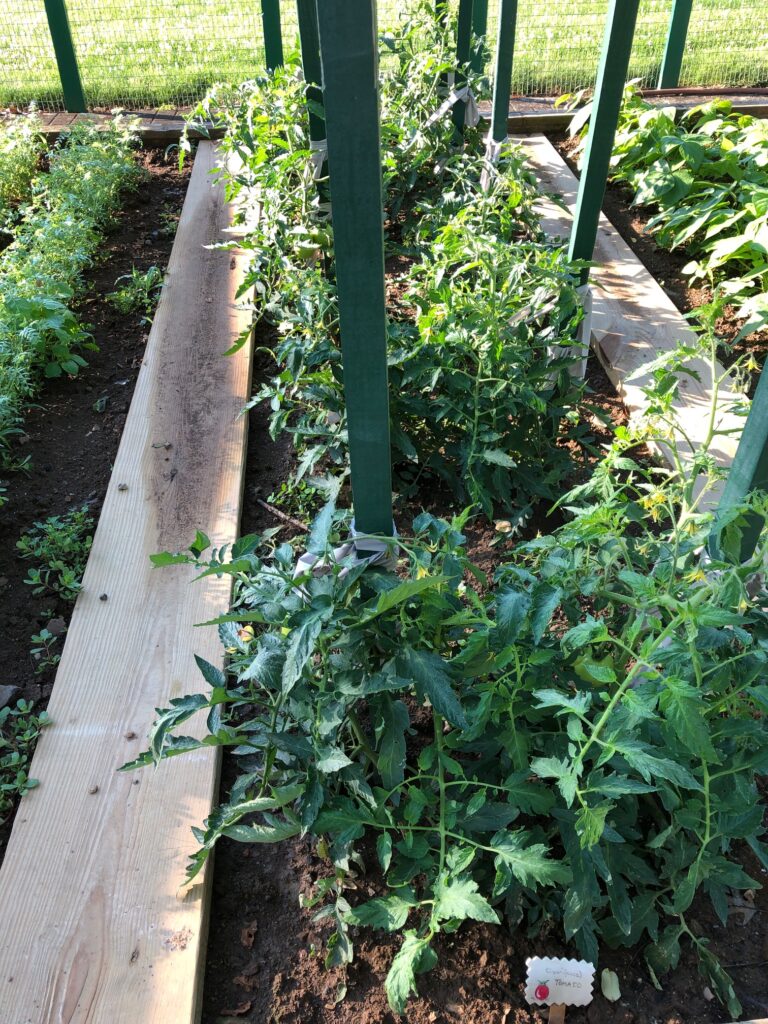
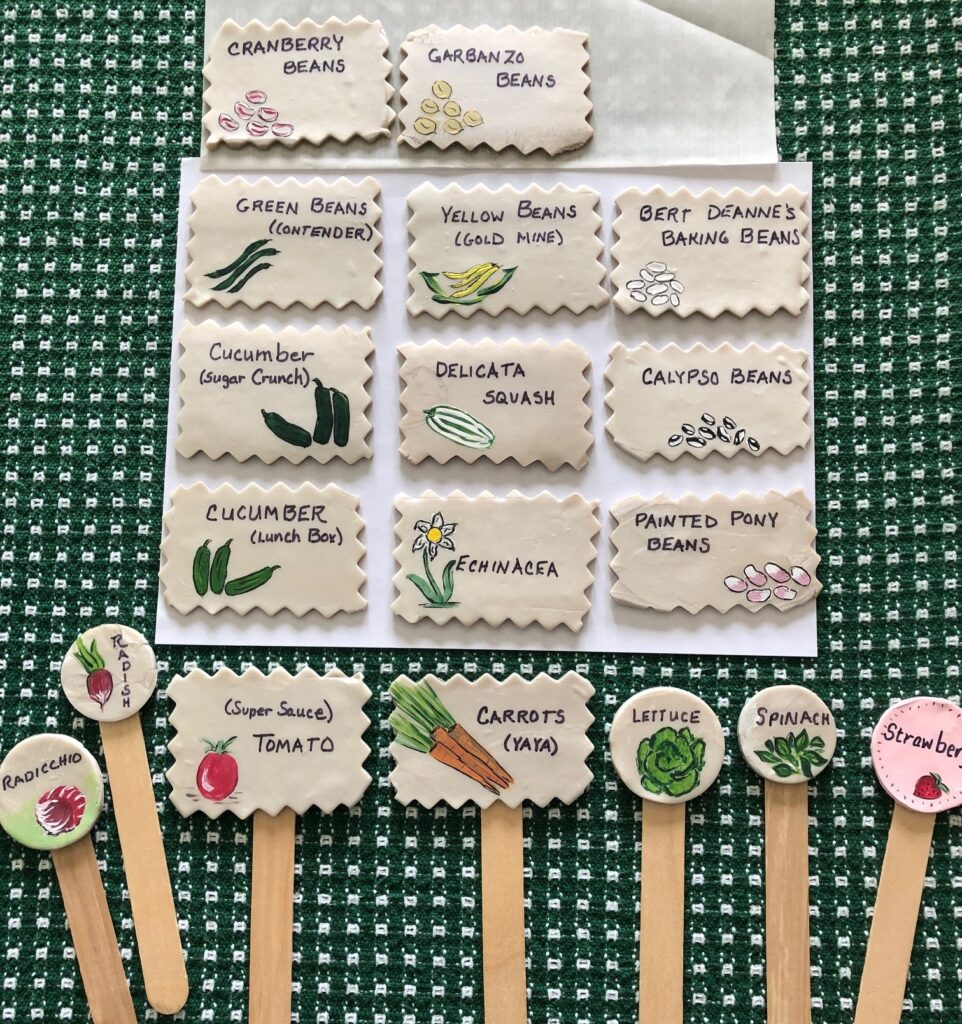
The one in the middle actually had a strawberry…and a roving chipmunk took a bite out of it!Moving on…the cherry tomato plant is doing well.I just discovered the first tomatoes tucked in the middle.The lettuce and radishes at least are doing well. We’ve been eating the lettuce, one bunch at a time and that is the second planting of radishes.This planter has the 4 kinds of shell beans. Luckily, I stuck my labels in the ground when I planted the seeds because they all look alike right now.Cucumbers are going strong.Delicata squash is determined to be bigger than the cucumbers!Up in the big garden, some of the lavender came back fine. A few plants are still thinking about it! The carrots next to the lavender did nothing. We had to replant.I have started to collect the stems. By the end of the summer I should have enough buds to make my lavender-infused oil.The row of carrots (and weeds) on the right are actually growing. Tomorrow, I’ll plant more green beans in the empty row on the left. They’ll be ready in late August.Green beans on the left; yellow beans on the right. Starting to make blossoms.Super Sauce tomatoes doing well.Most plants had at least one tomato and some had more. They all look like yummy pizza sauce in the future!And my crazy garbanzo beans (chick peas). They just make me smile!The echinacea looks impressive. All different stages after wintering over. We’ll just leave them alone and enjoy them.
We have had so much rain we haven’t had to water much. But, who knows, at any time the rain could stop and move us into a dry spell. We’re ready! Enjoy!
Hot summer days bring to mind how annoying mosquito bites can be. Preventing them is the first line of defense. The bug deterrent I made for dogs (and people) can help (see https://marykisner.com/natural-bug-repellent-for-dogs/); or any bug repellent you are comfortable using. However, the itching from a bite can prolong the agony for days.
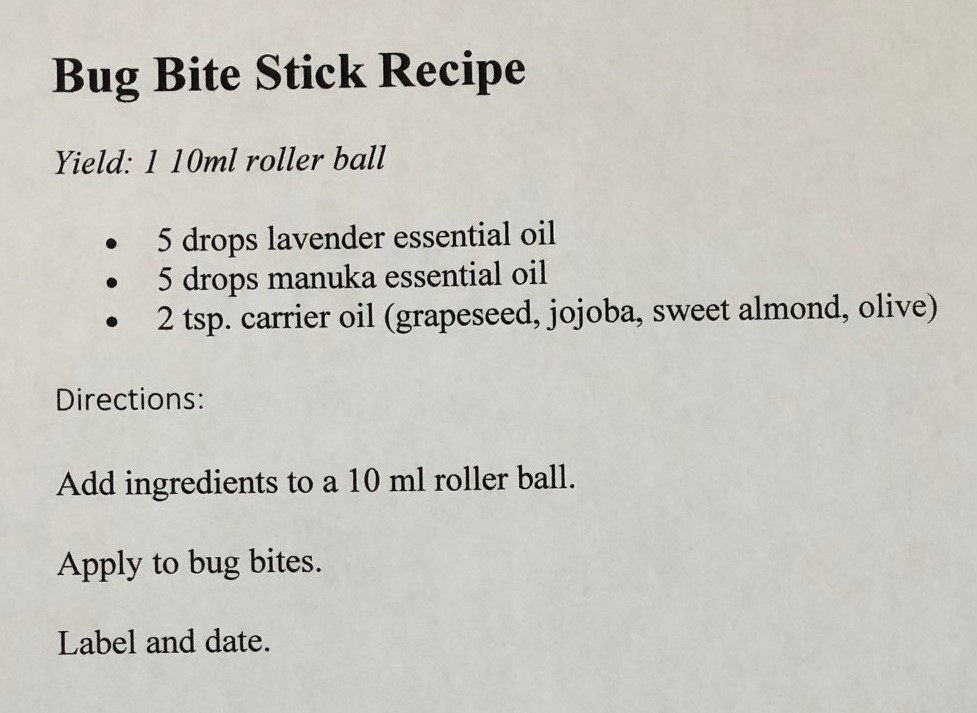
I found a simple recipe on a website I read frequently and thought I’d give it a try (https://joybileefarm.com/lavender-tea-tree-roll-on-stick/). My plan is to make a bunch and share it to see if it actually works. Here is my modified recipe:
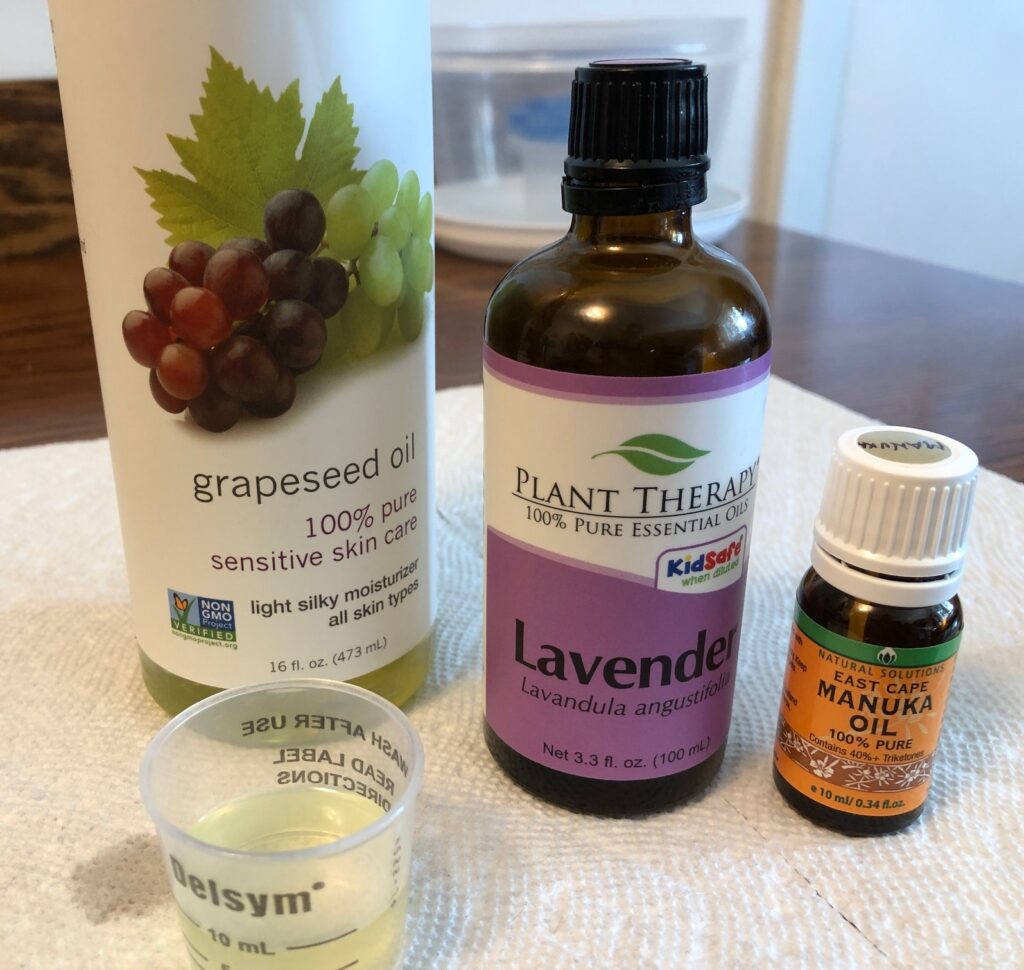
While I was collecting the supplies I thought about the ingredients. I had grapeseed oil and lavender essential oil on hand. I also have tea tree essential oil available, but after all my research about manuka essential oil, I thought I would try substituting it for the tea tree oil.
What’s the Difference Between Tea Tree and Manuka Essential Oils?
Tea tree oil has been considered the industry standard since World War II for many topical and household applications due to its antifungal and antibacterial properties. It is considered safe and effective to be used as an insect repellent, household cleaner and dandruff shampoo. It has been used to soothe bug bites, sunburns and rashes. However, it has a strong scent and can be irritating to some people, including children.
Manuka essential oil, while new on the market, has also been shown to have powerful antibacterial and antifungal properties. It is great for soothing sore muscles and itching from bug bites and sunburns. Manuka oil also had 20-30 times the antibacterial activity as Tea Tree oil. It is less irritating to sensitive adults, is safe for children AND it smells good!
Therefore, I substituted Manuka essential oil for the Tea Tree oil in this recipe.
Here are the ingredients for this mixture:
I knew that the little cup I saved from when I had kids had the 10 ml mark on the side and would be perfect to measure out the grapeseed oil. I just filled it to below the 10 ml line. It was much easier to dispense than the big bottle of oil.
I discovered after the first few I made that the 2 tsp. of grapeseed oil needed to be little less. The roller ball holds 10 ml (which is 2 tsp.). When I added the full 2 tsp. of grapeseed oil plus the 10 drops of essential oil it was so full I couldn’t get the roller ball snapped in. I ended up adding only 9 ml instead.
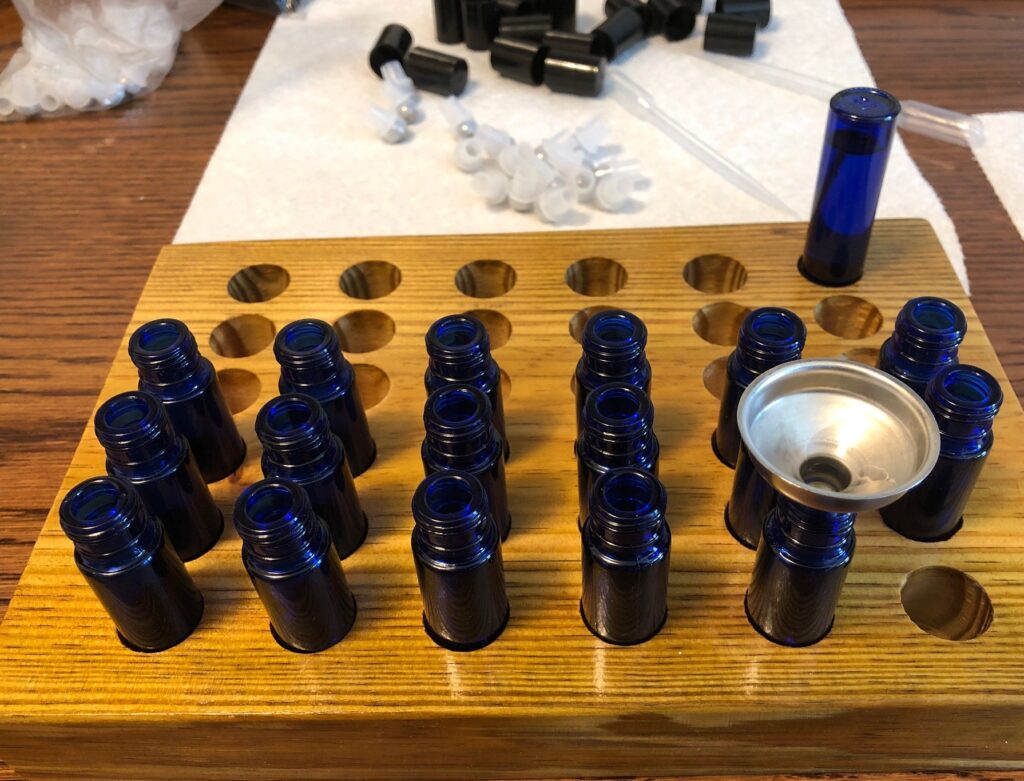
I set out 18 roller balls and filled 6 at a time, capped them and set them upside down along the back of the tray to help the oils mix.
I made 18 because I wanted to share them with some friends. I will need their feedback to see if rolling on some of this oil mixture really helps soothe the itch of a bug bite. We’ll see!
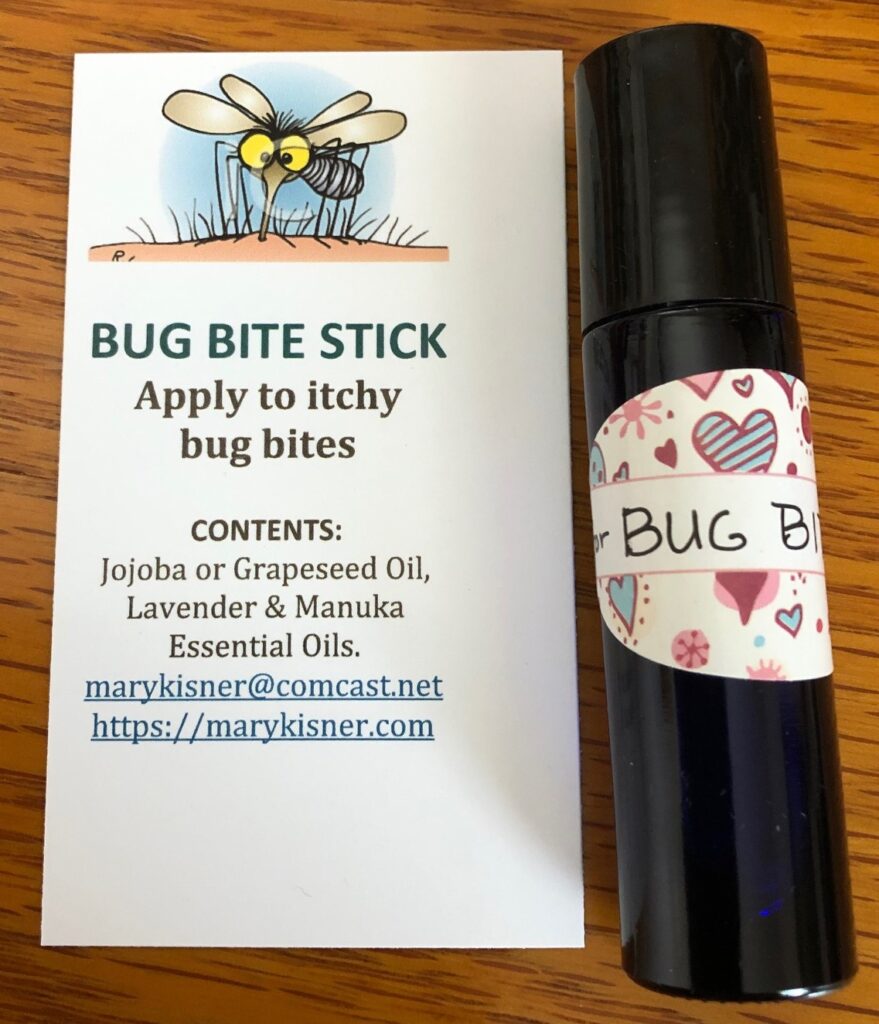
Of course, everything I make and give away needs information about what is in the product. I want folks to know before they put anything on their skin. Give this recipe a try yourself! Enjoy!
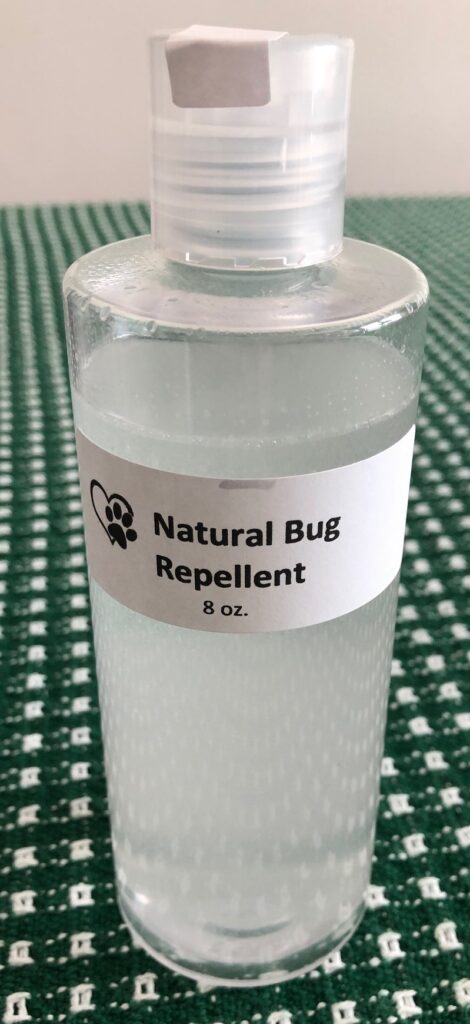
I’m getting ready to make another batch of natural bug repellent and remembered my recipe calls for Lavender Hydrosol. When I wrote my original article about this recipe last Spring I just followed the recipe. You can see the article here: https://marykisner.com/natural-bug-repellent-for-dogs/.
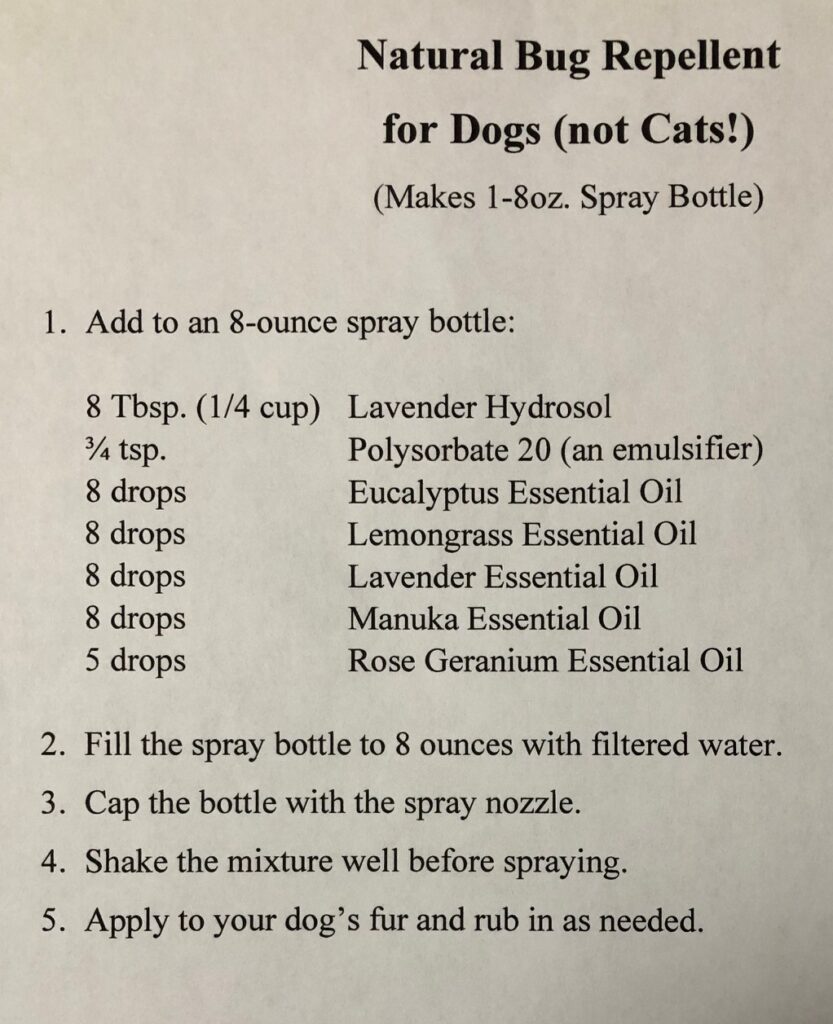
Here is the final recipe for this repellent:
This recipe is only approved for dogs (and is actually safe for humans too!). Cats are very sensitive to several of the essential oils in this mix and when they lick their fur, they ingest them. Not safe!
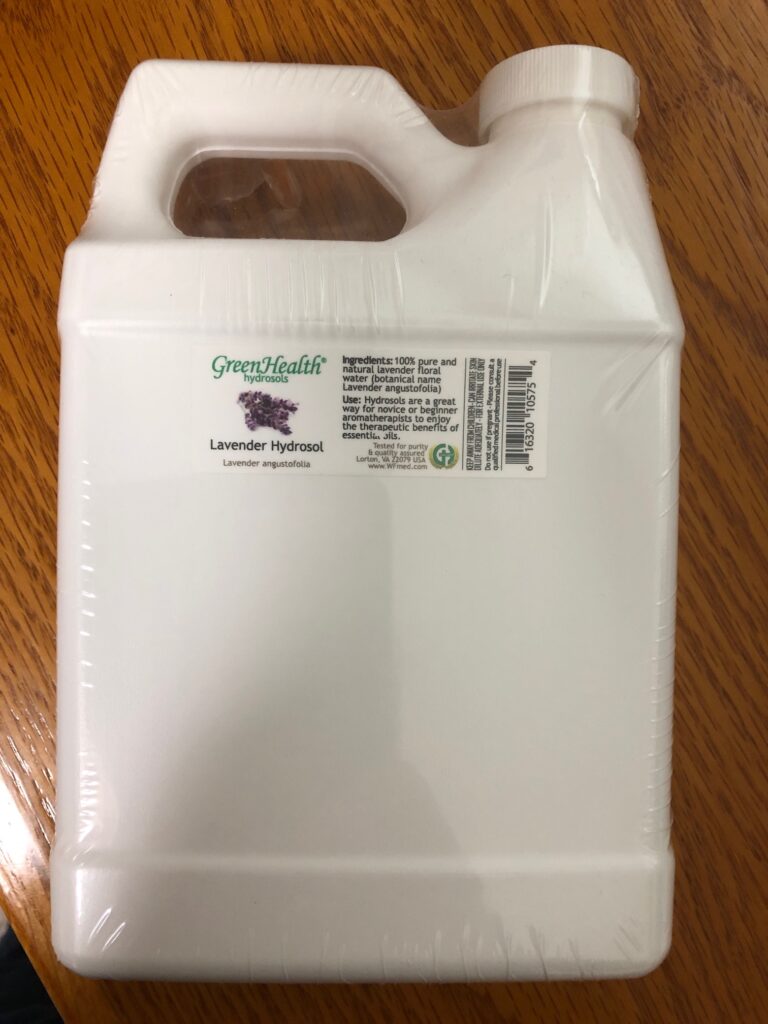
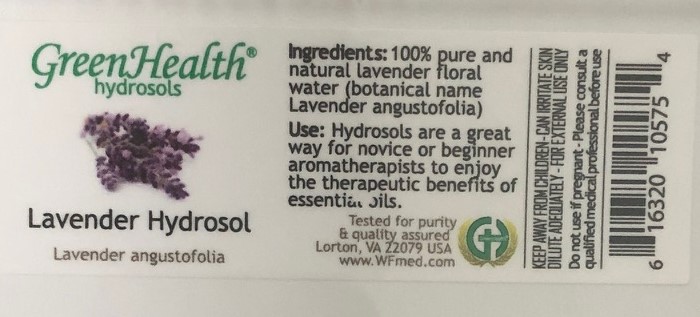
I ordered Lavender Hydrosol from Amazon…starting with a small bottle and then went to this quart jug so I could mix up enough for Nittany Greyhounds:
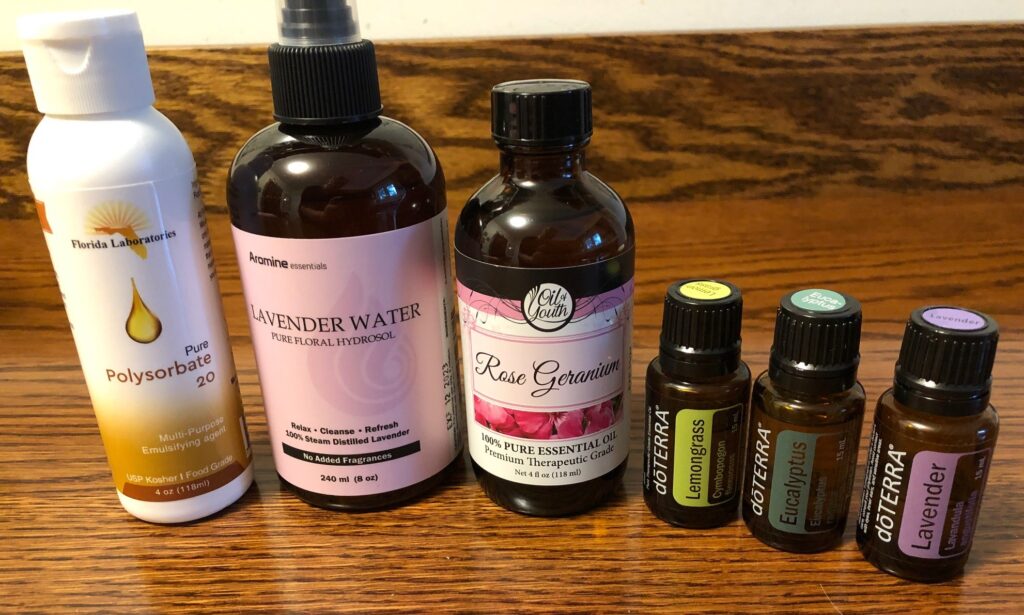
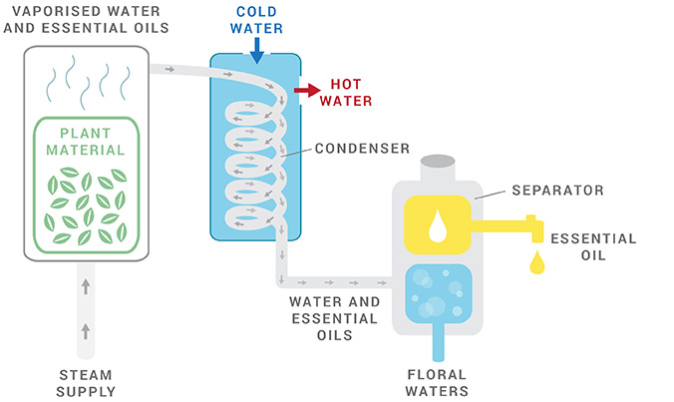
I did a little research that reminded me that this is basically lavender water…that is a byproduct from the distillation process of extracting lavender essential oil…and it is water soluble. Since my recipe called for lavender hydrosol and essential oils they would not stay mixed. I had to add an emulsifier to help them disperse. Polysorbate20 was recommended in the recipe.
Here are the ingredients in this natural bug repellent.It was packaged in a bottle that worked better for shipping…with an empty spray bottle provided. If I make only one for myself, I mix it directly in the spray bottle.
Learning More About Hydrosols
This year I wanted to know more about Hydrosols. I found this book that was very helpful:
This book, Hydrosols: The Next Aromatherapy by Suzanne Catty, has a wealth of information about how hydrosols are made, how the field of aromatherapy is maturing and how the production of hydrosols is becoming more consistent around the world. The author’s research provides many recipes to use hydrosols, from skin care products to using them in cooking to enhance flavors. While few essential oils are safe for babies (and even cats), hydrosols could be just the right product for many of those products.
Next, I did a search online for sources of hydrosols. Many companies that sell essential oils also offer hydrosols of those same plants. One company had a great article about hydrosols with the following illustration:
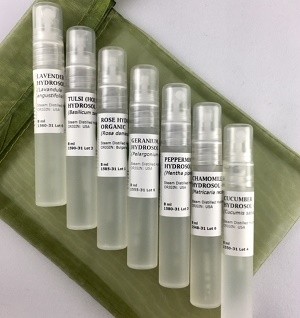
On another site, www.edenbotanicals.com I was able to order a set of 8 tiny spray bottles that would let me try them. So…these are very tiny samples, but might give me some ideas for future products.
These include Chamomile, Cucumber, Geranium Rose, Lavender, Rose, Tulsi (Holy Basil) and Tumeric Hydrosols.
I can see there is so much more to learn about Hydrosols; I’ve barely scratched the surface! Look for Hydrosols to appear in some of my future products! Enjoy!
Did you know garbanzo bean plants look nothing like standard bean plants? What a surprise! We are growing seven different kinds of beans this year…two standard snap beans we will pick at their peak of freshness; plus five shell beans we will let mature and dry on the plants right in the garden until fall. Today I just want to share how all the beans are doing.
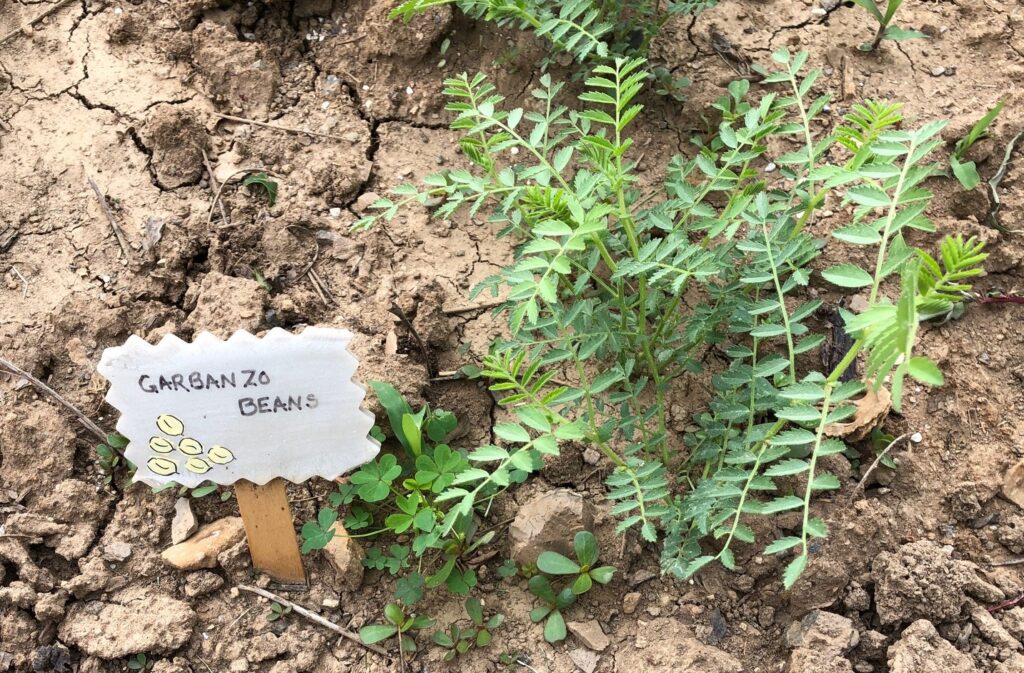
All the bean plants are now about 8″ tall and look really healthy, but I’ve been noticing how different the garbanzo bean plants look. Check it out:
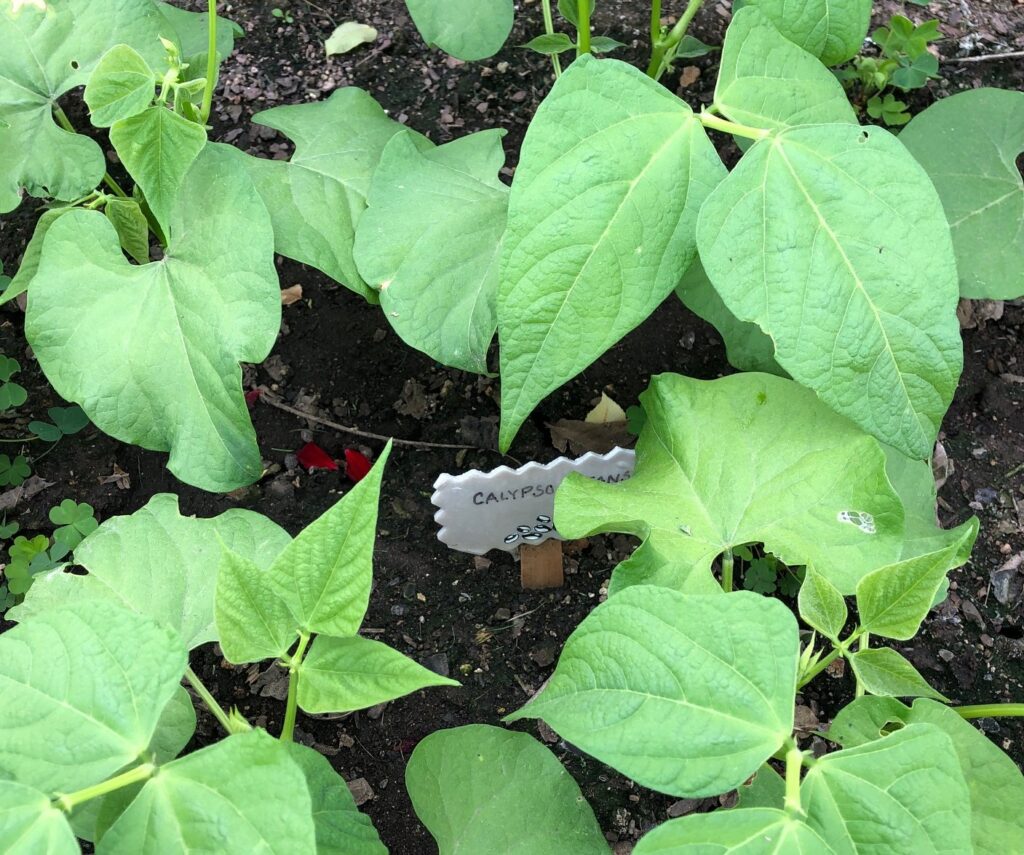
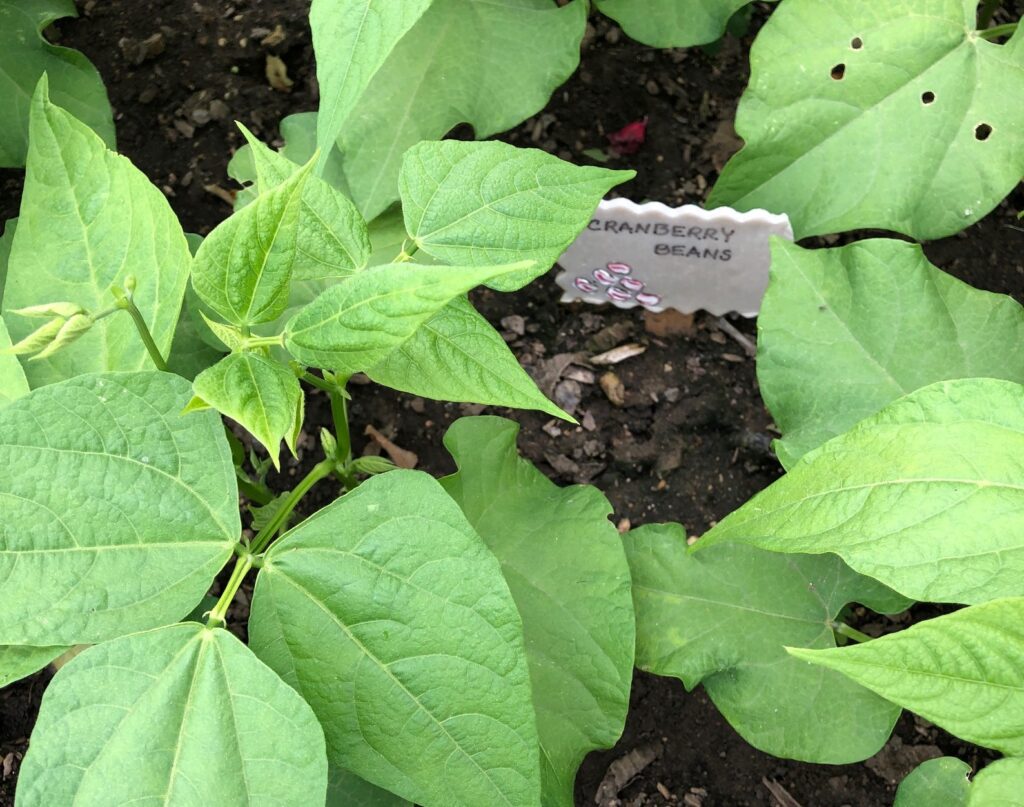
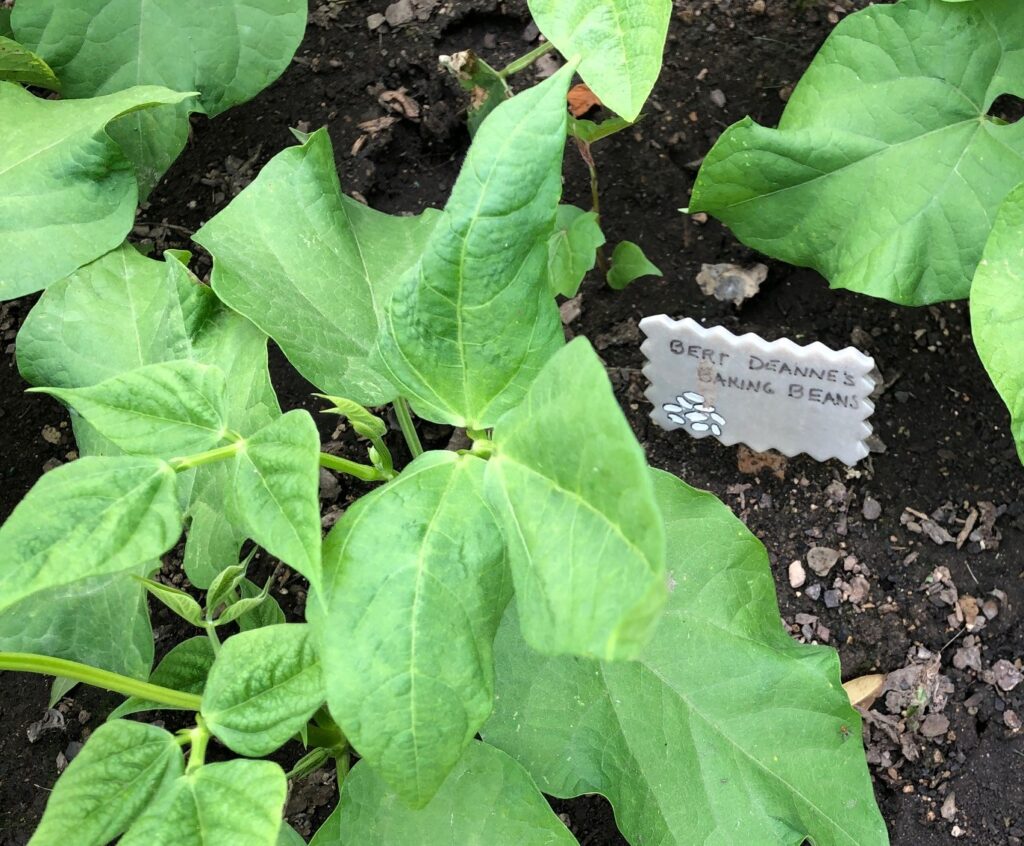
Green beansYellow beansPainted Pony beansCalypso beansCranberry beansBert Deanne’s Baking BeansGarbanzo beans. Check out those leaves!
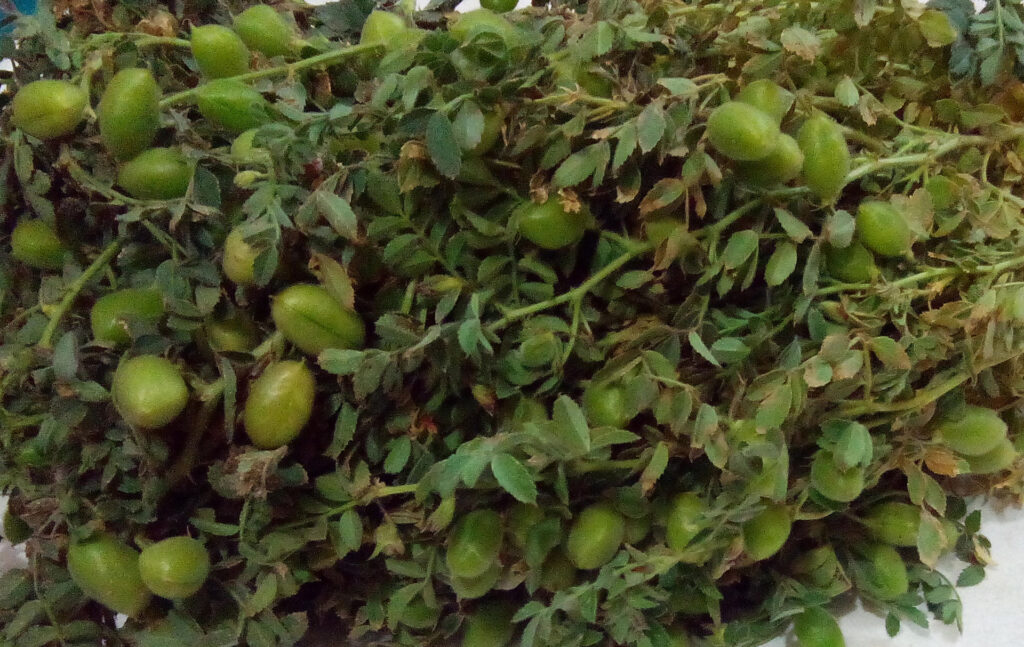
So, I tried to do a little research about garbanzo beans but could not find anything that explained why the leaves were so different. And then I found a picture of what the garbanzo bean pods will look like. I was so glad to have a heads up on what to expect!
The rest of the garden is coming along fine…more about other parts of the garden soon.
Please comment or email me directly if you know more about why the garbanzo bean plants look so different at marykisner@comcast.net.
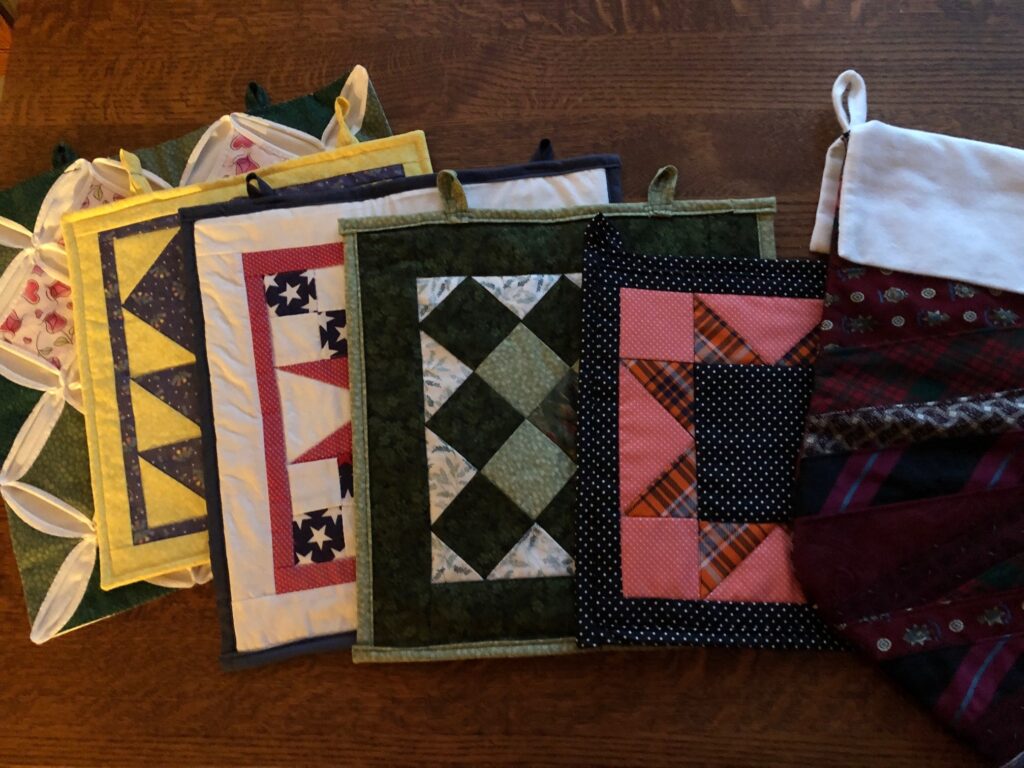
As you may know by now, most of my projects revolve around filling a need and making something practical and useful. If you’ve been following my posts about Door Quilts, you’ll know I have made six nice 12″ stand-alone fabric quilt blocks to hang on my front door. They lie flat and don’t get squished like a wreathe does between the front door and the screen door.
However, when I pulled out the Patriotic Door Quilt last month, I noticed it’s really faded from the sun. Here’s how it looked when new…
…and now it’s really bleached out from the sun:
Rather than make a bunch more fabric quilt blocks, I thought if I painted a quilt block on wood and coated it with an acrylic spray it would last better in the sun (kind of like the huge barn quilts you see across the country).
While I’m waiting for Bert to cut 12″ square boards for me, I thought I’d see if I could make miniature ones to satisfy my need to practice with paints. So, eventually, my fabric door quilts will evolve into wooden quilt blocks that will also hang on the front door and solve my problem just fine!
It’s been a long time since I painted anything. I’m not especially creative with paint, put I enjoyed playing with a few paints to make my garden stakes a few weeks ago (https://marykisner.com/final-garden-signs-for-2022/).
It helped that the pictures were tiny and didn’t need to be too detailed!
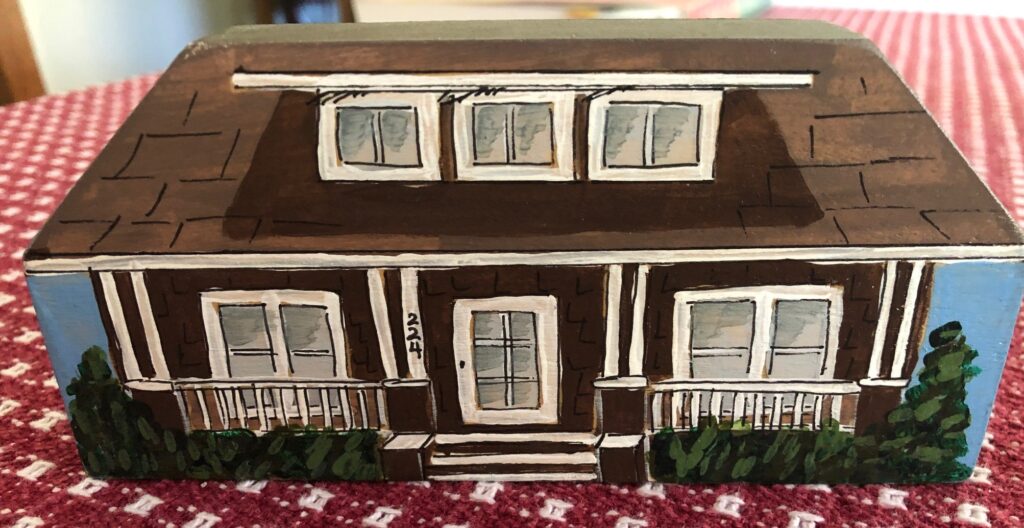
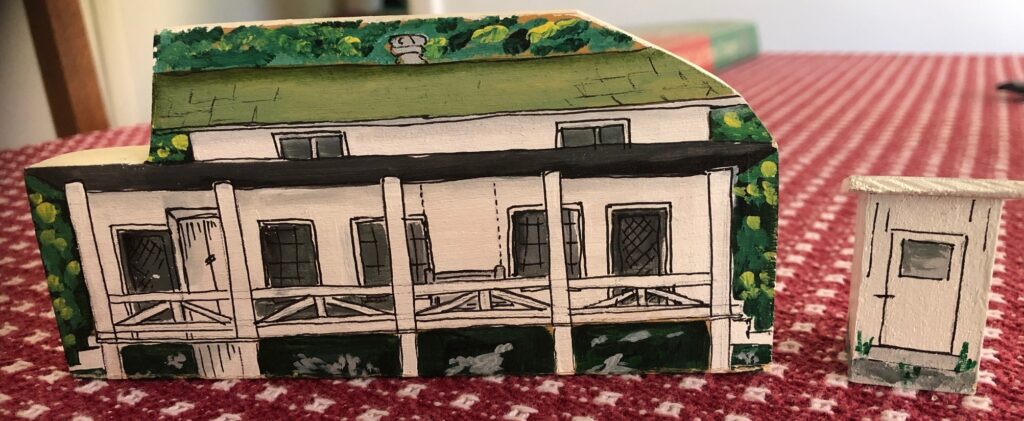
Twenty years ago, I spent hours painting small houses based on photographs. They were also not “creative” but instead were mostly straight lines and the photographs showed me shadows.
This is the house I grew up in, from an old photograph.The camp was fun to paint because I could add the tiny outhouse!
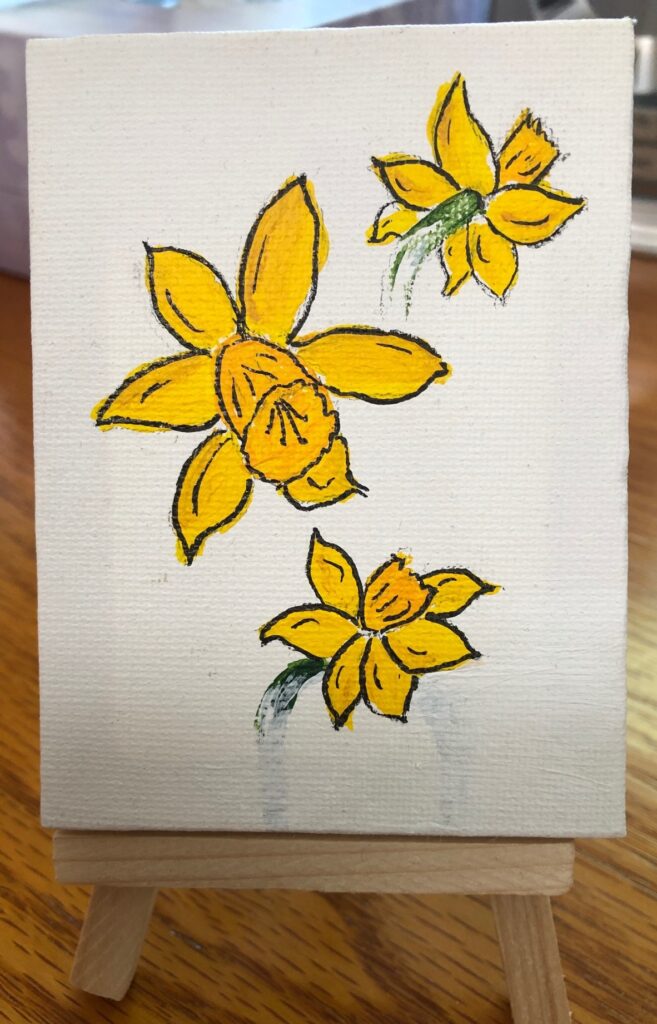
So, after making the garden stakes, I thought I’d try some miniature flowers:
This tiny canvas is 3″ x 4″
Even though I copied the daffodils from a photograph, I had to really struggle to get the petals turned right and getting the color right. Very frustrating. The point of painting was to do something fun, not frustrating! It seemed like I needed to paint something with straight lines. Quilt blocks would be perfect.
First Attempt
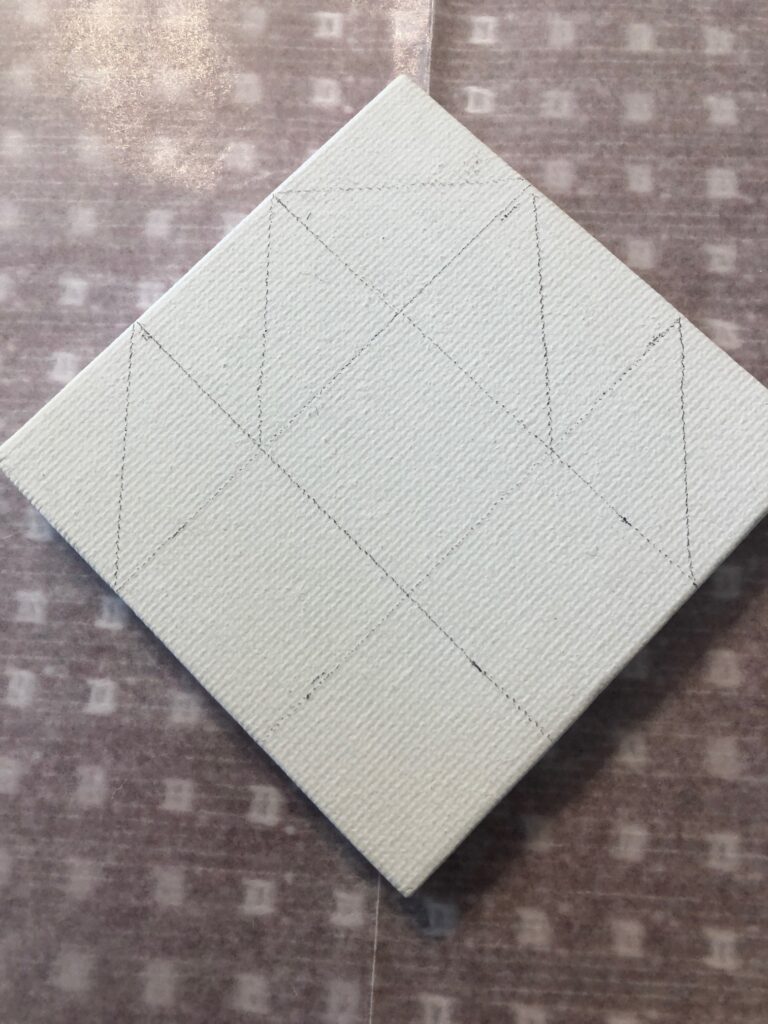
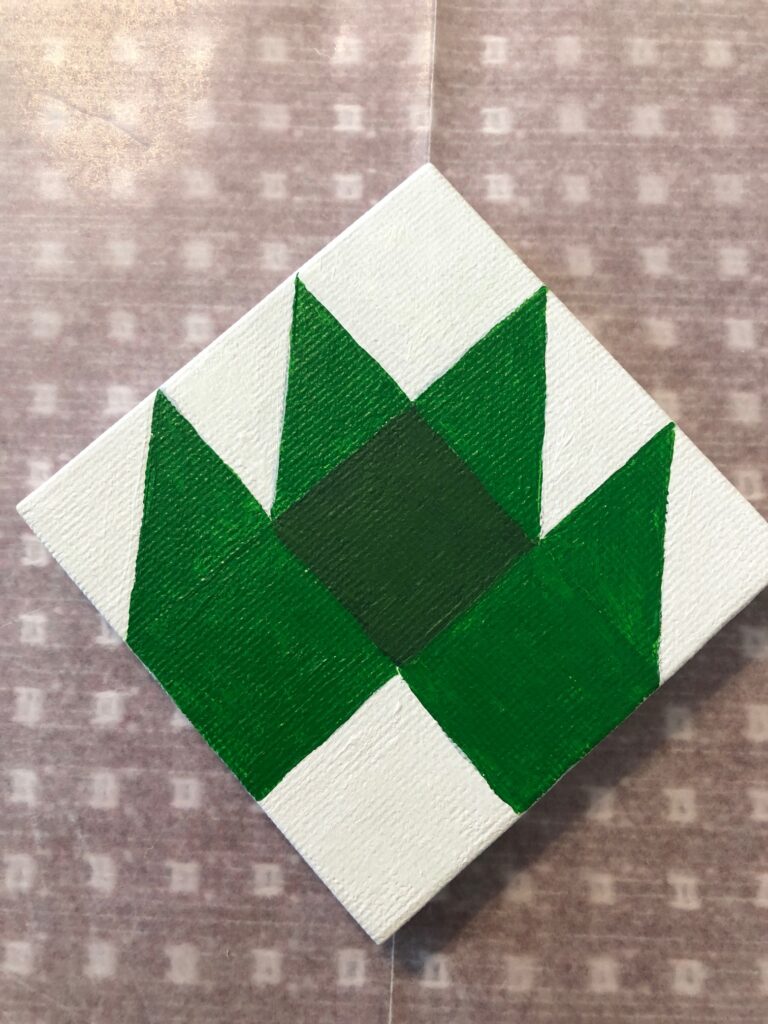
I started with a set of 3″ x 3″ square tiny canvases and some tiny easels to go with them. So cute!
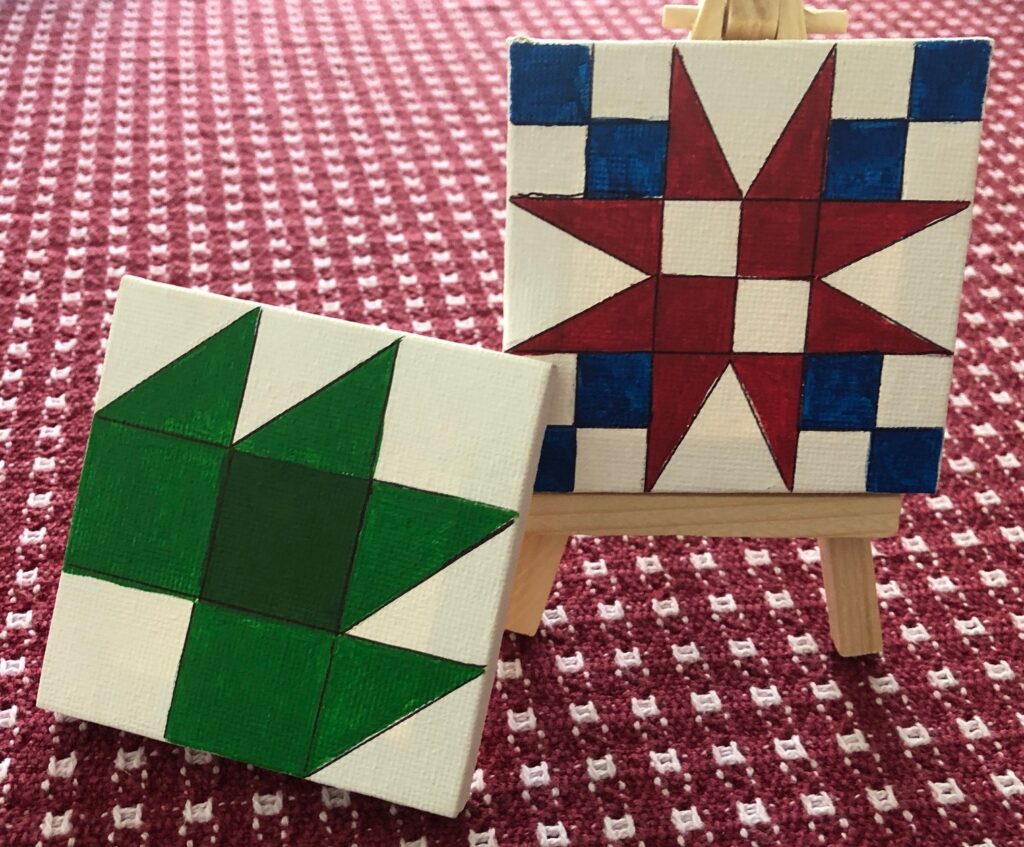
This block is called Vermont Maple Leaf.Adding the lines with a fine black marker seemed to help it look more finished.
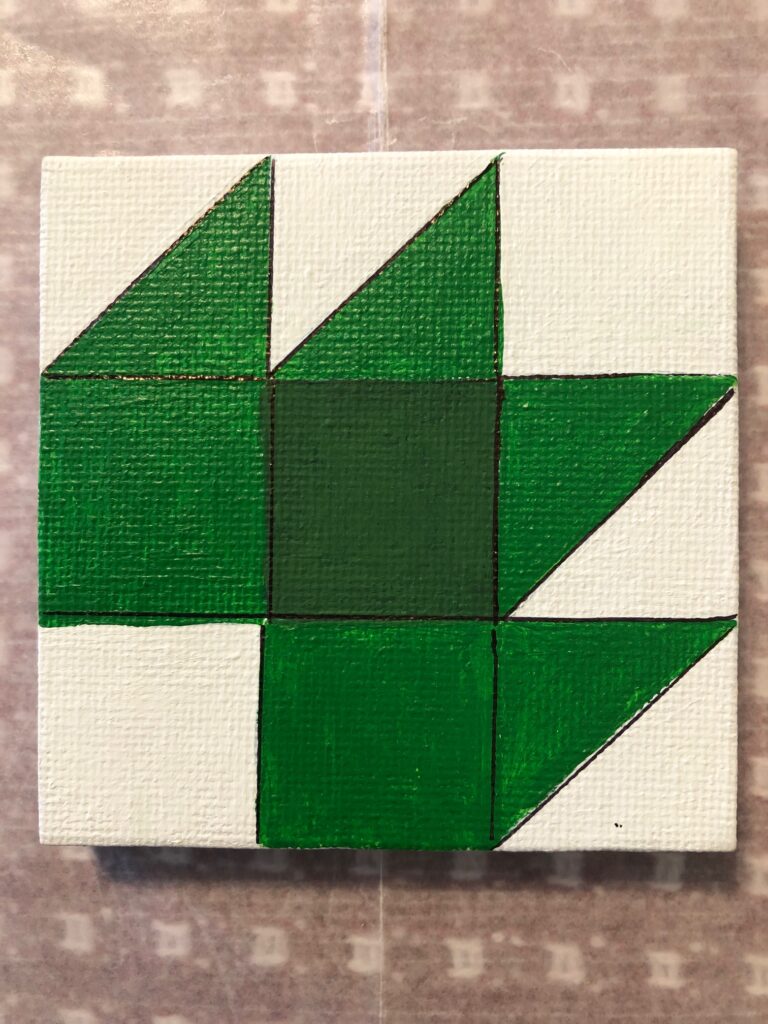
Second Attempt
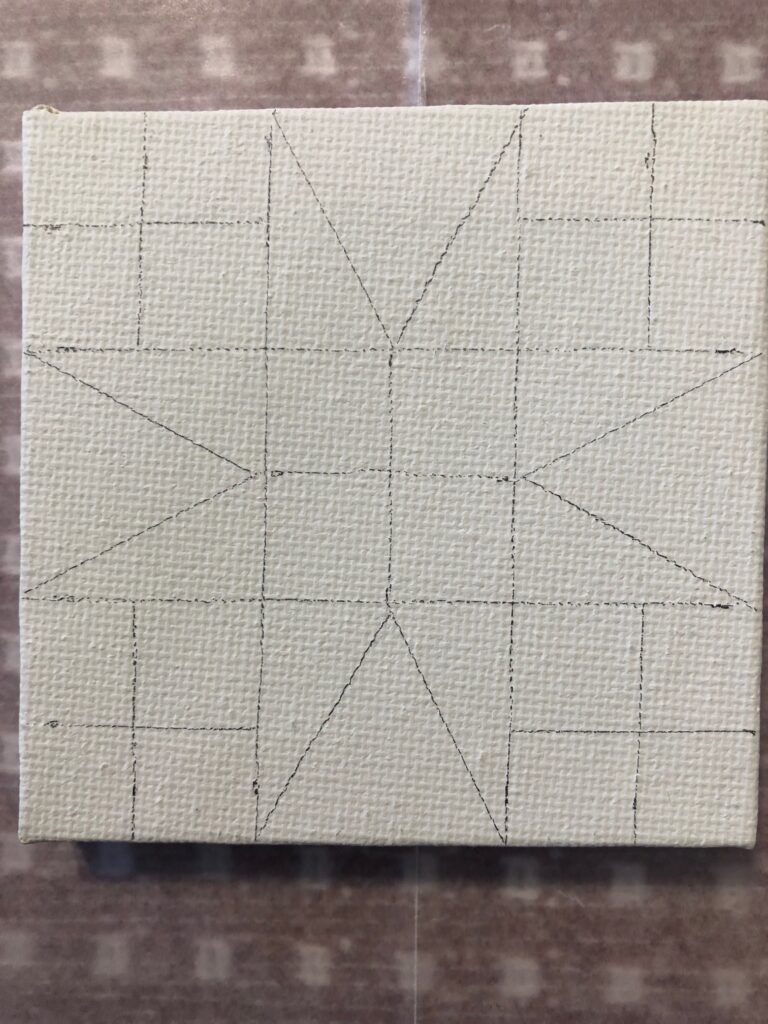
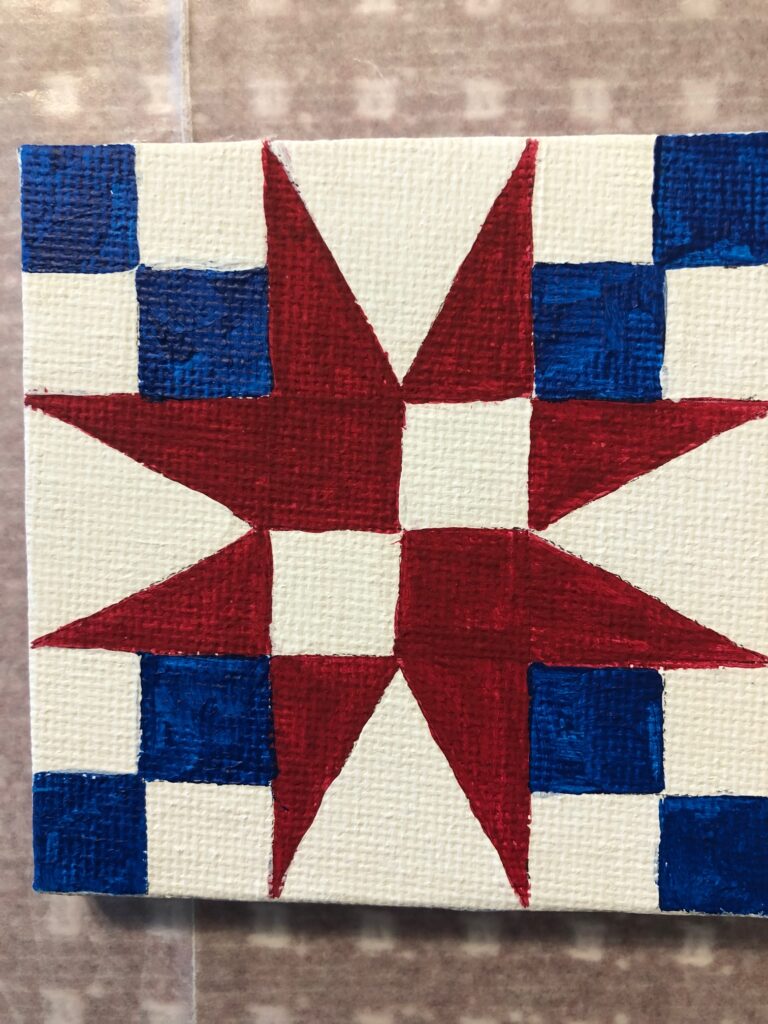
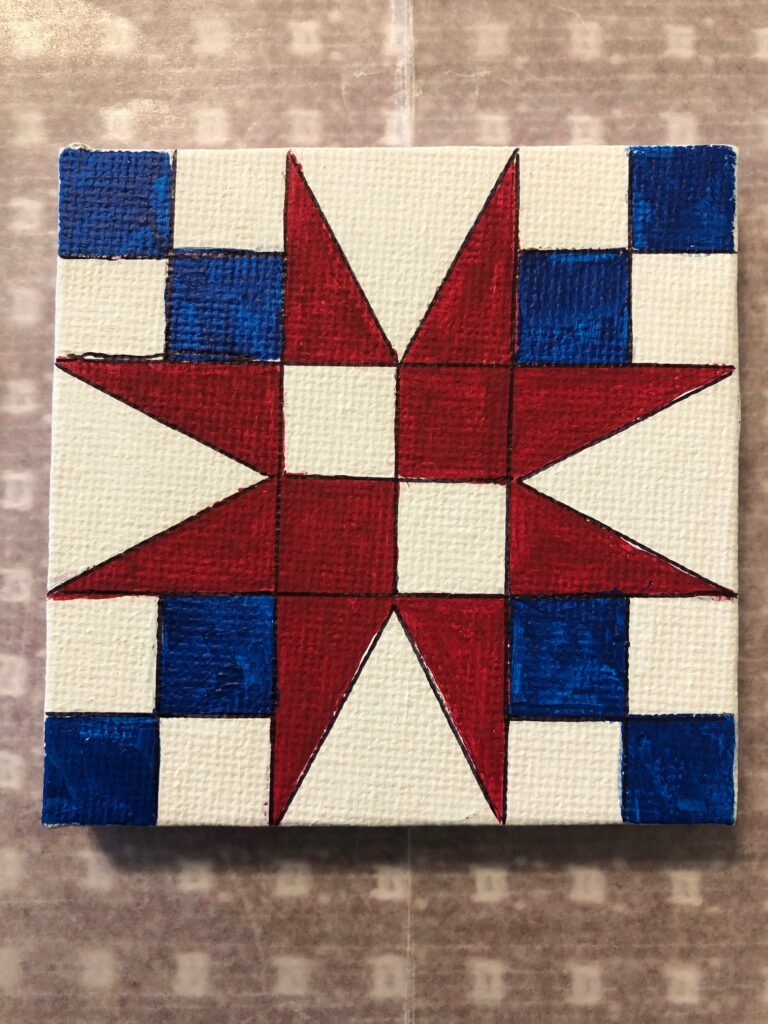
This block is called Fifty-four Forty or Fight. It’s the same block I made in fabric.I must say it’s a challenge to get in those tiny points!The fine black marker helped it feel finished.
While I’m waiting for my 12″ wood squares, I’ll experiment with tiny ones to see which patterns would look good on the front door! I must be nuts! Enjoy!